
Looking forward
Remembering Our Nakbas
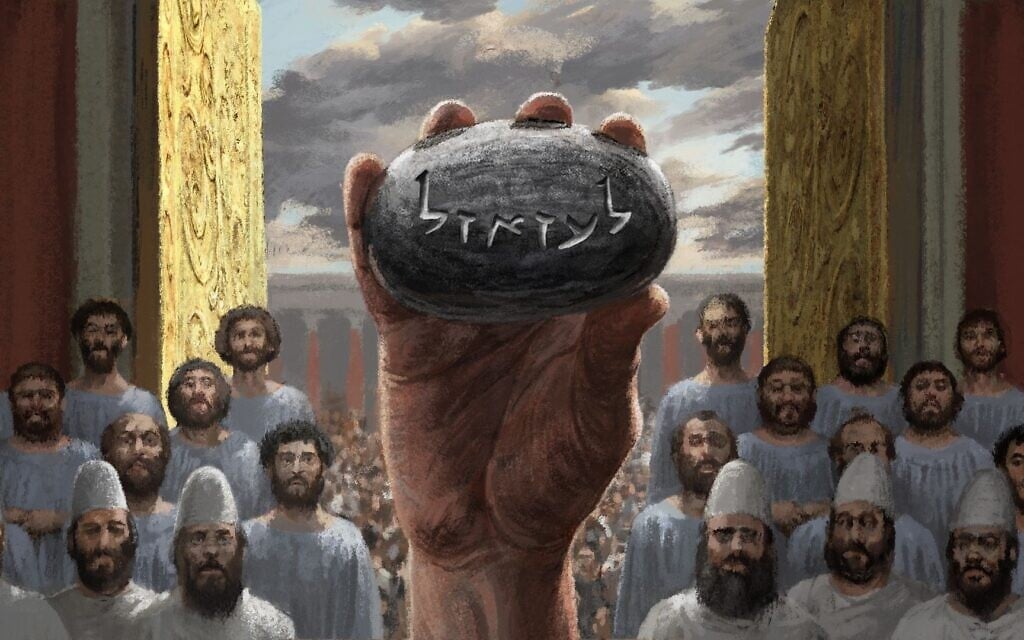
From 'Legend of Destruction,' Gidi Dar's 2021 film about the Jewish revolt against the Romans in 70 CE. (Courtesy: David Polonsky and Michael Faust)
How remembering our rebellious past may help us heal our fractured present
We lived under their military occupation for years before we decided: enough. We gathered our forces. We gathered supplies. We prepared our traps and sharpened our plowshares to swords and flattened our pruning hooks to spears. When we decided the moment was ripe we attacked and killed them mercilessly. At first we succeeded, Maccabees against the Greeks. Ultimately we were defeated, by their heirs, the Romans.
Again in 70, when Jerusalem was razed. And again in 117, when our communities arose across the region. And again in 136, led by Bar Kochba (Kosbia).
Which is why, for the nearly two thousand years since, we’ve devoted three weeks every year to remembering attempts at independence fought and lost. To remember that each one of our rebellions against the global powers who conquered us and subjugated our laws to theirs resulted in greater and greater destruction. Of life, of culture, of history. To remember that even as we mourned the Roman destruction of the Temple, Jewish life continued in Yavneh, in the Galilee. That it was our choice to rebel again. And again. Until Jews were nailed to sticks across our beloved land, and the sages of Yavneh were skinned alive.
These were our Nakbas. For these we cried. And it is my hope that in these days, as many of us sit on the floor to read the first of the accounts of our destruction by the prophet Jeremiah, we will learn to recognize the same pattern of doomed rebellion in our neighbors in the land and see their humanity, see a reflection of the stiffneckedness of our own.
Because they, too, love the land of their ancestors and hate the yoke of occupation. Yes, there are a thousand differences between us: they are, at least culturally and nationally, the children of Empire, of the conquering armies of their prophet Muhammad who swept the world as a desert storm. They are, at least religiously, aligned with global powers who seek the destruction and dispersal of the Jews, who believe us to be the ungrateful, rejectors of their divine word. They have been, at least ideologically, unwilling to accept our birthright to the land, even a section of it.
Yet in all these we can see ourselves and our past and present reflected. We too hate occupation. We too remember the stories of our first conquest of the land from the Canaanite tribes. Many of us, too, have fought for decades to decry the very existence of a Palestinian people, as if we can tell them how to define themselves and their attachment to each other. Many of us too have been unwilling to accept their birthright to the land, even a section of it.
And it may be that all of that was right, in theory. In practice, however, it takes but a glance through the lens of our lamentations to see how similar their story is to ours. How fiercely they believe what we believe but for themselves. How their willingness to sacrifice themselves for victory is so similar to our own. How much in common we have: a love of land. A pride of place. A devotion to family. A fiery pride that the jackboot cannot stomp down.
I believe the only way out of this current cycle of rebellion and reaction and the increased involvement of global powers in the region is through this recognition of the radical resemblance of our national struggles. The recognition that both of our peoples have extremists in their midst baying for blood, dreaming of destruction, willing to burn down the food stores and starve our strength out of a wholehearted belief that divine might will turn the battle’s tide. Most of both know this will not happen now as it did not happen in the past as it will not happen in the future. That our future will only flourish if our present overcomes our urge for reflexive revenge.
While the Second Temple still stood, and self-determination filled our people with pride, a delegation was sent to the prophet Zechariah to ask whether a fast was still required to lament the destruction of the first Temple destroyed by Nebuchadnezzar. Zechariah provided the answer of the Most High: The fast wasn’t for the Eternal, it was to remind us how to act. “When you fasted and lamented in the fifth and seventh months all these seventy years [of Exile by the rivers of Babylon], did you fast for my benefit?” The fast, he stated, was to ensure we remembered we were exiled from our land for losing our compassion, for not executing justice for “the widow, the orphan, the stranger.”
In this 77th year of the return to our independence, we need to listen to Zechariah now more than ever. We need to see the stranger as we see ourselves, and we need to hold ourselves and our current government to the same standards Zechariah reminded our ancestors to be the prerequisites for remaining in our land. We need to remember the evil brought upon us by extremists past and dangers of extremists present. Because once we do so, the prophet promises, once we remember to act justly and eschew corruption, the curses of the nations will be forgotten and we will once again be a blessing.
I wish you a meaningful memorial day on this Tisha B’Av, and hope you will join me in adding Zechariah to Jeremiah in your reflections.
Related Topics
Related Posts