Solicitor & foreign policy adviser
Restore Britain is bad news for British Jews
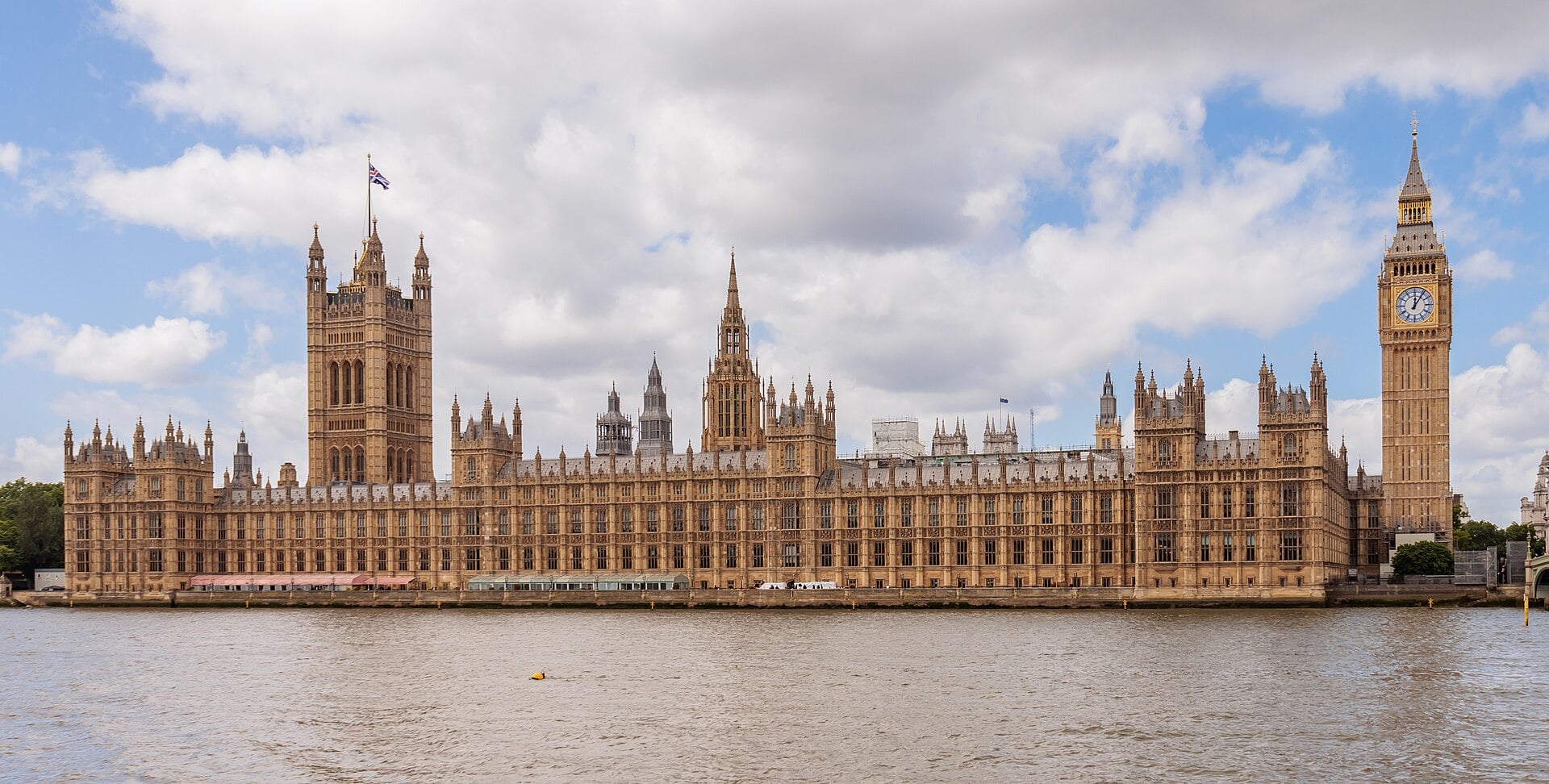
Photo by Terry Ott (Wikipedia Commons)
There is no rule of common sense as such in politics: but when a movement devoted to restoring Britain cannot quite decide whether the King is British, it may be time to inspect the restoration plans.
Restore Britain has lately provided plenty of reasons to do so. Its campaign director and co-founder, Charlie Downes, has raised a red flag by arguing that Britons are “a people defined by indigenous British ancestry and Christian faith”. When Allister Heath objected to this racialised conception of nationality, Downes called him “a traitor to the British people” and an “agent of the anti-white establishment”. He then appeared to insinuate that Nigel Farage had been bought by Jews, responding to Farage’s declaration that he could not be bought with an image of him standing before Jewish communal branding. Downes has also accused Israel of committing genocide in Gaza, reiterating the modern blood libel recasting the Jewish state as uniquely murderous.
Resulting criticism has come from Allister Heath, Stephen Pollard, Gideon Falter and Melanie Phillips, among others. Phillips identified the intellectual problem precisely: Restore is flirting with an ethnostate while calling their stance British patriotism.
For British Jews, however, this is more than an argument about the finer points of nationalism. Rupert Lowe has repeatedly advocated banning kosher slaughter. In a Commons debate in June 2025, he was admirably unambiguous: “We should ban non-stun slaughter, we should ban halal slaughter and we should ban kosher slaughter.” Hansard records the statement. Restore subsequently made abolition of both part of its politics.
The problem is not that Lowe has strong views about animal welfare. Parliament is entitled to debate slaughter standards. The problem is the political habit revealed by the formulation: halal and kosher, Muslim and Jew, placed together as interchangeable manifestations of foreign religion requiring identical treatment. Britain’s existing law makes a deliberate accommodation for religious slaughter precisely because religious liberty sometimes requires distinctions rather than administrative neatness. The Government reaffirmed in 2025 that it respected the rights of Jews and Muslims to eat meat prepared according to their religious beliefs.
This habit of crude equalisation runs through Restore’s thinking. Its ideologues appear to have noticed that Judaism and Islam are both non-Christian religions and concluded that the interesting analysis can therefore stop.
Alas, it cannot. Judaism and Islam occupy radically different historical, demographic and political positions in Britain and Europe. That observation implies no hierarchy of human worth. It does require anyone proposing a theory of national identity to know rather more history than can be fitted on a campaign leaflet.
The Jews have spent most of their history as a small, dispersed minority. Until the creation of Israel in 1948, there had been no sovereign Jewish state for nearly two millennia. The Muslim world, meanwhile, contains numerous sovereign states; the Organisation of Islamic Cooperation today comprises 57 member states and describes itself as the second-largest intergovernmental organisation after the United Nations. The geopolitical position of a tiny diaspora community and that of a world religion of two billion people represented across scores of states is plainly different. Treating them as sociologically equivalent because both have dietary laws is analysis at the level of noticing that a submarine and a cucumber are both long.
Their relationship with Western civilisation is different too. Christianity emerged from Judaism. The Hebrew Bible became the Old Testament of the Christian canon. The moral vocabulary, narratives and categories of European Christianity are consequently inseparable from Jewish scripture. One can be an atheist and still recognise the historical fact. Jerusalem, Athens and Rome are conventional shorthand for the principal tributaries of Western civilisation for a reason.
Islam arose centuries later outside the Judaeo-Christian development of Europe and produced its own civilisation, jurisprudence and conception of political and religious authority. Serious questions consequently arise about the compatibility of particular Islamic political doctrines, the subordination of civil law to religious law, punishment for apostasy or blasphemy, and restrictions on freedom of conscience, with a liberal constitutional order. Those questions should be asked without pretending that every Muslim subscribes to those doctrines. Equally, they should not be evaded through the lazy proposition that every religion presents Britain with the same political problem.
The distinction becomes especially important when discussing assimilation. Judaism is not ordinarily a missionary religion seeking the conversion of the surrounding population. Islam has historically contained a universal missionary imperative, although the history of Islamic expansion and conversion is far more complicated than the cartoon in which every conversion occurred at sword-point. Even the Islamic textual tradition contains the famous injunction that there is “no compulsion in religion”. The serious argument concerns the interaction between religious doctrine, political Islam, state power and liberal institutions, not some racial property supposedly possessed by Muslims.
Restore manages to miss this distinction because ethnonationalism is an extraordinarily poor substitute for political thought. Once ancestry becomes the organising principle, the actual conduct and beliefs of citizens become secondary. The assimilated Jewish family whose ancestors arrived in Britain generations ago becomes conceptually suspect while a white atheist of impeccable genealogy sails through the ancestral customs post. Restore calls this defending civilisation. It looks remarkably like confusing civilisation with a family tree.
British Jews should recognise the danger in that mistake earlier than most. Anglo-Jewish history is, among other things, the history of the gradual victory of civic belonging over confessional and ancestral exclusion. Jews returned to England in the seventeenth century and spent the following centuries securing the civil and political equality that allowed a distinct religious minority to become thoroughly British without ceasing to be Jewish. The nineteenth-century struggle for Jewish emancipation was precisely about removing religious disabilities from citizenship. Geoffrey Alderman’s history of British Jewry describes political emancipation as the dominant communal question of the mid-nineteenth century (Geoffrey Alderman, Modern British Jewry (1992)); Michael Clark’s subsequent scholarship treats emancipation as the crucial point of departure for modern Anglo-Jewish identity (Michael Clark, Albion and Jerusalem: The Anglo-Jewish Community in the Post-Emancipation Era (2009)).
Ethnonationalism quietly reverses that settlement. It tells the Jew that citizenship may be legal but belonging is genealogical. Downes’s definition of Britain through “indigenous British ancestry and Christian faith” necessarily raises the question of where that leaves the Jew. There is no satisfactory answer because the premise has already decided it.
This is why Melanie Phillips’s criticism matters. She is hardly an advocate of multicultural relativism or uncontrolled immigration. Her objection is that Britishness has never depended upon racial homogeneity. She describes it instead as a civic identity formed from Britain’s institutions, history, culture and particular conception of political liberty. A country can demand integration, defend its inherited culture, control immigration and resist Islamic politics without converting citizenship into ethnography. Indeed, that is exactly what a serious British conservatism should do.
The irony is considerable. Restore Britain emerged because many voters believe the political establishment has lost confidence in Britain: its borders, history, institutions and culture. There is an intellectually formidable case for recovering that confidence. There is also a powerful case against mass immigration, sectarian politics and Islamic challenges to liberal society. Yet none of it requires determining Britishness with a DNA test, treating every minority religion as politically interchangeable, or telling Jews that the government intends to interfere with one of their oldest religious practices because somebody wanted to ban halal meat and found symmetry irresistible.
British Jews therefore have reason to pay attention to Restore Britain. The danger is not simply an offensive tweet or an eccentric campaign director. It is an impoverished conception of nationhood which cannot distinguish citizenship from ancestry, religion from political ideology, or one minority’s historical circumstances from another’s. Britain is a Christian country, but Britons may be whatever they please, provided they are content to live in one. Jews are Britons of the Mosaic faith, happy to live in a Christian country.
Restore Britain wants to recover an older Britain. British Jews might reasonably ask how old. Go back far enough and the Jews were expelled in 1290. For a party promising restoration, the choice of period rather matters.
Related Topics
Related Posts