
Rift or Renaissance? Israel’s Russian Community, Four Years After War in Ukraine
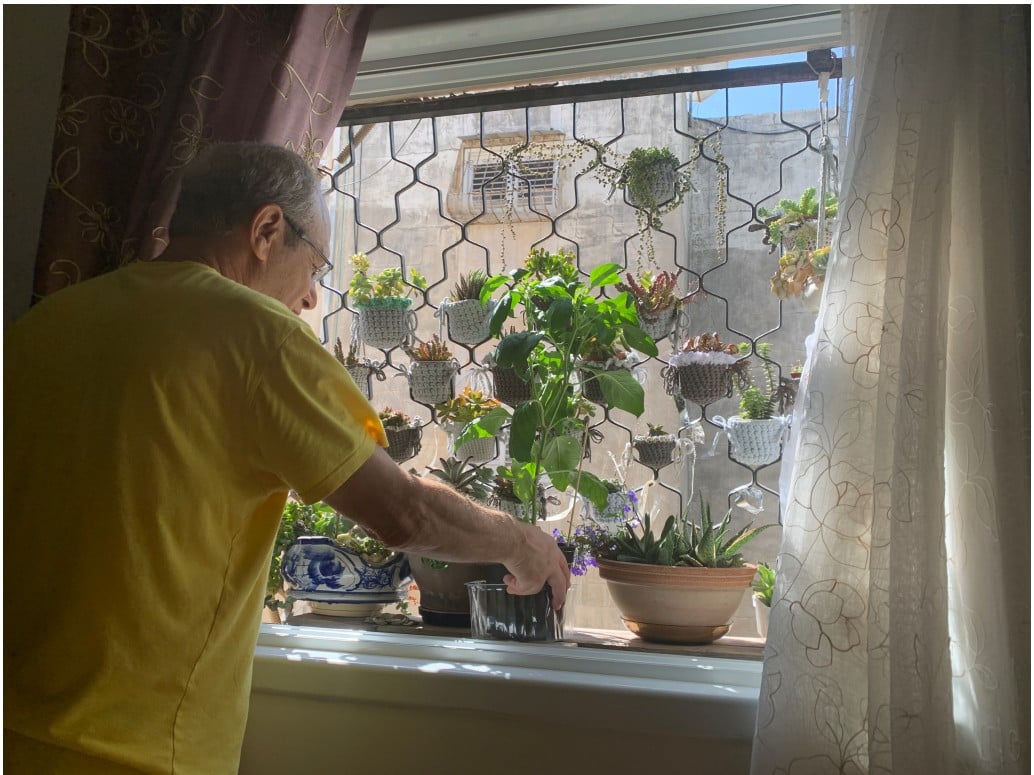
It was September 2023, about one and a half years after Russia’s War on Ukraine, when I touched down in Israel to begin my studies as an international student from America. Arriving at my new home, my grandparents’ apartment in Bat Yam—the epicenter of Russian speakers—the familiar chatter of Russian filled my ears. Bat Yam looked just as I remembered it from the summers of my childhood—Russian minimarts lining the streets, little kids playing and shouting in Russian, old Russian babushkas roaming the parks to feed stray cats.
At first glance, little seemed to have changed in Bat Yam since these distant childhood summers. Nothing around me indicated any sort of decline—Russian culture was thriving in Bat Yam, and it only seemed to be growing. It appeared to me that our community was maintaining strong connections to our Eastern European and Soviet heritage, even thirty years after our aliyah from the collapsed Soviet Union.
I only started noticing the tension within the Russian-speaking community when I began talking to my peers, other children of ‘90s olim. My parents, like many others, left post-Soviet countries in the 1990s for life in Israel, bringing Russian language and culture with them. I am a child of this wave of immigration to Israel, but I left Israel at a young age. As a result, I did not fully understand the developments in the Russian community until I began speaking to my Russian peers who grew up in Israel.
Every single one of them, from distant relatives to the children of my parents’ friends, reported being bullied for their Russian heritage, so much so that they pretended that they couldn’t speak Russian when they came to school. Many of them avoided speaking Russian entirely, which led to a general decline in their Russian skills. These kids of the ‘90s aliyah were pressured to disconnect from their heritage in order to fit in with the Israeli general population, a pressure many other nationalities faced in the aliyot of the past. So why did it seem to me that Russian culture was still thriving in Israel?
As I quickly learned once I began my studies at Tel Aviv University, the Russian-speaking community of Israel has experienced a demographic revival thanks to the recent arrival of refugees from both Ukraine and Russia. Many of the students enrolled in my English-speaking program were refugees of Russia’s war.
When I first met these students, I felt a shared connection with many of them over our Eastern European heritage. We spoke a common language and inherited a similar set of post-Soviet traditions. As time went on, however, I felt an increasing gap between the recent Russian-speaking immigrants and myself, and I understood that our lived experiences were very different.
It seemed to me as if the Russian-speakers of the ‘90s aliyah were confronted with “fresh blood” from the motherland, which only built on the internal tension within the community’s younger generation that I observed. I, and many other second-generation Russian-speakers, could not keep up with the level of Russian language of the new aliyah, and we struggled to relate to their cultural norms and popular references.
Additionally, many of the Russian-speakers who arrived expressed their particular national connections, whether that be with Ukraine or Russia, as an important part of their identity. I, and many other children of the ‘90s aliyah, often feel a broader connection to Russian-speaking culture in general, due to the Soviet upbringing of our parents and our lack of exposure to the national identities that were revived after the collapse of the Soviet Union.
This difference in identity manifested in different perspectives between the two groups, creating a subtle but present divide. With all of these differences, I felt, at times, more at home with Israelis, whose language I did not speak, than with the new immigrants from Russia and Ukraine.
From the outside, the Russian-speaking community in Israel seems to thrive. Russian businesses continue to spring up, new generations of children speak Russian, and Russian culture is very visible in its cultural centers. Issues from within our community, such as my generation’s alienation from Russian culture and the cultural gap between aliyot, threaten the vitality of the Russian community. Although Russian-speaking culture is experiencing a renaissance in Israel due to the influx of Russian-speaking immigrants, there is a widening gap between the new olim and the old that threatens the continuity of the community.
If the two groups—the Russian-speakers of the ‘90s and the newly-arrived Russian-speaking olim—do not intentionally choose to strengthen their connections and build a more uniform identity, the rift in the Russian-speaking community will continue to widen. The division between the aliyot and the stigma against Russian culture in Israeli society threatens the vitality of Russian culture in future generations. Only if connections are strengthened between the new and the old olim and an active effort to sustain a connection to our Eastern European heritage emerges from the earlier aliyah, will the Russian community have a shot to persevere against the challenges that it faces.