A Call to the Moral Debate the World Refuses to Face — A Black Jewish Voice Speaks for Israel and Global Jewry
Ron Dermer’s Departure A Turning Point — Call for a New Generation of Diplomats

By Shmuel Legesse
Upcoming author of Moral Diplomacy for a Broken World: Inspired by the Vision of Rabbi Jonathan Sacks
Ron Dermer’s departure from office marks the end of one of the most influential diplomatic eras in modern Israeli history. Those who follow Israel’s global standing understand that Dermer has always been more than a government official. He has been one of Israel’s sharpest strategic thinkers, a craftsman of alliances, a defender of national legitimacy, and a rare diplomat whose clarity never depended on applause. In a noisy political age, Dermer practiced something increasingly uncommon: moral clarity grounded in responsibility. His years in office should not be judged by the short memory of politics but by the long arc of history and by that measure, his record deserves nothing less than an A+.
Dermer was never simply a messenger; he was a designer. The Abraham Accords did not materialize spontaneously. They resulted from years of patient diplomacy, deep regional understanding, and the courage to challenge assumptions that had dominated Middle Eastern negotiations for generations. Working alongside Prime Minister Benjamin Netanyahu and President Donald Trump, Dermer helped create a new strategic landscape one based not on illusions, but on shared interests, economic vision, and recognition of Israel as a stable, permanent force in the region. Scholars will one day study the Accords as a rare convergence of moral conviction, strategic courage, and political opportunity.
During the Gaza war, Dermer again found himself at the center of global scrutiny. He understood that Israel was fighting not only a military battle but also a diplomatic one: a battle over legitimacy, narrative, and truth. He worked relentlessly to keep the world focused on the hostages, to articulate Israel’s right to self-defense, and to insist that democracies do not forfeit their moral standing simply because the battlefield is complex. In an era shaped by digital radicalization and misinformation, Dermer was a steady voice reminding the world that moral responsibility and national survival are not contradictions. Critics charge that Dermer aligned too closely with the American political right. But this criticism misunderstands both diplomacy and reality. The task of a diplomat is not to please every faction abroad; it is to protect the long-term future of the nation he represents. Dermer built alliances where they could be sustained with honesty and mutual respect. His relationship with President Trump was not a partisan indulgence; it was rooted in shared strategic clarity at a moment when Israel faced existential decisions. Few diplomats possessed his ability to speak frankly to power and earn its respect.
Now, as Dermer steps away from public office, Israel faces a crucial question: what kind of diplomatic leadership will define the next chapter? Israel cannot afford to return to the apologetic diplomacy of the past. The country needs representatives who understand both the vulnerability and the moral magnificence of the Jewish story diplomats who can speak in the languages of Jerusalem and New York, Addis Ababa and Abu Dhabi, London and Johannesburg. Israel needs envoys who can defend the state without flattening its diversity, who build alliances without bending truth, and who can tell the world: Israel will not be defined by its enemies’ fantasies but by its own moral reality.
This moment demands both praise and challenge. Leadership is measured not only by achievements but by successors. Dermer’s legacy should not end with him; it should expand through those he mentors. Israel’s diplomatic corps must begin to reflect the full story of the Jewish people. Too often, the world sees only one Israeli face Western, Ashkenazi, European. This image feeds the false and toxic claim that Israel is a colonial project. But Israel is not a European invention; it is a home for a global people. It is Ethiopian, Yemenite, Moroccan, Iraqi, Russian, American, French, and sabra. It is black, brown, and white. It is ancient and modern.
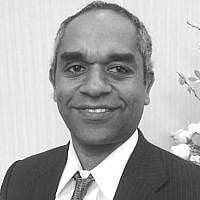
As a Black Ethiopian Israeli, educated in the West, trained in international leadership and diplomacy, and experienced in government service in New York, Africa, and Israel, I represent a dimension of Israel the world rarely sees. I am not alone. Thousands of Ethiopian Israelis serve in the IDF, in hospitals, in universities, and in government. We carry the same covenant and responsibility. But our visibility on the world stage remains disproportionately small. When diplomats reflect Israel’s diversity, the colonial accusation collapses under the weight of truth.
In this sense, Dermer’s departure is not only an ending but an opening. It is an opportunity to bring in diplomats who speak multiple continents’ languages, who understand the psychology of global movements, and who can stand before the UN, the EU, the African Union, or the Arab League with the authority of lived experience. I have long believed and still do that I can serve Israel in such roles, whether within the Abraham Accords framework, at the African Union, the United Nations, or as an ambassador in Europe or Africa. My journey from Ethiopia to the United States to Jerusalem has prepared me not only professionally but morally for such service.
Prime Minister Netanyahu also deserves recognition. For all the criticism he receives, some justified, much exaggerated history will likely regard him as one of Israel’s most consequential strategic leaders. No leader is perfect, but the portrayal of him as a criminal over personal gifts distorts reality. Compared to global standards, Netanyahu’s record is notably clean. In moments of crisis, he has demonstrated composure, determination, and unwavering commitment to Jewish security.
President Trump, too, left an undeniable mark. The Abraham Accords reshaped the region through a rare alignment of political will, strategic insight, and diplomatic skill.
As I finish my forthcoming book, Moral Diplomacy for a Broken World: Inspired by the Vision of Rabbi Jonathan Sacks, I return repeatedly to one truth: diplomacy is moral conversation. Rabbi Sacks taught that leadership widens the circle of human dignity. Israel’s next diplomatic chapter must widen that circle to include every segment of its own people. Ron Dermer served Israel with brilliance. His legacy is secure. Now Israel must raise a new generation of diplomats, diverse, principled, courageous ready to carry the story forward. I am ready to be one of them.
Related Topics
Related Posts