Rabbi, Special Operations Police Officer, Award Winning Filmmaker
Roseanne Barr Invites Her Fellow Jewish Brothers and Sisters to Set One More Place
From One Empty Chair to a Worldwide Movement: How Ten Days Ignites Jewish Unity
Ten days ago, this was simply an idea.
Not a political movement.
Not a government initiative.
Not a campaign backed by a major institution.
Set one more place at your Shabbat table.
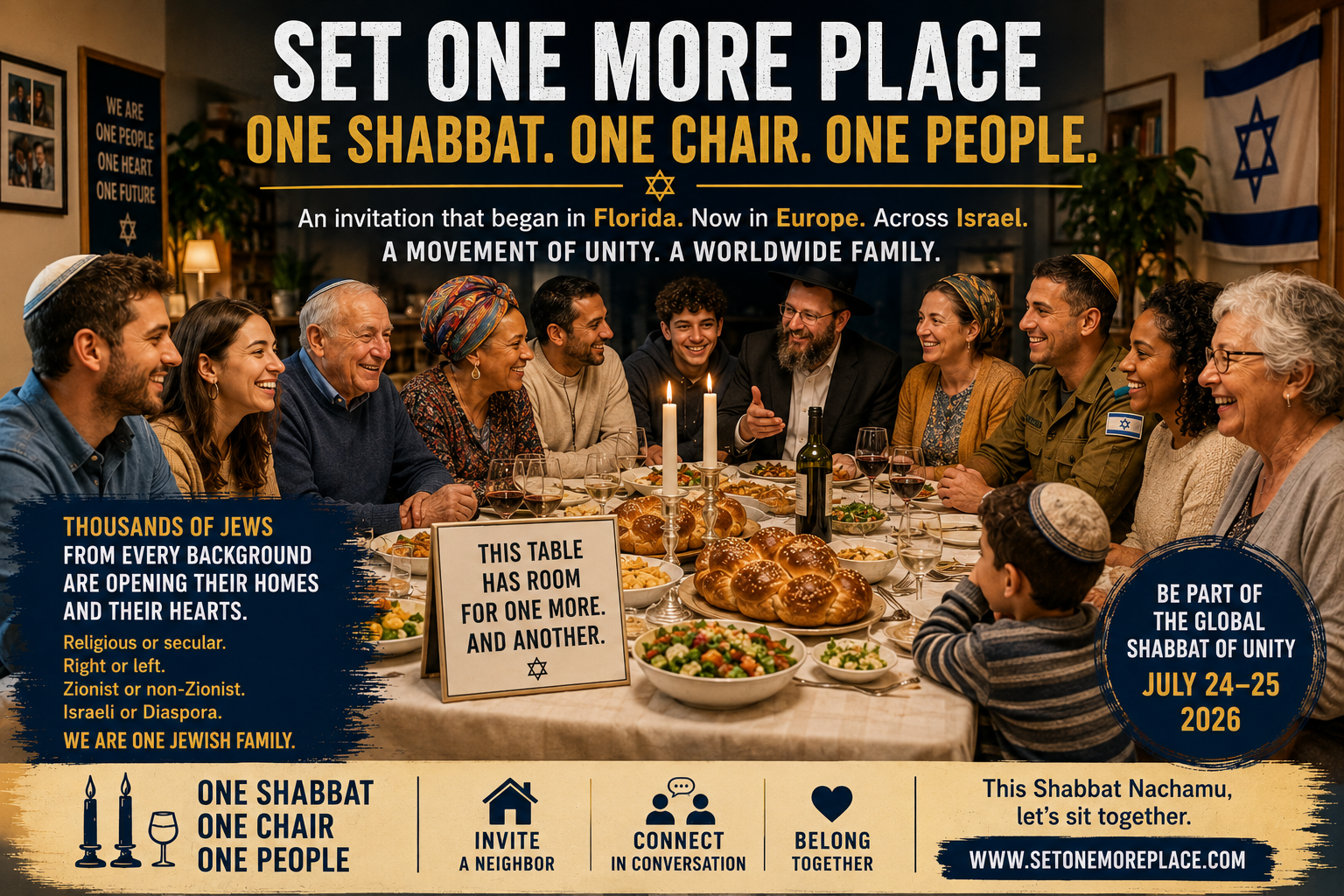
At first glance, it almost seemed too simple.
Could one extra chair really make a difference?
Could one invitation matter in a world so divided?
Could one Shabbat meal begin to heal wounds that have taken years to create?
Today, as we prepare to enter Shabbat Nachamu, we are witnessing something remarkable.
What began as a simple grassroots idea conceived by Mendy Fensterszaub has become an international movement that has spread from the United States to Europe and throughout Israel. Every day has brought another surprise. Another video. Another community. Another leader. Another family deciding that perhaps the first step toward healing is not another argument—but another guest.
The movement has grown not because anyone was forced to participate.
It has grown because people recognized something they had been longing for.
For years we have spoken about polarization. We have discussed division. We have analyzed the growing distance between religious and secular Jews, between Israelis and Diaspora Jews, between right and left, young and old.
Everyone agrees that unity is important.
Far fewer know how to achieve it.
Set One More Place offered something refreshingly practical.
Instead of asking people to change their political opinions, it asked them to open their front doors.
Instead of demanding agreement, it encouraged conversation.
Instead of another slogan, it offered another chair.
Over the past ten days, support has come from every corner of Jewish life.
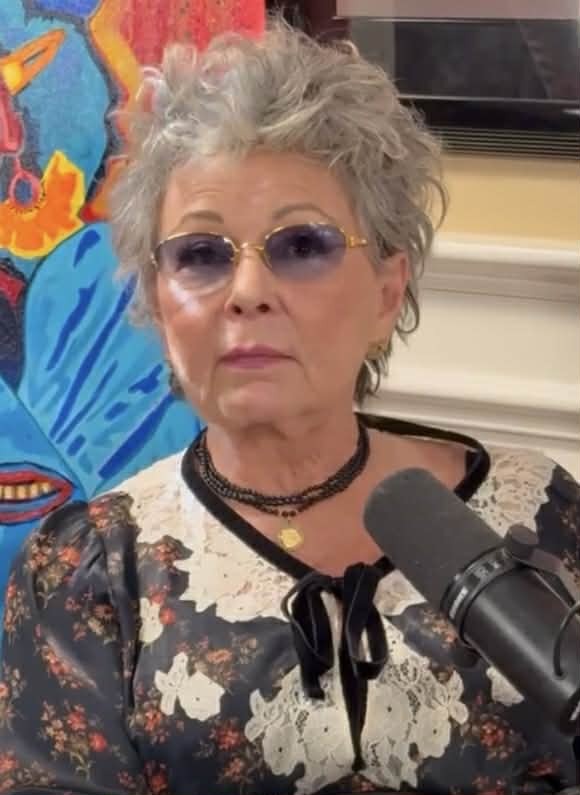
The initiative has also attracted the support of legendary actress and comedian Roseanne Barr, who recorded a special video calling on Jews around the world to open their homes, set one more place at the table, and strengthen Jewish unity this Shabbat Nachamu.
Israel’s legendary high-tech pioneer Dov Moran, inventor of the USB flash drive, recorded a message encouraging participation.
The Chief Rabbi of Zichron Yaakov, Rabbi Mordechai Bramsky, called upon families to strengthen Jewish unity through the timeless institution of the Shabbat table.
Rabbi Baruch Barnas, a highly respected Torah scholar and Rosh Kollel of Kollel Ner Mordechai in Zichron Yaakov, also joined the initiative, emphasizing that Jewish unity begins not only in our synagogues but around our Shabbat tables.
Dr. Racheli Baratz, a leading public voice on Jewish identity and Zionism, enthusiastically embraced the initiative and encouraged others to join.
Professor Gil Troy, one of the world’s foremost historians of Zionism and the Jewish people, added his voice to the growing chorus calling for Jewish unity.
Lone soldiers.
Community leaders.
Educators.
Entrepreneurs.
Students.
Rabbis.
Synagogue leaders.
Families across Israel, North America, and Europe.
People who rarely find themselves standing behind the same public message all found themselves saying the same thing:
That alone should give us pause.
These individuals come from different professions, different communities, and different perspectives.
Yet they all recognized that the Jewish people need more than another discussion about unity.
We need opportunities to experience it.
Much of what has happened over the past ten days has taken place quietly.
Behind the scenes, conversations have opened with respected leaders and influential public figures from across Israeli society and the Jewish world. New relationships have been formed. New partnerships have begun. Every day has brought fresh expressions of encouragement and support.
It has become increasingly clear that this initiative is speaking to something much deeper than a single Shabbat.
It is speaking to a longing.
Since October 7, the Jewish people have endured unimaginable challenges.
Families have buried loved ones.
Soldiers have risked everything in defense of our nation.
Communities have carried trauma that words cannot fully describe.
At the same time, Jews around the world have witnessed an alarming rise in antisemitism, reminding us once again that our destiny remains deeply connected.
Ironically, at the very moment when our enemies have tried to divide and isolate us, countless Jews have begun asking a different question:
How do we become closer to one another?
Perhaps the answer does not begin in government offices.
Perhaps it does not begin on television panels or social media.
Perhaps it begins where Judaism has always been strongest.
Around the Shabbat table.
For thousands of years, Jewish continuity has been sustained not only by synagogues and schools, but by families gathering every Friday night.
Children learn traditions around the table.
Guests become friends.
Strangers become neighbors.
Stories are shared.
Songs are sung.
Blessings are recited.
Relationships are built.
It is remarkably difficult to hate someone after sharing challah together.
That is why this initiative has resonated with so many people.
It does not ask us to become the same.
Whether one identifies as religious or secular, right or left, Zionist or non-Zionist, Israeli or Diaspora, the invitation remains the same: set one more place at the table.
It asks us to remember that we belong to the same family.
As we move from Tisha B’Av into Shabbat Nachamu, the symbolism could not be more powerful.
Immediately after mourning the destruction of the Holy Temples, we hear the prophet Isaiah proclaim:
“Comfort, comfort My people.”
Comfort is not merely something Heaven sends.
It is something we create for one another.
Sometimes comfort begins with listening.
Sometimes with forgiveness.
Sometimes with compassion.
And sometimes it begins with setting one more place at the table.
The movement does not end this Shabbat.
In many ways, it is only beginning.
If you have not yet joined us, there is still time.
Invite a neighbor.
Invite someone from a different background.
Invite a lone soldier.
Invite a new immigrant.
Invite someone who may otherwise spend Shabbat alone.
Then take one more step.
Record a short video inviting others to participate.
Share it with your family.
Your synagogue.
Your school.
Your community.
Your social media.
Every invitation creates another invitation.
Every video inspires another family.
Every table becomes another opportunity to strengthen the Jewish people.
To learn more or to become part of this growing movement, visit:
History often remembers wars, elections, and famous speeches.
But Jewish history has also been written around family tables.
Around candles.
Around challah.
Around conversations that transformed strangers into friends and friends into family.
Ten days ago, there was only one empty chair.
Today, across Israel and around the world, thousands of Jewish families are preparing to fill it.
Perhaps that is how great movements always begin.
Not with headlines.
Not with institutions.
Not with politics.
But with ordinary people deciding to do one extraordinary act of kindness.
This Shabbat Nachamu, may we remember that before we are left or right, religious or secular, Israeli or Diaspora, Zionist or non-Zionist, we are one people.
And perhaps the future of the Jewish people really can begin with the chair that is still empty.
One Chair.
One People.
Click here to hear the official anthems of the movement in both English and Hebrew.
–
Note: Hollywood legend Roseanne Barr also recorded a video endorsing the initiative, thanks in part to the behind-the-scenes efforts of her son, Jake Pentland, whose assistance helped make her participation possible.
Related Topics
Related Posts