Samih Maurice: The Serpico of Our Era
For quite some time, one of my closest friends in Israel has been posting tweets on his X account detailing the systematic and ongoing injustices suffered by a Canadian man of Egyptian origin, Samih Maurice Bowles. My friend’s continuous posts, combined with my professional curiosity as a writer, made it impossible for me to remain a silent observer. I had to research, investigate, and trace the chapters of this dramatic story to its conclusion.
Over several days, I read extensively about Samih’s ordeal, which immediately reminded me of one of the most iconic films ever made, Serpico (1973). The film, which earned two Academy Award nominations (Best Actor for Al Pacino and Best Adapted Screenplay) and won Pacino a Golden Globe, was later ranked by the American Film Institute among the 100 greatest films in American cinema history.
The film tells the true story of New York police officer Frank Serpico, who served between the late 1960s and early 1970s. From his very first day on the job, Serpico discovered that corruption had infiltrated every level of the police force: bribes were paid to overlook crimes, cash envelopes were distributed among officers, evidence was manipulated, and false testimonies were fabricated to justify police misconduct.
However, Serpico refused to become part of this corrupt machinery. He rejected bribes and would not remain silent in the face of perjury. He quickly became an outcast within the department, facing bullying, threats, and harassment from both colleagues and superiors. When he attempted to file official complaints about corruption, the administration conspired to silence him and drive him out of sight.
The events of that timeless film forever etched in the memory of cinema lovers are repeating today in a different form, no less tragic and perhaps even harsher.
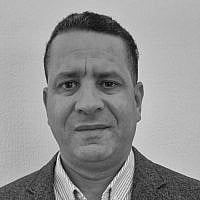
Samih Maurice Bowles was born in Egypt in 1974. He lived, studied, and worked there until 1995, when he joined a Kuwaiti company and was later transferred to its main branch in Kuwait. In 2006, he joined the Al-Mulla Group for car trading, where he encountered widespread corruption both within the corporate environment and in dealings with government departments.
Events escalated when, in October 2007, a customer purchased a car from Al-Mulla and, in August 2008, this buyer requested a copy of the ownership receipt to export the car, but the company refused to provide any documents and even denied, according to Samih, that the sale had taken place. The company asked Samih to give false testimony denying that he had witnessed the transaction, threatened him with dismissal, if he refused and offered him incentives and bribes in exchange for agreeing, including a car, promotions, and financial perks.
When he steadfastly refused, Samih allegedly discovered internal records showing the same car registered under another person’s name at discounted prices, along with other vehicles fraudulently registered, and indications of bribes paid to a senior officer to facilitate procedures. The company then fabricated several charges against Samih and informed him that the matter could be “resolved” if he cooperated, yet he remained firm.
That marked the beginning of a long campaign of revenge: repeated arrests, detentions, and torture including brutal methods such as electric shocks, a technique commonly used in repressive states along with constant threats that turned his life into hell for him and his family. His wife and children endured harrowing episodes worthy of documentation. On one occasion, their home was raided, his young daughter was severely beaten, and his wife was assaulted. The perverse reality is that Samih was targeted by law-enforcement agencies for persecution because he had refused to commit perjury to cover up corruption.
In 2017, he and his family were finally able to flee Kuwait after being granted asylum by Canada. The details of their last-minute escape are worthy of any Hollywood script. After years of confrontation, he sought legal counsel, worked with legal organizations, and filed complaints with the United Nations Working Group on Arbitrary Detention in Geneva, among other documented legal measures as part of his case file.
In November 2022, the UN Working Group on Arbitrary Detention issued its report on the case of Samih, finding that he had been arrested eleven times between 2010 and 2017 without clear judicial basis, subjected to solitary confinement, physical and psychological abuse, and deprived of the right to communicate with a lawyer or appear promptly before a competent judge, in clear violation not only of the International Covenant on Civil and Political Rights but even of Kuwaiti law itself.
The UN team concluded that his detention was arbitrary and contrary to international law, and that Kuwaiti authorities had violated their obligations by denying him a fair trial and legal protection. His case was classified under Categories I and III of arbitrary detention.
The report called on the Kuwaiti government to fully compensate Samih for the damages suffered, open an independent investigation into the allegations of torture, and take effective measures to prevent recurrence in compliance with international human-rights law.
As of the writing of this article, Kuwait has not implemented any of the recommendations in the UN report. Moreover, those who tried to assist Samih faced retaliation including a former member of the Kuwaiti Parliament, an independent human-rights advocate, and a Kuwaiti representative in a UN agency. Meanwhile, a long list of employees, officers, investigators, prosecutors, and senior officials who deliberately harmed him continue to enjoy promotions and career advancement.
The essence of this real-life tragedy can be captured in one incident, when a government employee colluded against Samih and attempted to close his bank account, telling him: “We want to cleanse the bank of people like you, because you are Christian.”
To broaden the perspective, the ordeal of Samih Maurice Bowles must be seen within the wider context of a severe crackdown on human rights in Kuwait. The regime of Emir Mishal Al-Sabah who became head of state in November 2023 following the death of his brother, suspended the constitution, dissolved parliament, and launched a massive campaign of political oppression. Kuwait now ranks among the world’s highest in cases of citizenship revocation, which is used as a weapon of repression, with upwards of 55,000 people rendered stateless, from a total population of just 1.6 million.
Freedom of speech has been all but obliterated, with X and other online platforms serving as some of the few remaining spaces for expression even as the regime zealously patrols these platforms, arresting and imprisoning those it identifies as critics of government policies.
Within this framework, it becomes evident that what Samih Maurice Bowles endured is not an isolated incident, but part of a broader system of violations against law and basic rights, as demonstrated by the regime’s determination to ignore the UN report in his case. This underscores the urgent need for a comprehensive review of mechanisms protecting human rights and freedoms in Kuwait.
The painful reality remains that Samih has yet to receive full justice, despite having officially documented his suffering before the UN Working Group on Arbitrary Detention. Just as Serpico (1973) exposed police corruption and the courage of one man standing against a rotten system more than fifty years ago, Samih today lives a modern echo of that same struggle in a different setting, but with the same unyielding spirit. His story is not merely a personal tragedy; it is a mirror reflecting systemic corruption and abuse, calling upon international law and the global conscience to act to ensure justice not only for Samih, but for all who dare to stand against tyranny and oppression