SA’s Minister Lamola Silences Accountability
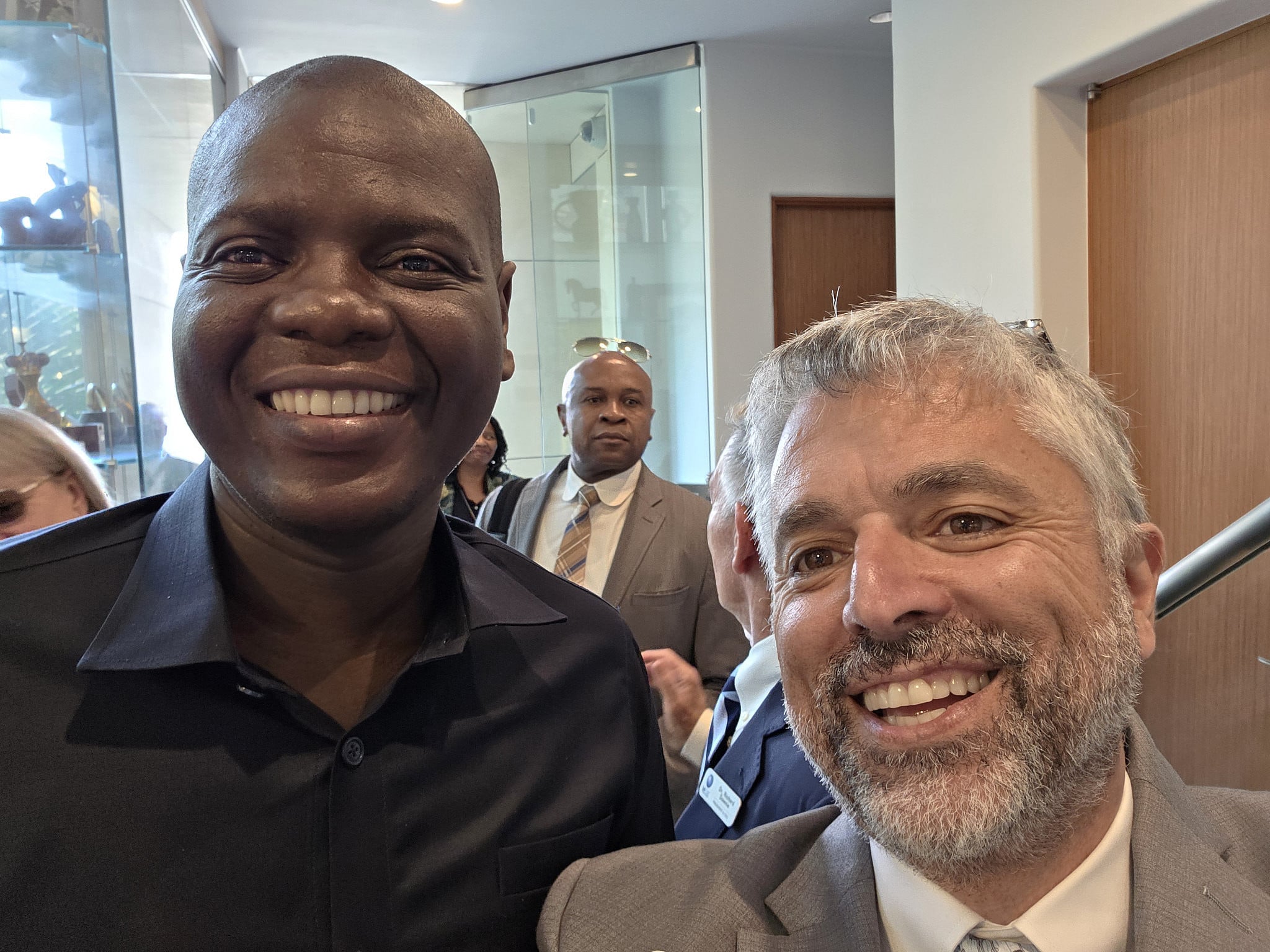
As a South African who fled apartheid’s oppression in 1986, I fought for a democratic nation rooted in justice, equality, and accountability. Yet, under the African National Congress (ANC), led by figures like Minister of International Relations and Cooperation Ronald Lamola, that dream has evaporated. On September 17, 2025, I confronted Lamola with critical questions about the ANC’s domestic failures and questionable foreign policy, particularly South Africa’s ICJ case against Israel. His refusal to engage—silencing me mid-sentence—reveals a troubling rejection of democratic scrutiny, undermining South Africa’s moral and global standing.
South Africa faces dire challenges: 63% of its people live in poverty, 35% are unemployed, and 60% of youth lack jobs. Infrastructure crumbles, and corruption festers, as evidenced by the Zondo Commission’s 2022 findings on state capture, which implicated ANC loyalists in looting public funds. Yet, instead of addressing these crises, the ANC prioritizes international posturing, notably its December 2023 ICJ case accusing Israel of genocide. This move, costing over R130 million (potentially rising to R400 million, per 2024 budget estimates), diverts resources from starving citizens while straining ties with key allies like the United States.
During my encounter with Lamola, I attempted to pose questions probing these priorities, including the ANC’s Black Economic Empowerment (BEE) policies, which have enriched a politically connected elite while unemployment soared from 22.6% in 2003 to 35% in 2025. I asked why South Africa pursues costly foreign ventures, like the ICJ case, when domestic needs are unmet. Lamola’s response was to cut me off, a move that stifles the open discourse democracy demands. His refusal to answer echoes the ANC’s broader evasion of accountability, betraying the principles I fought for decades ago.
The ICJ case exemplifies this betrayal. Lamola claimed the 1948 Genocide Convention mandates states to file such lawsuits, but Article I requires only prevention and punishment, not court filings, as any legal scholar can confirm. He cited a UN report by Navi Pillay to justify the case, yet her documented anti-Israel bias, noted in 2023 UN Watch critiques, undermines its credibility. The ICJ has not ruled on genocide, only finding South Africa’s claim “plausible” for provisional measures, as clarified by former ICJ President Joan Donoghue in April 2024. Lamola’s misrepresentation of these facts misleads global audiences and exploits South Africa’s apartheid history to deflect from domestic failures.
This deflection has consequences. The ICJ case has provoked U.S. backlash, including H.R. 4051 and Senate Bill S. 2752 (introduced September 2025), threatening sanctions and aid cuts, such as $500 million slashed via a February 2025 executive order. These losses exacerbate South Africa’s economic woes, with 2.3 million households lacking proper housing and healthcare collapsing. Lamola’s silence on these costs and his refusal to disclose the case’s funding sources—despite 78% of ANC’s 2023/24 private donations being undisclosed, per Electoral Commission records—fuels suspicions of illicit foreign influence.
South Africa’s democratic promise hinges on leaders facing tough questions. By silencing critics and prioritizing global stances over starving citizens, Lamola and the ANC erode public trust and international credibility. To restore faith, Lamola must engage openly, provide transparent financial records for the ICJ case, and prioritize domestic needs over foreign agendas. Until then, his actions betray the democratic ideals South Africans fought for.
For a full list of questions posed to Lamola and further evidence, see my unredacted Substack post: Betrayal of Democracy: Lamola Silences Accountability.