
Saudi Arabia: A New Regional Balance
For a few years, Saudi Arabia has become established as the most important emerging power in the Middle East. This rise in power, announced but often underestimated, is accelerating today at a pace hardly matched in the region. It is settling into a geopolitical recomposition where Washington returns to the center of the game, where Beijing extends its economic influence, and where neighboring countries—Egypt, Syria, and Iraq—are losing their influence. Riyadh has become the capital towards which governments, investors, and strategists turn. Contrary to a widespread idea, this rise could constitute an asset, rather than a threat, for Israel.
First of all, because on the scale of the Arab world, no state today has as many assets as Saudi Arabia. The kingdom has political stability in a region marked by chronic instability. It benefits from an energy source that guarantees it levers in global markets. And above all, under the leadership of Mohammed bin Salman (MBS), he has initiated a significant economic transformation—Vision 2030—which redesigns its productive apparatus and its relationship to the world. This project, often described as a mere showcase, is a coherent power strategy: economic diversification and massive investments in technology and infrastructure.
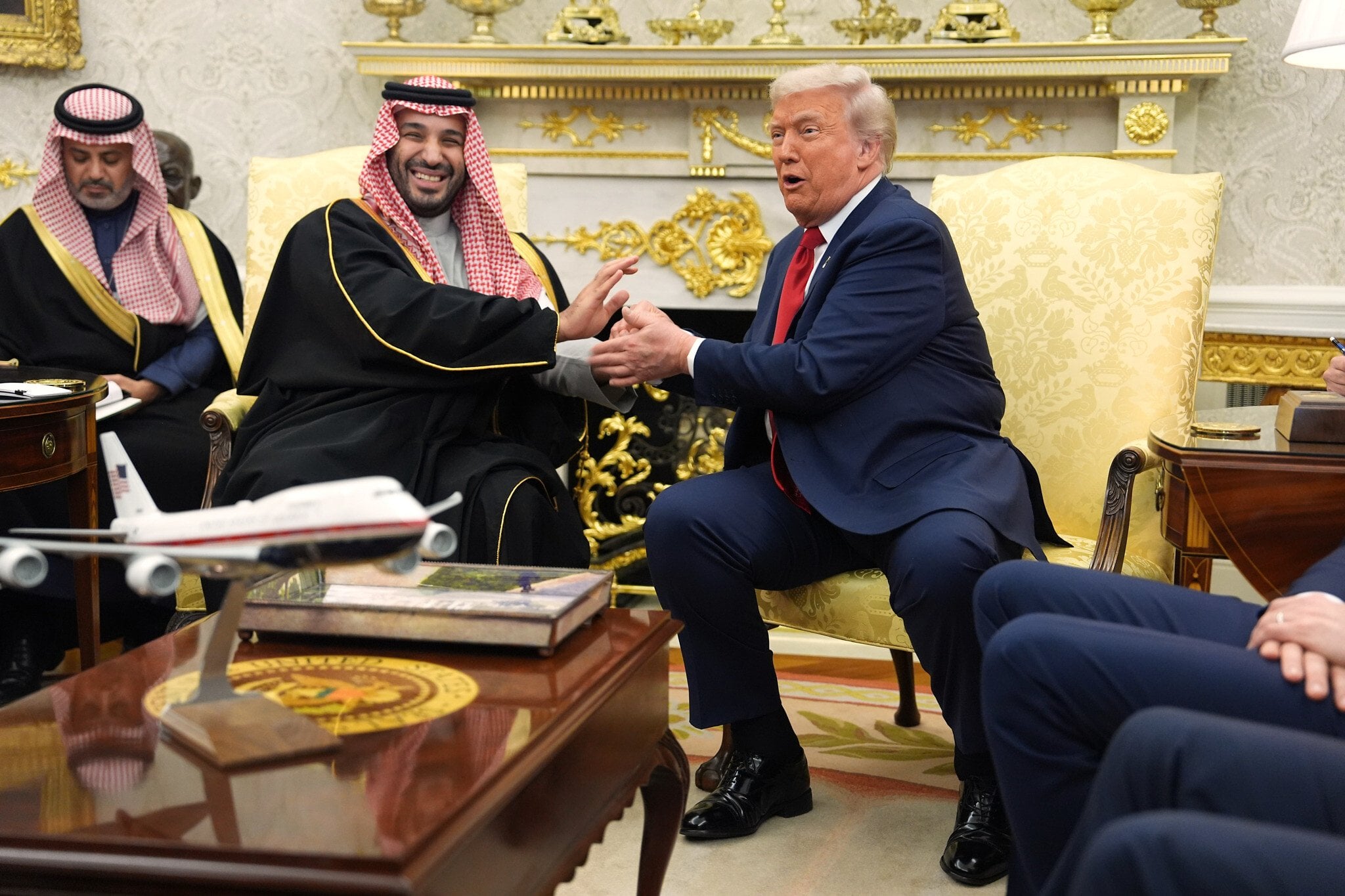
This mutation finds its continuation in an ambitious diplomacy. Saudi Arabia today has a rare ability: to converse simultaneously with Washington, Beijing, and Moscow. With the United States, the relationship had been weakened under the Biden presidency, but the return of Donald Trump dramatically changes the situation. Trump and MBS maintain a direct, strategic relationship based as much on common interest as on the shared vision of a Middle East.
With China, Riyadh is developing significant economic cooperation: Beijing is the first oil client of the kingdom and is becoming an essential partner. As for Russia, it remains a key player in OPEC+, which allows Riyadh and Moscow to jointly steer energy prices. This diplomacy gives Saudi Arabia flexibility and autonomy unmatched in the Arab world.
This increasingly predominant role raises the question of its relations with Israel. Officially, the two countries have no agreement (of peace). But unofficially, the convergences have never been so strong. The perception of Iran as an existential threat is the first point of rapprochement. The Iranian regime, engaged in a nuclear program and in a regional policy based on its proxies (pro-Iranian militias), is identified as the factor of destabilization of the Middle East both in Jerusalem and in Riyadh. On this subject, the Israeli and Saudi interests overlap.
The second convergence is geopolitical: the challenge for the United States to build a strategic axis capable of containing Iranian and Chinese influence. Washington, for several years, has been influencing towards a normalization that would encompass the USA and Saudi Arabia and a framework for technological cooperation with Israel.
Finally, the third convergence is pragmatic. MBS is not a prisoner of an anti-Israel ideology. He reasons like a strategist: what serves the modernization of the kingdom, what strengthens its security, what allows it to consolidate its partnership with Washington is conceivable. Tacit cooperation between the two countries in intelligence or regional threat management is no longer a secret. Normalization is not ‘distant’: its timing depends on the context in Gaza and internal balances.
Can we conclude that the new ‘importance’ of Saudi Arabia is de facto an advantage for Israel? Not totally. There are limits. Public opinion in Riyadh remains sensitive to the Palestinian cause, which imposes political caution on the crown prince.
At the level of major regional trends, the idea that Saudi Arabia could become a rival to Israel is a misunderstanding. Saudi Arabia is not building an anti-Israel hegemony; it is building a power that is defined by stability, economic diversification, and the fight against regional threats. In this scheme, Israel is not an obstacle but a discreet, strategic, and perhaps soon official partner.
In the meantime, the rise of Saudi Arabia is emerging as one of the major geopolitical developments in the contemporary Middle East—and probably one of the most promising levers for a more stable regional order.