
Saudi Security and Abraham Accords back on the table
The intensifying Houthi attacks on Saudi Arabia have thrust regional security back into the heart of Middle Eastern diplomacy. However, as concerns about missile and drone strikes grow, a new opportunity is emerging: this crisis could lead to renewed regional cooperation, strengthen strategic ties, and reignite efforts to integrate Saudi Arabia into the Abraham Accords. If we approach this situation with wisdom and diplomatic determination, it could transform into a stepping stone toward a more stable, interconnected, and prosperous Middle East.
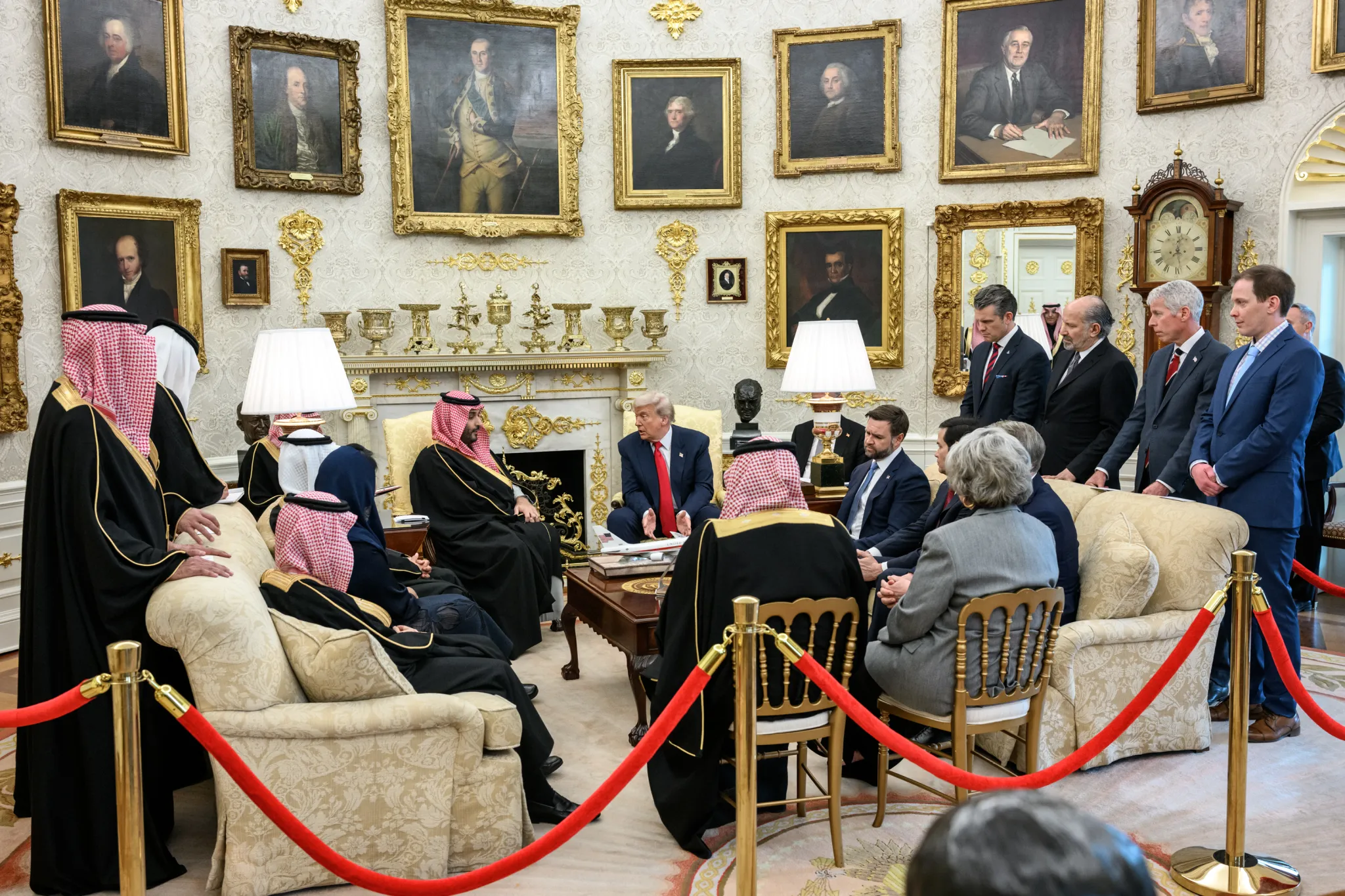
US President Donald Trump has expressed optimism about the prospects for Saudi-Israeli normalisation, saying that the possibility of Riyadh joining the Abraham Accords is once again on the table. He suggested that Saudi Arabia was pleased with American and Israeli support against the Iran-backed Houthi rebels in Yemen. His remarks point towards a significant diplomatic opportunity: security cooperation could help build the confidence needed for a broader regional understanding.
???????????????????????? TRUMP: ISRAEL HELPING SAUDI ARABIA FIGHT HOUTHIS — ABRAHAM ACCORDS BACK ON THE TABLE
Trump: “Israel has been very helpful to Saudi Arabia.”
Amid deadly Houthi attacks, Trump backs Israeli assistance to Riyadh.
On Saudi-Israel normalization: “Yeah, I think so, maybe more… pic.twitter.com/FWYvVBdX6k
— Mossad Commentary (@MOSSADil) October 16, 2026
The Abraham Accords, launched during Trump’s first administration in 2020, transformed the diplomatic landscape by establishing formal relations between Israel and several Arab countries, including the United Arab Emirates and Bahrain. The agreements demonstrated that longstanding regional differences need not permanently prevent cooperation in trade, technology, investment, tourism and security. Their wider significance lies in the possibility of replacing entrenched hostility with practical partnerships that deliver tangible benefits to ordinary people.
Saudi Arabia’s potential participation would give this process a new dimension. As one of the Arab world’s most influential countries and the custodian of Islam’s two holiest mosques, the Kingdom carries considerable diplomatic, religious and economic weight. An agreement between Riyadh and Israel could open new avenues for regional investment, technological cooperation, energy development and connectivity while encouraging other countries to reconsider the possibilities of constructive engagement.
The immediate challenge, however, is security. Houthi missile and drone attacks have threatened Saudi territory, critical infrastructure and civilian safety. Such incidents are not simply a bilateral matter between Saudi Arabia and the Houthis; they have implications for the stability of the Gulf, international shipping and the wider global economy.
President Donald Trump has indicated that Israel is helping Saudi Arabia counter Houthi attacks, describing Israeli support as valuable to the Kingdom’s security. He also suggested that Saudi Arabia’s participation in the Abraham Accords could be closer than ever. Although the nature of Israel’s assistance remains undisclosed, the emerging security cooperation could create a diplomatic opening for Israeli-Saudi normalisation, provided Riyadh’s concerns over Palestinian statehood are meaningfully addressed.
???? TRUMP CONFIRMS ISRAEL IS HELPING SAUDI ARABIA FIGHT THE HOUTHIS
President Trump revealed that Israel is assisting Saudi Arabia against Iranian-backed Houthi attacks.
Trump: “Yes, I think so. I think they will. Israel has been very helpful to Saudi Arabia.”
Asked whether… https://t.co/ufIRb4FoOz pic.twitter.com/EdTT9ovfwE
— Mossad Commentary (@MOSSADil) October 17, 2026
For Saudi Arabia, protecting its sovereignty and population remains paramount. Its ability to pursue ambitious economic reforms under Vision 2030 depends partly on a stable regional environment that attracts investors, supports tourism and allows major infrastructure projects to proceed with confidence. Persistent security threats undermine these objectives and raise the costs of economic development.
Egypt’s response reflects the wider importance of Saudi security to the Arab world. President Abdel Fattah al-Sisi has expressed his country’s readiness to take necessary measures to support and defend the Kingdom if requested, emphasising that such steps would be defensive in nature and coordinated with Saudi leadership.
Egyptian President says he will take any measures necessary to protect and defend Saudi Arabia against Houthi attacks. ???????? ????????
Houthi escalation has crossed from a Saudi problem into a regional emergency that neighboring states now feel compelled to prepare for militarily. Egypt…
— Donald J Trump Posts TruthSocial (@TruthTrumpPost) October 17, 2026
Cairo’s position rests on longstanding political, economic and strategic ties with Riyadh. Saudi Arabia and other Gulf countries have provided substantial financial and economic assistance to Egypt over the years, while the two countries share an interest in protecting Red Sea trade routes and preventing regional instability from spreading. Egypt’s strategic location, particularly its control of the Suez Canal, gives it an important stake in maintaining maritime security.
Pakistan has also reaffirmed its support for Saudi Arabia. Prime Minister Shehbaz Sharif, during his meeting with Saudi Arabia’s newly appointed ambassador, Dr Rajeh Tami Albugamy, reiterated Islamabad’s commitment to the Kingdom’s sovereignty, security and territorial integrity. He condemned the escalation in Houthi attacks, including incidents that have caused civilian casualties and affected Pakistani nationals.
The prime minister also highlighted the importance of the Strategic Mutual Defence Agreement and the Makkah Joint Defence Alliance, describing them as significant milestones in bilateral relations. These arrangements reflect the depth of Pakistan-Saudi cooperation and the shared determination to strengthen regional stability.
The newly arrived Ambassador of the Kingdom of Saudi Arabia, H.E. Dr. Rajeh Tami Albugamy, called on Prime Minister Muhammad Shehbaz Sharif.
Welcoming the Ambassador to Pakistan, the Prime Minister congratulated him on assuming his new responsibilities and wished him success in… pic.twitter.com/WZe2TXUuji
— Prime Minister's Office (@PakPMO) October 16, 2026
For Islamabad, standing with Riyadh is consistent with longstanding diplomatic ties, close people-to-people relations and substantial economic interests. Millions of Pakistanis live and work in Saudi Arabia, contributing to the Kingdom’s development while supporting families back home through remittances. A peaceful and economically vibrant Gulf is therefore directly relevant to Pakistan’s own prosperity.
At the same time, Pakistan has consistently favoured a political solution to the conflict in Yemen. Supporting Saudi Arabia’s security does not require abandoning diplomacy. On the contrary, credible defence cooperation and sustained political engagement can complement one another, helping deter further attacks while creating space for negotiations.
This broader approach also offers a constructive context for the Abraham Accords. The objective should not be to turn regional security partnerships into instruments of confrontation, but to use them as foundations for a more cooperative Middle East. As countries recognise their shared interests in protecting trade routes, developing infrastructure and attracting investment, they have stronger incentives to resolve disputes through dialogue rather than prolonged conflict.
Trump’s renewed interest in Saudi-Israeli normalisation could help bring these interests together. Israel’s technological capabilities, Saudi Arabia’s economic ambitions and investment capacity, and the strategic weight of other regional partners could support cooperation in fields ranging from water management and agriculture to artificial intelligence, renewable energy, healthcare and advanced manufacturing.
Such cooperation would be especially valuable for a region seeking to diversify its economies and create opportunities for a young population. The potential benefits extend well beyond diplomatic ceremonies. Stronger commercial ties can generate employment, encourage innovation, improve infrastructure and create constituencies with a practical interest in preserving peace.
The current crisis also presents an opportunity for regional powers to demonstrate that collective security and economic cooperation can reinforce one another. Egypt can contribute to maritime stability, Pakistan can support diplomatic engagement and defence cooperation, and Gulf states can use their economic influence to promote a regional environment in which development takes precedence over confrontation.
For Pakistan, an expanded Abraham Accords framework could have implications beyond the immediate question of normalisation. Greater regional stability would help protect energy supplies, strengthen trade links and create new opportunities for investment and economic cooperation. Islamabad should therefore encourage diplomatic initiatives that promote peace, respect national sovereignty and keep the channels of communication open among regional partners.
The road ahead will require patience. Saudi Arabia’s security concerns must be addressed, the conflict in Yemen needs a sustainable political settlement, and the Palestinian question demands serious attention. None of these challenges can be resolved overnight. Yet the history of the Abraham Accords demonstrates that diplomatic breakthroughs once considered unlikely can become possible when political leadership is matched by a willingness to pursue practical solutions.
Saudi security and the revival of the Abraham Accords need not be competing objectives; they can become complementary pillars of a more peaceful Middle East. If Trump can translate his renewed optimism into sustained diplomacy, and if Riyadh and its regional partners seize the opportunity, the present crisis could mark the beginning of a more ambitious chapter in regional relations.
The ultimate promise of the Abraham Accords lies in their potential to make peace economically valuable, diplomatically sustainable and meaningful to ordinary citizens. A Middle East in which Saudi Arabia feels secure, Israel builds constructive relations with its neighbours, Palestinians see a credible path towards statehood, and regional economies grow through cooperation would be a far stronger foundation for the future than one defined by recurring conflict.
For Pakistan, Egypt, Saudi Arabia, the United States and their partners, this is an opportunity worth pursuing. The challenge is to turn a moment of insecurity into a catalyst for dialogue, reconciliation and shared prosperity. With determined leadership and an inclusive diplomatic vision, the revival of the Abraham Accords could become more than a normalisation initiative: it could help lay the groundwork for a new regional order built on security, economic opportunity and lasting peace.