
Saudi’s attack on Israel at Doha Forum 2025
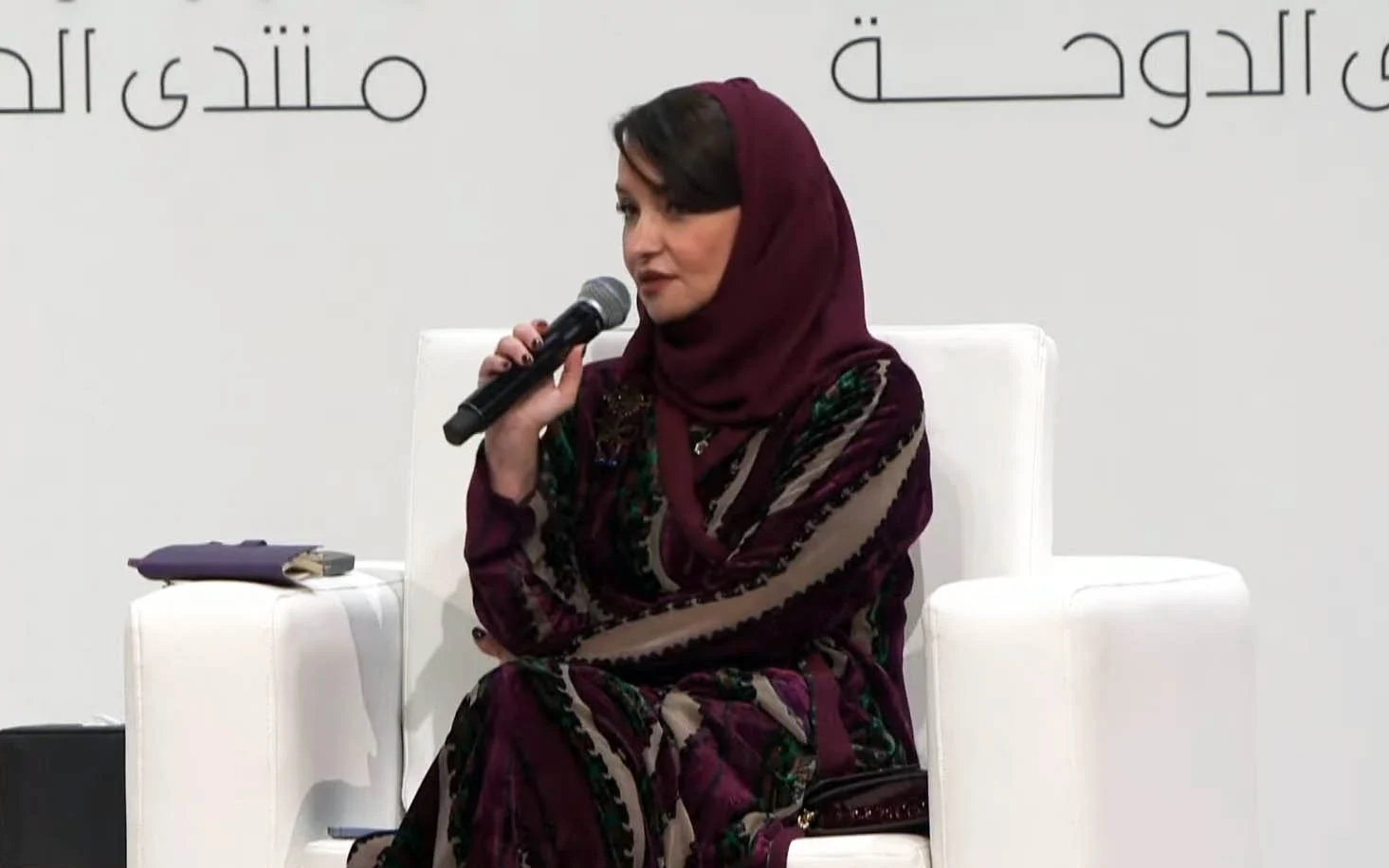
At the Doha Forum 2025, held on December 7-8 in Qatar, Saudi Foreign Ministry official Manal Radwan unleashed sharp criticism of Israel. She argued that Israel’s government, not the Palestinian Authority, needs urgent reform to enable peace. Radwan praised the Authority’s reforms over three decades, backed by daily Saudi support under President Mahmoud Abbas. Yet she condemned Israel’s administration for rejecting the two-state solution and inciting against Palestinians, Arabs, and Muslims—making it no partner for peace or even a lasting ceasefire. “We don’t see that we have a partner for peace. Not even a partner for a sustainable ceasefire,” she declared, stressing that Palestinian rights are key to regional security, Israel’s included. Her words echoed Saudi calls to preserve Trump’s 20-point plan and Gaza ceasefire terms, insisting military might alone won’t bring stability. Such rhetoric marks a surge in tension, inviting deeper scrutiny of Saudi motives.
Dr Manal Radwan of Saudi MOFA on the need to reform the Israeli government. pic.twitter.com/TXFQwMtPOf
— Ali Shihabi علي الشهابي (@aliShihabi) December 7, 2025
Echoes from Influential Voices
Radwan’s views resonate with those of Prince Turki al-Faisal, Saudi Arabia’s former intelligence chief. On December 5, 2025, he labeled Israel the region’s chief “troublemaker,” a bigger destabilizer than Iran thanks to its actions in Gaza, the West Bank, Syria, and Lebanon after the October 7, 2023, Hamas attack. “In my view, it is definitely Israel that is the troublemaker and should be reined in by the United States,” he said, spotlighting Israel’s aggression. This uptick in critique, against the backdrop of halted Abraham Accords expansion, probes Saudi Arabia’s shifting position. Though rooted in Palestinian solidarity, these claims invite critical review.
Rebutting the Core Saudi Claims
While these statements reflect Saudi Arabia’s longstanding support for Palestinian rights, they warrant scrutiny. Radwan’s claim that the PA has been reforming for 30 years overlooks persistent core issues plaguing Palestinian governance, such as the controversial “pay-for-slay” system, which provides lifelong stipends to families of terrorists who attack Israelis, deep-seated corruption, and ongoing incitement against Israel in education, media, and international forums, including lawfare tactics at bodies like the International Court of Justice. These problems have been documented in reports from organizations like the US State Department and Israeli analyses, undermining the narrative of the PA as a ready partner for peace. Similarly, branding Israel as unfit for even a sustainable ceasefire ignores tangible achievements: Israel has maintained a fragile ceasefire with Hezbollah in Lebanon since late 2024, upheld truces in Gaza amid violations by militants, and forged the Abraham Accords with the UAE, Bahrain, Morocco, and Sudan—demonstrating its capacity for normalized relations when mutual interests align. This rebuttal highlights selective framing in the rhetoric, but to fully grasp the shift, we must explore the underlying strategic dynamics.
The Collapse of Key Normalization Drivers
This heightened criticism signals more than ideological posturing; it reveals a strategic pivot by Saudi Arabia, driven primarily by the collapse of key drivers that once propelled normalization talks with Israel. Prior to October 7, 2023, momentum for a Saudi-Israeli deal appeared imminent, fueled by two main factors: the perceived existential threat from Iran and its proxies, and US defense agreements—such as arms sales including F-35 jets—explicitly coupled to normalization under previous frameworks. Riyadh’s engagement seemed opportunistic, with leaks suggesting a “vague formula” on Palestinian issues to provide domestic cover while committing Israel to little substantively. That calculus shifted dramatically in 2025, as Israel’s successful strikes during the June 12-Day War humiliated Iran, exposing vulnerabilities in its air defenses, missile production, and proxy networks like Hamas, Hezbollah, and the Houthis. With Iran’s capabilities degraded—missile stocks halved and its regional influence curtailed—Saudi Arabia’s threat perception diminished, reducing the urgency for direct ties with Israel as a counterweight. This reduced Iranian menace, combined with other developments, paved the way for Riyadh to secure gains independently.
Decoupling US Security Perks
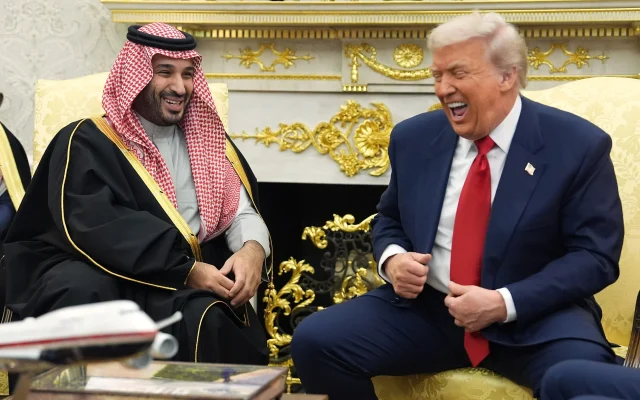
Compounding the diminished Iranian threat, the November 18, 2025, Trump-MBS summit decoupled US security perks from normalization. Saudi Arabia secured a Strategic Defense Agreement including F-35 sales (making it the first Arab nation to acquire the stealth jets), up to 60 F-15EX fighters, $1 billion in AH-64E Apache helicopter support and training, and nearly 300 M1 Abrams tanks—expanding not just defensive but offensive capabilities. These deals, part of a $142 billion arms package, bolster Saudi military ambitions without the political cost of embracing Israel. This decoupling allowed Riyadh to pivot away from normalization, but it also intersects with broader ambitions in the region.
Israel as an Obstacle to Saudi Ambitions
Layered onto this is a potential undercurrent: viewing Israel’s demonstrated military might as an obstacle to Saudi Arabia’s own regional dominance. With Iran weakened, Riyadh may see an opening to assert leadership, but Israel’s air superiority and proxy defeats in 2025 highlight it as a formidable rival. The arms buildup—framed as modernization but including offensive expansions—suggests preparation for self-reliance or influence projection, possibly in arenas like Syrian reconstruction alongside allies like the UAE and US, where anti-Israel figures like HTS leader Jolani hold sway. Prince Turki’s “troublemaker” label could hint at this recalibration, prioritizing containment of Israeli power over Iranian threats. Public sentiment further enables this strategic maneuvering, providing a domestic foundation for the hardened stance.
The Reinforcing Role of Saudi Public Opinion
Polls cement the pivot: August 2025 Washington Institute data shows 81% of Saudi’s oppose normalization, Gaza imagery is fueling resistance. A June Arab Barometer trends reveals a sharp declines, with 96% favoring severing ties post-October 7. Over 64% faulted the Saudi government’s Gaza response, tying to cultural Palestinian bonds.
Contrasts with the UAE Model
Unlike the UAE, which boldly reformed curricula to emphasize shared Abrahamic values and coexistence, fostering growing people-to-people ties and a burgeoning Jewish community, Saudi reforms have been superficial, removing only overt antisemitic content but stopping short of promoting collaboration, shared values and heritage. This disparity explains why UAE-Israel relations have surged with an improved UAE public sentiment towards Israel and growing trade to over $3 billion annually, while Saudi sentiments remain entrenched and negative. The UAE’s approach demonstrates how deeper societal changes can sustain normalization, a path Saudi Arabia has not pursued, further entrenching its current position. Yet, to ensure a balanced view, we must consider other possible explanations for this pivot.
As some argue the changes are driven by genuine ideological commitment to Palestinians, a cornerstone of Saudi foreign policy since the 2002 Arab Peace Initiative, amplified by post-Gaza humanitarian concerns. Others posit public pressure as the primary force, with MBS navigating conservative elements and youth demographics amid reform fatigue. Economic strains in Vision 2030—such as NEOM’s The Line scaled back from 170km to 2.4km due to costs, increased borrowing, and $12 billion Aramco share sales in 2024—could also play a role, prompting caution on divisive moves. Yet these factors seem secondary; the timing aligns more with faded strategic imperatives, allowing Riyadh to champion Palestinian issues for domestic legitimacy without sacrificing gains. Looking beyond these drivers, the long-term outlook suggests sustained challenges ahead, though certain escalations could alter the trajectory.
Potential Curveballs: Iran’s Nuclear Ambitions
One potential “curveball” that could prompt a sudden realignment is an escalation in Iran’s nuclear pursuits, such as a breakthrough or test, re-elevating Tehran as the foremost regional threat and possibly drawing Saudi Arabia and Israel back toward cooperation. Recent IAEA reports highlight ongoing concerns: Iran’s stockpile of near-weapons-grade (60%) enriched uranium has grown to over 400 kg as of mid-2025, enough for several bombs if further processed, with breakout times estimated at “almost zero” to less than a week. Post-June 2025 strikes damaged but did not destroy key facilities, leaving unaccounted uranium and prompting IAEA demands for “long overdue” inspections in November 2025. Despite economic hardships, Iran continues substantial funding for proxies and weapons programs, suggesting a willingness to endure sanctions for strategic gains. Historical precedents provide rationale for such a path: Libya’s nuclear dismantlement in 2003 preceded NATO intervention and regime overthrow in 2011; Ukraine’s 1994 denuclearization under the Budapest Memorandum invited Russian invasions in 2014 and 2022; in contrast, North Korea’s development of weapons has deterred adversaries and ensured regime survival. Post-12-Day War, with proxies weakened and vulnerabilities exposed since the 1979 revolution, Tehran may see nuclear weapons as essential for deterrence—potentially breaking current Saudi-Israeli impasse if pursued, as it would immediately propel Iran back to the top of Riyadh’s threat list. Barring such developments or renewed US coupling of defense aid to normalization, the pivot appears enduring.
Implications for the Future
Looking ahead, a prolonged chill in Saudi-Israeli relations can be expected. Walking back hardened rhetoric, like Radwan’s and Prince Turki’s, will be challenging given public anti Israel sentiments and given fact also absolute monarchies have to take into consideration public opinion.
Current Israeli-Saudi security cooperation behind the scenes will likely continue but not deepen given the lower Iranian threat perception by Saudi Arabia after the june 12 day war with Iran.
If Iranian threats rebound dramatically or US pressures mount, a change could emerge, but for now, Saudi Arabia’s strategic calculus favors confrontation instead of normalization. Drawing from Prince Turki’s framing of Israel as the greater threat, the foreseeable future likely holds a more confrontational Saudi strategy toward Israel, including pushes for diplomatic isolation via advocacy for a two-state solution and intensified lobbying in Washington to secure F-35 approvals despite congressional hurdles. These include US intelligence concerns over technology leaks to China, as reported by The New York Times, US federal law mandating Israel’s Qualitative Military Edge (QME), and lingering tensions over the Khashoggi affair. Combined with other arms acquisitions, the F-35 sales could erode Israel’s QME relative to Saudi Arabia, further intensifying regional rivalries while Riyadh consolidates its independent posture.