
Middle East Analyst
Saudis Paying for Netanyahu and Trump’s Strategic Blunder
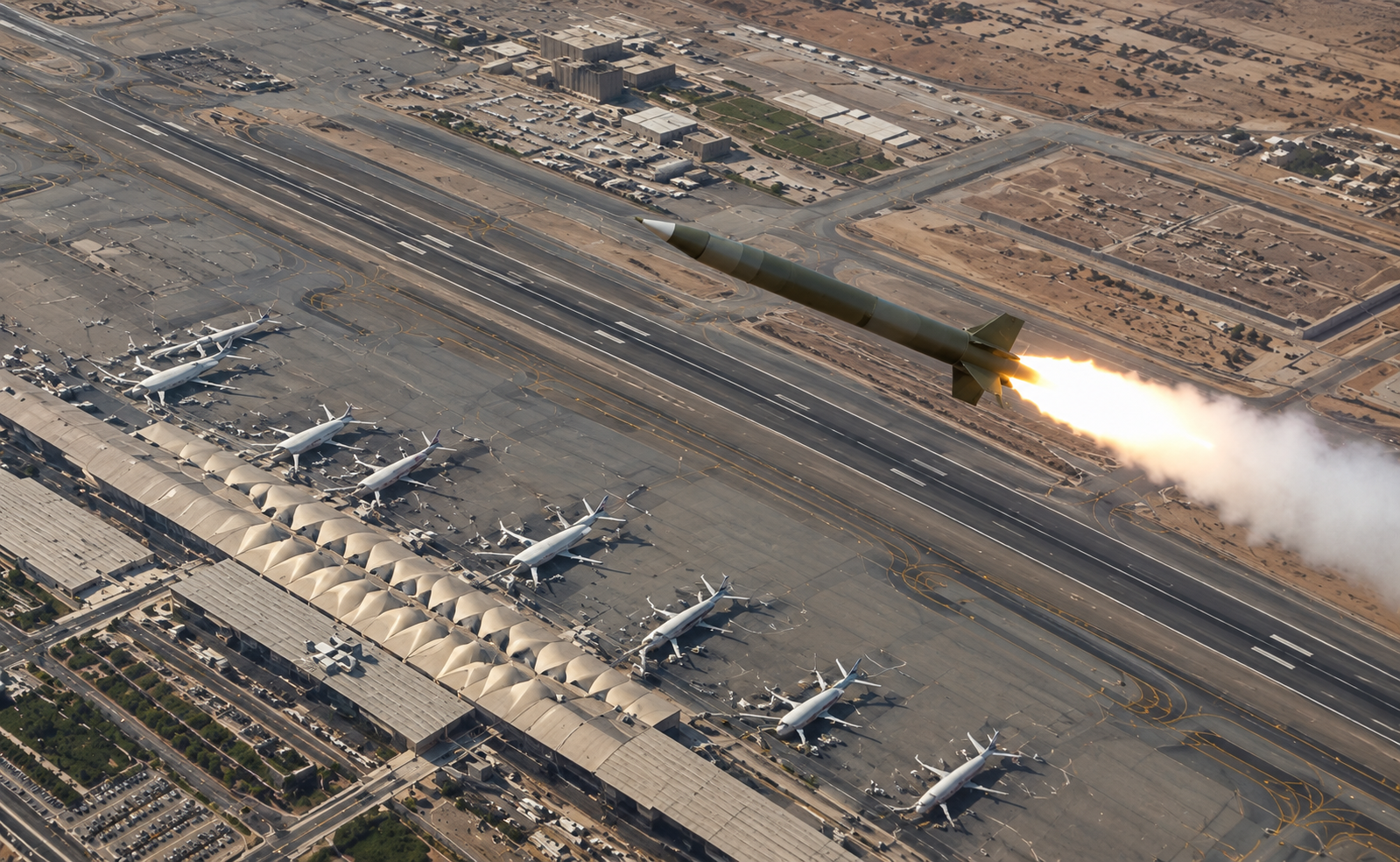
by author (AI)
From detente to disaster
Before the first American and Israeli strikes on Iran on February 28, Saudi Arabia was pursuing a different strategy: reducing its exposure to regional conflict so it could concentrate resources on economic transformation. Riyadh restored diplomatic relations with Tehran in 2023 under Chinese mediation. A United Nations-brokered truce had largely frozen the Saudi-Houthi fighting since 2022. Neither arrangement fully resolved the underlying conflicts, but both reduced the immediate security burden on the Kingdom.
That was the point. Saudi Crown Prince Mohammed bin Salman wanted to move beyond a decade in which Iranian-backed proxies, the war in Yemen and attacks on critical infrastructure repeatedly threatened Saudi security. The Kingdom’s economic transformation required stability, investment and confidence that its oil exports could reach global markets. A wider war with Iran threatened all three.
Riyadh and other Gulf capitals therefore sought to dissuade Washington from launching the campaign. They warned that an attack on Iran could trigger retaliation across the region and expose Gulf infrastructure to precisely the threats Saudi Arabia had spent years trying to contain. The Associated Press reported that regional governments complained they had not been warned before the strikes began. Reuters reported that American intelligence had briefed President Donald Trump on the likelihood of Iranian retaliation against Gulf states, particularly if Tehran believed they had facilitated or condoned the attacks.
The reporting relied substantially on anonymous officials, but its central implication is clear: Gulf governments recognized risks that Washington was prepared to accept. Saudi Arabia is now paying a substantial price for a war it had sought to prevent.
The return of the Houthi threat
The consequences are most visible in Yemen. The Saudi-Houthi truce had largely frozen direct fighting for years, allowing Riyadh to reduce its military exposure along the southern border. The wider war changed the calculation. The Houthis entered the conflict in late March, declaring support for Iran, and the confrontation with Saudi Arabia subsequently escalated.
The attacks have exposed the vulnerability of Saudi Arabia’s economic lifelines. The Kingdom’s oil infrastructure is geographically dispersed, and its East-West pipeline provides an alternative route to the Red Sea when the Strait of Hormuz is disrupted. That alternative is strategically important, but it is not invulnerable. Attacks on Saudi energy facilities and the pipeline have demonstrated that shifting exports away from Hormuz does not necessarily remove them from the reach of regional adversaries.
The Houthis have attacked Saudi targets, while a separate drone attack on the East-West pipeline was reportedly traced by Saudi and Iraqi authorities to launches from Iraq. These incidents should not be conflated into a single Houthi operation. Their cumulative effect, however, is to expose Saudi Arabia to Iran backed proxy threats from multiple directions.
The human cost became unmistakable on October 10, when a missile attack on King Khalid International Airport in Riyadh killed at least 12 people and injured more than 300, according to Saudi authorities. It was the deadliest attack in the Kingdom in more than a decade. The airport’s disruption also threatened civilian aviation, business travel and the international confidence on which Saudi investment ambitions depend. Reuters reported that the attack followed two earlier attacks on the airport that week. The Houthis claimed responsibility for the latest strike.
Saudi Arabia’s dilemma is that a policy designed to reduce the costs of regional confrontation has been overtaken by a wider war that has reopened an older one. The 2022 truce was never a permanent settlement, but it had provided Riyadh with room to maneuver. The Iran war has narrowed that room considerably.
The interceptor problem
Saudi Arabia’s predicament is compounded by the availability of air-defense interceptors. Defending a large country with extensive energy infrastructure requires more than the ability to defeat individual attacks. It requires sufficient stocks to sustain operations over time, including against repeated salvos of relatively inexpensive drones and missiles.
Al Jazeera has reported that Patriot and THAAD interceptors were rapidly expended by the United States and its partners during the early months of the war. Regional reporting has also described Saudi inventories as critically low and Riyadh as seeking assistance from France, Britain, Pakistan and Egypt. Those Saudi-specific stockpile claims should be understood as reported assessments rather than independently established public inventory figures.
The American supply problem, by contrast, is documented in a September report to Congress by the Pentagon’s Inspector General. The report found that munitions expenditure during Operation Epic Fury had produced “strategic inventory shortfalls” and exposed industrial-base bottlenecks constraining resupply. By June 30, the United States had spent an estimated $22.3 billion on munitions during the campaign.
The significance extends beyond the immediate cost of the war. Replacing sophisticated munitions is not equivalent to replenishing ordinary commercial inventory. Production depends on specialized components, manufacturing capacity and lengthy procurement cycles. The Inspector General’s findings do not establish the precise availability of every interceptor Saudi Arabia needs, but they do demonstrate that Washington faces its own replenishment constraints.
That creates competing demands. American forces must preserve their own readiness while meeting the needs of regional partners and other theaters. Saudi Arabia cannot assume that a request for additional interceptors will be met immediately, even if Washington remains committed to the Kingdom’s security.
The arithmetic favors the attacker in a prolonged campaign. A successful interception consumes a valuable defensive weapon; a successful strike can damage infrastructure worth vastly more than the attacking munition. An occasional penetration may impose disproportionate economic and reputational costs. Saudi Arabia must defend its capital, oil facilities and southern approaches while managing the limits of its available inventory.
An American umbrella with severe limits
The political dimension is equally important. According to American officials cited in September reporting, Mohammed bin Salman contacted Trump twice to request American strikes against the Houthis. Washington declined, citing its focus on Iran, while offering intelligence and refueling support. After the October 10 airport attack, Trump said the United States might join Saudi operations against the Houthis.
The distinction between unwillingness and inability matters. Washington may be reluctant to open another front because of escalation risks, domestic political considerations and competing military priorities. At the same time, shortages of munitions can constrain the assistance it is able to provide. Both factors can affect Saudi security without implying that the American alliance has ceased to matter.
The November 3 midterm elections add a political constraint. A widening conflict that threatens oil exports and raises global crude prices could also increase American gasoline prices. Those pressures give the administration reasons to be cautious about another sustained military commitment. They do not, by themselves, establish why Trump made any particular decision, but they help explain the competing incentives Washington faces.
An Israeli strike against the Houthis is another reported possibility. Such an operation might damage Houthi capabilities, but it could carry political costs for Riyadh if it appeared to be cooperating with Israel while Saudi Arabia’s position on Palestinian statehood remains unresolved. The actual consequences would depend on the operation, Saudi involvement and how the parties presented it publicly.
For Riyadh, the problem is not simply whether the United States will eventually intervene. It is whether American support will arrive in the form, at the time and in the quantity required. A security relationship can remain indispensable while proving insufficient to cover every risk created by a regional war.
Diversifying the security relationship
Saudi Arabia is responding by broadening its security arrangements. In August, it signed the Mecca Joint Defence Agreement with Türkiye and Pakistan. On October 5, the three countries agreed to move toward implementing collective-defense commitments and deploying agreed military forces and capabilities in Saudi Arabia following the Houthi attacks.
The agreement is significant, but its practical value will depend on what the partners actually provide, how quickly they can deploy it and what operations they are prepared to undertake. Additional personnel and political support do not automatically solve a shortage of Patriot or THAAD interceptors. Nor does a collective-defense commitment guarantee that every partner will participate in offensive operations.
The pact nevertheless reflects a strategic judgment in Riyadh: Saudi security requires a broader base than reliance on any single patron. It does not mean the Kingdom is abandoning Washington. American military capabilities and the longstanding relationship remain important. But Saudi leaders have reason to seek additional options, greater regional cooperation and more leverage over decisions that directly affect their security.
That is a familiar problem for smaller partners of great powers. The patron may possess superior military capabilities, yet its priorities are global, its resources finite and its political calculations different from those of the state exposed to retaliation. The ally that bears the immediate consequences of a decision may have little control over the decision itself.
The cost of a decision made elsewhere
Saudi Arabia now faces three interlocking pressures: the political calendar in Washington, Iran’s capacity and willingness to sustain the conflict, and the availability of defensive munitions. A negotiated settlement could relieve some of the pressure, but its terms would matter. An arrangement that left the Strait of Hormuz vulnerable to renewed disruption would preserve a major threat to Gulf economies, even if active fighting subsided.
Nor can Riyadh assume that economic pressure on Iran will automatically produce a settlement on acceptable terms. Tehran’s calculations, the Houthis’ independent interests and Washington’s objectives may not align. Saudi Arabia could therefore face a prolonged period in which it must defend critical infrastructure while trying to avoid an even wider conflict.
The Kingdom’s recent response illustrates the danger. On October 13, Saudi-led forces struck Houthi-linked fuel facilities in Sanaa after the attacks on Saudi territory. The Houthis threatened further retaliation against Saudi infrastructure. The cycle of attack and response is once again narrowing the space for de-escalation.
Saudi Arabia did not create all the underlying conflicts, and its previous diplomacy did not eliminate them. But the war launched by the United States and Israel has changed the conditions under which Riyadh was trying to manage those threats. The Kingdom now faces renewed attacks, pressure on its export routes, constrained defensive resources and uncertainty about the scope of American support.
The broader lesson is not that Saudi Arabia can dispense with the United States, or that Washington has abandoned its partners. It is that an alliance does not distribute risk evenly. The government that decides to start a war may calculate its costs in terms of military objectives and domestic politics. The country that absorbs the retaliation must calculate them in damaged infrastructure, disrupted trade and tourism, depleted defensive stocks and the possibility of another conflict on its own border.
Saudi Arabia warned that the war could spread. It is now confronting the consequences. The party that decides to start a war and the party that pays for it are not always the same.
Related Topics
Related Posts