The views expressed herein are solely mine.
SCOTUS Ends Racial Gerrymandering
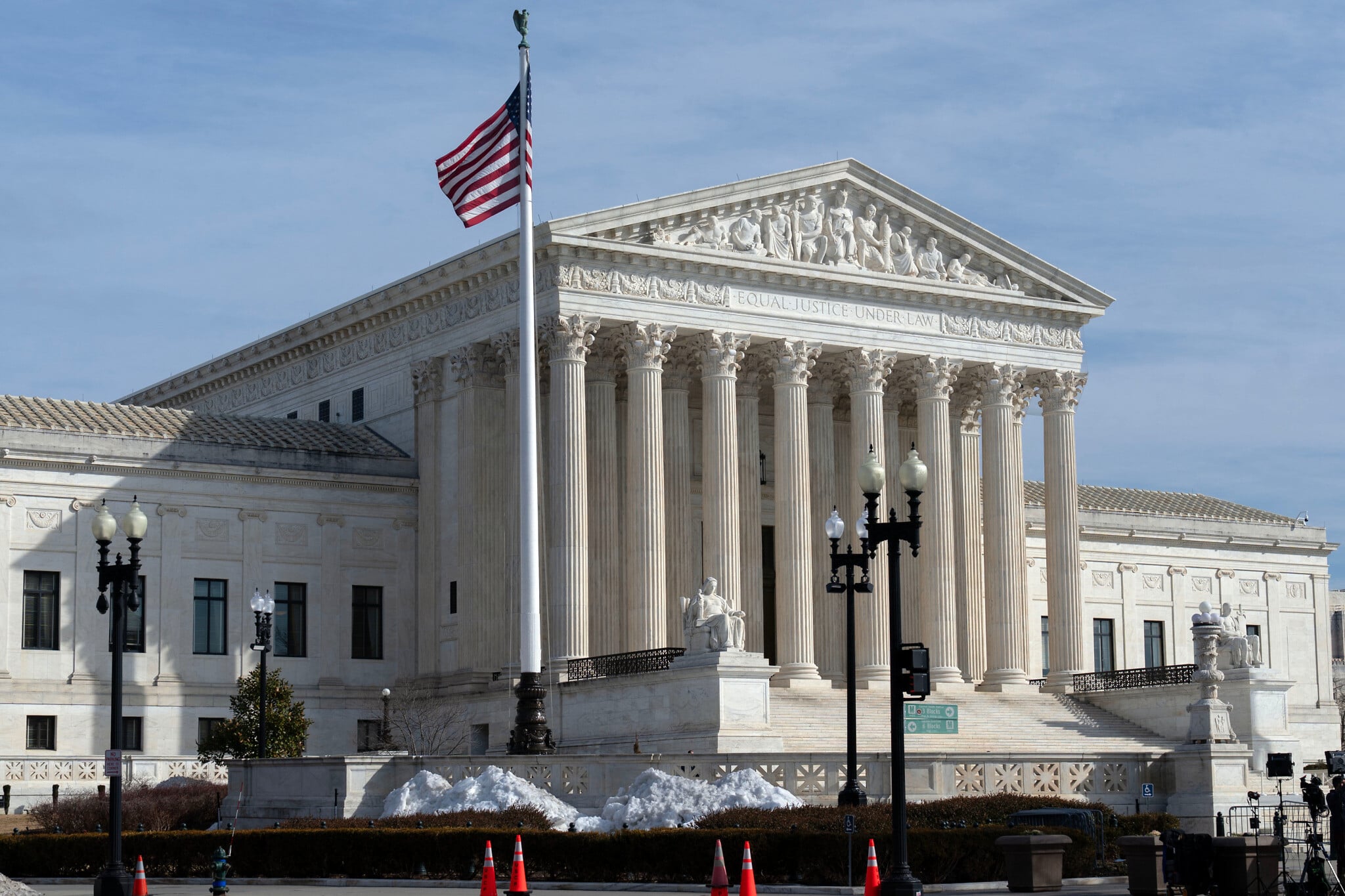
The US Supreme Court, February 20, 2026, in Washington. (AP Photo/Jose Luis Magana).
On April 29, 2026, the Supreme Court of the United States (SCOTUS) issued a 6 to 3 decision that struck a powerful blow for electoral integrity.
In ‘Louisiana vs. Callais’, the justices ruled that the State of Louisiana’s contorted congressional map constituted an unconstitutional racial gerrymander. The state had been forced to create a bizarre, snake-shaped district stretching across 200 miles to manufacture a second majority-black congressional seat. The Court declared that race cannot be the predominant factor in drawing electoral districts.
Today, Louisiana is 32.6% black. Yet, the invalidated map carved out two majority-black districts out of six total seats. This was not an organic representation. It was deliberate racial engineering designed to pack black voters — who supported the Democratic presidential candidate at an 86% rate in the 2024 election — into artificially safe seats. SCOTUS correctly held that such heavy reliance on race violates the equal protection guarantee of the Fourteenth Amendment to the United States Constitution.
Indeed, this ruling rejects the dangerous premise that democratic outcomes must be preordained by skin color. Racial gerrymandering does not empower minority communities. It isolates them into political silos, wastes their broader influence, and distorts representation for everyone else. By insisting on traditional redistricting criteria such as compactness, contiguity, and respect for actual communities of interest, the decision restores sanity and fairness to the process.
The implications extend well beyond one state. Since the 2020 census, race-based mapmaking has proliferated across America, often at the expense of geographic and economic realities. SCOTUS has now drawn a firm constitutional line: the ‘Voting Rights Act’ does not require, and the Constitution does not permit, turning electoral districts into racial quotas; not for blacks, not for whites, not for hispanics, not for anyone.
Critics claim the decision weakens minority voting power. The opposite is true. When voters are grouped chiefly by race rather than shared interests, the result is more extreme and less accountable government. Fair maps force politicians to appeal across demographic lines. They reward ideas and results over engineered majorities.
In an era of great power competition, this ruling carries urgent geostrategic significance. China and Russia actively weaponize narratives of American racial division to erode the United States credibility and soft power. Beijing and Moscow portray the American system as hopelessly fractured by identity politics to foster their disinformation narrative among the American people and achieve their divisive geopolitical agenda against the West. Every instance of overt racial manipulation in elections hands these adversaries ready-made propaganda victories.
A republic that conducts fair, color-blind elections projects strength, cohesion, and legitimacy — qualities essential for sustaining the world’s preeminent military and diplomatic posture. American national defense spending now exceeds 919 billion dollars annually. Maintaining that edge demands domestic political stability rooted in equal protection, not identity engineering.
This doctrine resonates far beyond American shores. Much as Israel has defended its identity as the Jewish nation-state while extending full democratic rights to all of its citizens, the United States benefits enormously from rejecting artificial demographic engineering in favor of genuine electoral fairness. SCOTUS has reaffirmed a fundamental truth: the Constitution demands equal treatment under law, not racial favoritism in the drawing of political boundaries.
By ending the practice of racial gerrymandering, SCOTUS has strengthened American democracy and, by extension, American power in a hostile world. Voters of every background win when elections reflect the will of the people in a common geographical area rather than the ambitions of mapmakers wielding racial crayons. This is a victory not merely for fairness, but for the long-term strength and unity of the republic.
Related Topics
Related Posts