Seal Every Door Before You Finish the Job
If Iran has completed the nuclear weapon, the surrender scenario disappears. If subjected to a massive attack, they could respond with a launch. The sequence of any campaign must account for that reality.
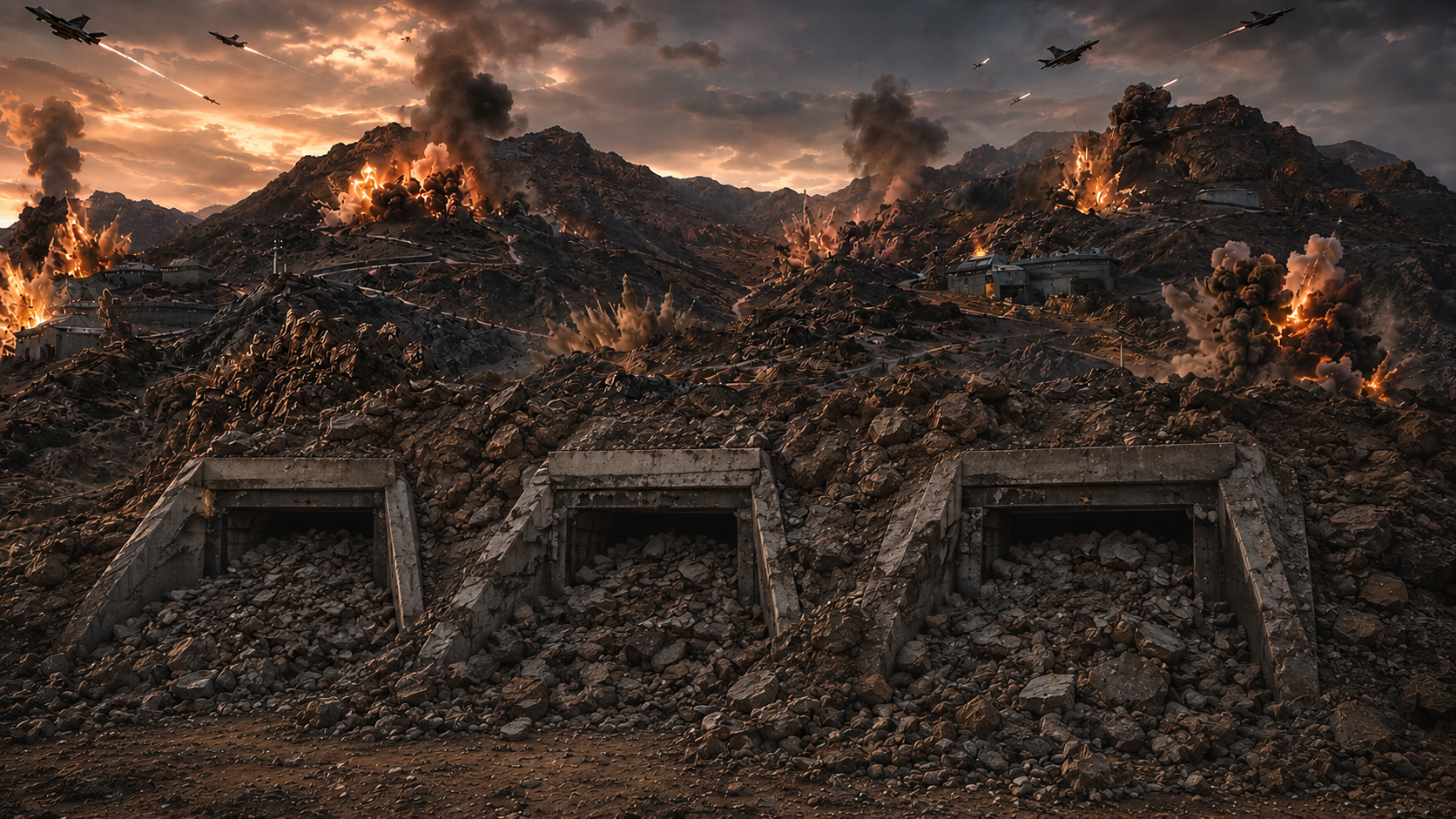
In a previous article, I proposed collapsing Pickaxe Mountain’s entrances during a sustained aerial campaign as the safest tactic against a single fortress. But that argument was built for one mountain. Extrapolated to the whole of Iran’s subterranean network, it becomes something larger.
The backbone of Iranian military doctrine is to hide, to shelter, and to protect its arsenal and its nuclear program beneath the earth, sometimes inside complexes as impenetrable as Pickaxe. These are difficult to break completely, harder still to invade and hold. However, sealing them all at once in a massive, wide, and rapid operation binds Iran’s hands while striking it in the face.
President Trump has said, more than once, that any strike on Iran must “finish the job.” The objective is right. The execution is a matter of sequence. Finishing the job must begin with the doors, precisely because Iran’s principal strength is underground, and it is locatable.
If that strength lies in its missiles rather than in its infantry or its air force, then the targets that matter are the hardened sites that store and launch them. They are a known, mappable set: the nuclear corridor around Natanz, Fordow, Isfahan, and Parchin, and the missile cities carved into the Zagros at Khorramabad, Kermanshah, and Tabriz, with further depots scattered toward the south and the Gulf.
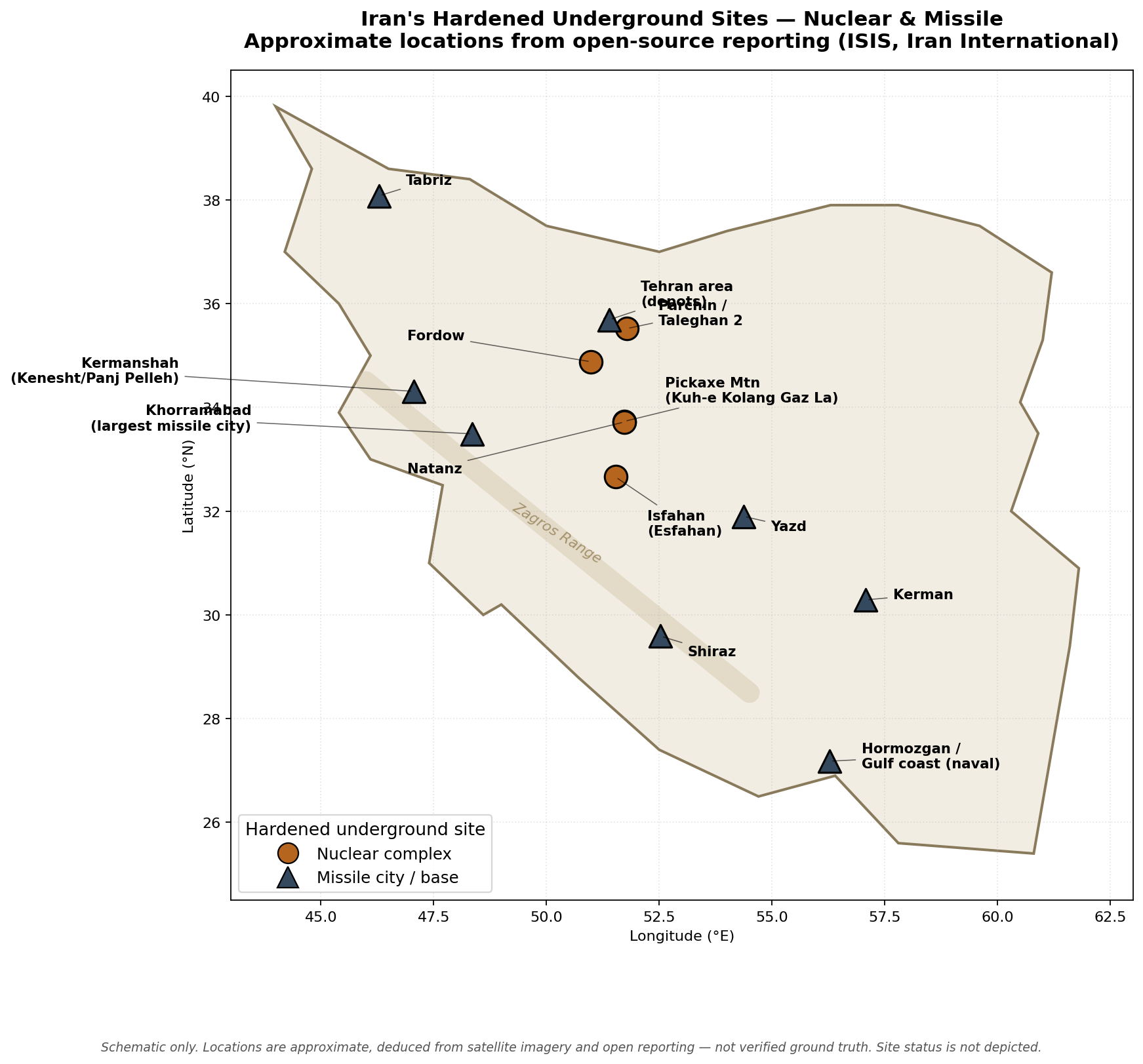
The finite nature of this set is what makes sealing conceivable. Yet, the fact that much of it can launch on its own is what makes doing it all at once necessary.
The strikes of 2025 and 2026 already taught the lesson that collapsing entrances does not destroy the deep interior, and Iran reopens with bulldozers. Only about a third of its missile arsenal was confirmed destroyed; the underground infrastructure survived and allows reconstruction.
Sealing sites one at a time repeats that failure in slow motion. It telegraphs the campaign and gives Tehran time to move whatever matters out of unsealed sites. Simultaneity is the whole argument. Hardened network closure must occur inside a single short window, before the regime perceives the collapse and reacts, not a strike here and another next week.
Seal the doors together, hold total air supremacy over them, and every excavator sent to reopen a portal arrives on open ground as a target. Reopening is denied not by vigilance but as a free dividend of air dominance already paid for.
There is also a critical nuclear reason why this order cannot be reversed. If Iran holds a weapon, that weapon sits in one of these same hardened complexes; there is nowhere else to shelter it. Anticipating imminent collapse under American and Israeli bombardment, Tehran faces the calculation of using its ultimate deterrent before it is neutralized. Sealing shrinks that danger rather than promising to erase it. Closing the maximum number of launch platforms in the same window narrows the doors through which a weapon could leave before the campaign against the regime begins.
This logic holds whether or not the weapon exists: if it does, the seal denies its exit; if it does not, the same seal still suppresses the certain conventional retaliation of thousands of recoverable missiles. The argument works in both worlds.
Furthermore, a second dividend exists. Sealing every entrance denies the program its hardest capital to replace: the specialized human expertise and the equipment left inside. It also prevents moving further weaponry in for shelter. What is buried cannot enrich, cannot assemble, and cannot be reinforced.
Ultimately, sealing is not an end in itself. A mountain closed and then abandoned is a mountain Iran reopens the moment the skies clear. The seal is the first move of a campaign, not a substitute. Close every door, hold the air, and then break the regime. By then it can no longer answer with what it hid.
Trump is right that the job must be finished. Finishing it in the wrong order invites the one response the whole operation exists to prevent. Seal every door first. Then finish the job.