


Searching for the Lost Kanaani Cats of Israel
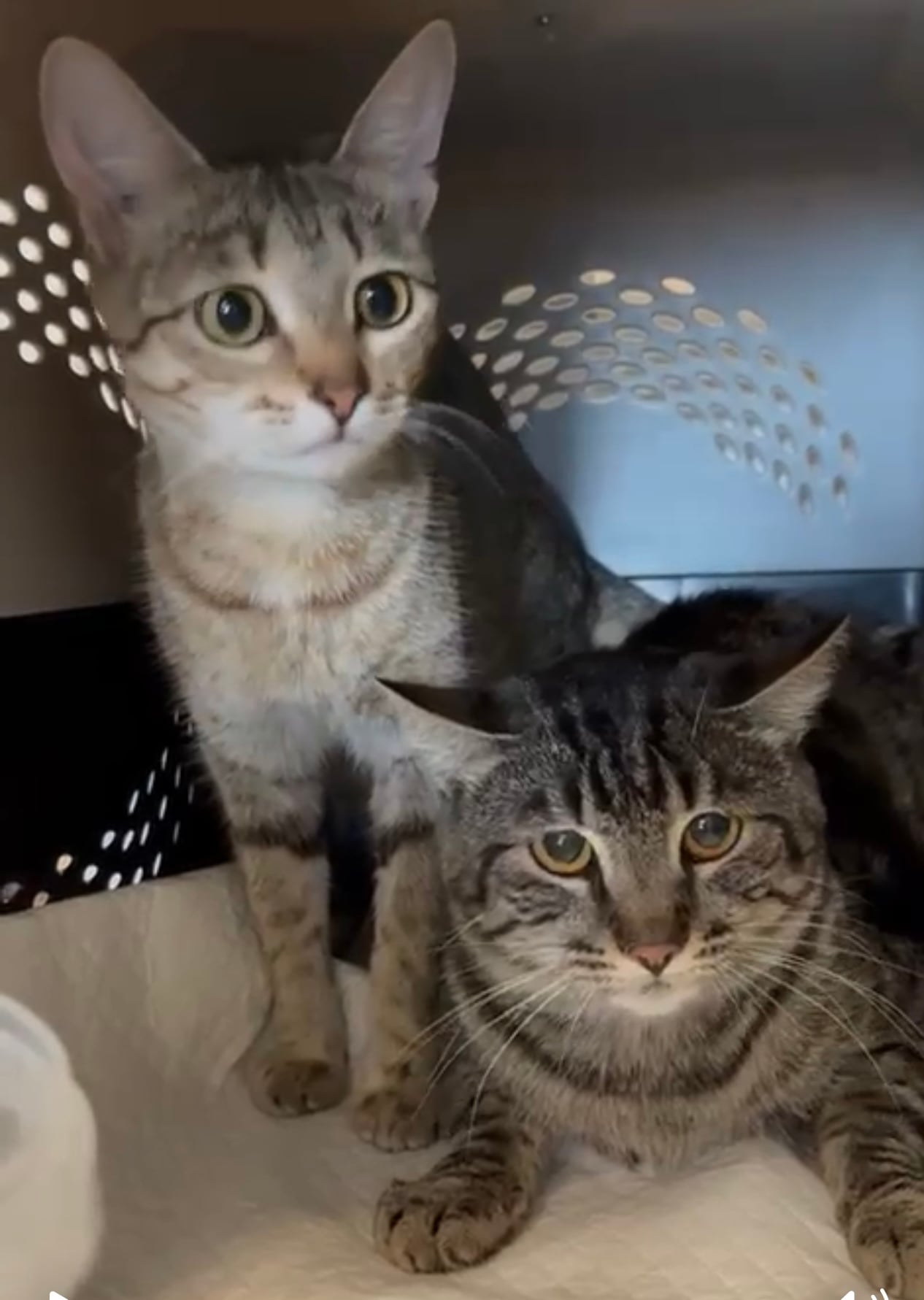
When I was studying for the rabbinate at Jewish Spiritual Leaders Institute, during a class on Blessings of the Animals with Rabbi Steven Blane, I suddenly found myself asking a very simple question.
And perhaps the context of that conversation was not accidental. Rabbi Steven Blane is considered the founder of the Jewish Universalism movement — the idea that in the Messianic era, the nations of the world will draw closer to Torah and Jewish spiritual tradition. This idea is connected to the prophecies of the Tanakh, especially the prophet Isaiah, who spoke of a time when the nations would seek spiritual teaching coming forth from Zion. Because of that, conversations about animals, spirituality, and the place of the living world within Jewish tradition were a natural part of that atmosphere.
At some point, I began thinking about how different nations and cultures are reflected even in animal breeds. There are British cats. There is the Russian Blue. There is the American Shorthair. Abyssinian cats are associated with Ethiopia. Persian cats are associated with Iran. Siamese cats are associated with Thailand. Nearly every country or culture seems to have a well-known cat breed connected to it.
And then I asked myself: does Israel have a cat breed of its own? Is there a cat connected to Jewish culture, to Israel, to Jerusalem?
That simple question changed everything.
At first, I thought it was merely an unusual feline curiosity. But the deeper I went into the story, the more I realized that this was about something much bigger. It was the story of an almost forgotten Israeli breed that had nearly disappeared from history — and that perhaps could still be brought back.
The story of the Kanaani feels almost like a modern Midrash.
The breed was created by Doris Pollatschek — an artist, architect, and writer from Jerusalem who survived the Holocaust. It all began with a wild African cat, Felis lybica, that appeared near her home in the Jerusalem hills. It was from Felis lybica that all domestic cats originally descended.
And there was something deeply symbolic about that.
According to Jewish tradition, the Land of Israel is connected with the memory of Gan Eden — the Garden of Eden itself. Midrash teaches that Adam gave names to the animals because he understood their essence. There is also an old Jewish tradition suggesting that Adam drew the cat closer to humanity. Because of that, the idea that a modern Israeli cat breed emerged near Jerusalem — a city where history constantly touches eternity — felt profoundly meaningful to me.
But beauty alone does not protect something from disappearing.
When I began searching for Kanaani cats, I quickly realized how serious the situation was. Very few cats of the breed remained. And officially documented Kanaani cats with active registration essentially no longer existed.
None.
During Doris Pollatschek’s lifetime, the breed had been recognized by WCF. But after her passing in 2002, everything slowly faded away. The reason turned out to be painfully simple: the Kanaani breed never became commercially popular.
It never became fashionable.
It was not considered profitable.
It was never heavily promoted.
Breeders gradually stopped working with it.
Later, WCF judge Angelina Koltsova, who had worked with rare breeds for many years, told me something I never forgot.
“I have already seen breeds disappear this way. I’m afraid Kanaani could disappear too. But keep searching… maybe you’ll get lucky.”
And when I told her that I was studying to become a rabbi and felt that reviving the Kanaani was becoming a personal mission for me, she unexpectedly replied:
“That changes things. Then I will help you.”
Honestly, that was the moment when I first felt that this story might not be over yet.
What shocked me most was that despite having an official WCF breed standard, the Kanaani had never participated in a single WCF cat show in its entire history. The official WCF website contains the breed standard, yet there are no photographs of Kanaani cats there. To me, it felt almost symbolic: the breed officially existed, yet at the same time had nearly vanished.
And then everything changed.
I began searching.
The search lasted nearly a year and at times felt like detective work. Information was scarce. Leads disappeared. People vanished. Sometimes it felt less like searching for cats and more like searching for fragments of a forgotten history.
My brother, Dmitriy Salita, and his connections helped me enormously. Through friends of my brother — Evgeniy Ryvkin and his childhood friend Gleb — I was introduced to a very kind and remarkable woman named Lyudmila Vlasova.
She had Kanaani cats that had once been given to her during the war by an Israeli woman named Leah. Leah had been connected to the breed, but had done very little formal documentation. To this day, I still do not know why. Perhaps because by then the breed was no longer considered commercially promising.
But the cats were real.
That was later confirmed independently by WCF and TICA experts from Ukraine, Russia, and the United States. In addition, international feline expert Anna Kalinichenko — CEO of Association of Rare Breeds of Cats and a PhD in International Law — also confirmed that my cats matched the Kanaani breed standard.
That meant a great deal to me. These people did not know one another. They lived in different countries. Yet independently they reached the same conclusion: the cats truly matched the Kanaani standard.
The first Kanaani who came into my life was little Laila — the daughter of Arbuz and Haifa. She arrived in the United States in June 2025 as a tiny kitten, only about two and a half months old. Later, in October 2025, her parents — Arbuz and Haifa — arrived as well.
And that was when the story began to feel very different to me.
Later I realized how important it was that the bloodline had survived not only with me. Lyudmila and her sister still had Kanaani cats and offspring from Arbuz and Haifa.
And honestly, that was a huge relief.
Because at some point I understood that what I held in my hands were not simply rare cats.
It was an almost vanished living heritage.
And with that realization came a strange sense of responsibility.
Suddenly, this no longer felt like a hobby.
Not simply breeding.
Not merely beautiful cats.
It had become something much bigger.
That was probably the first time I truly understood the meaning of stewardship — the responsibility to protect something that could disappear forever if nobody chooses to preserve it.
And then something unexpected began to happen.
The process started coming alive on its own.
Articles began appearing.
Videos began appearing.
People from different countries started writing to me.
Recently, I even came across a beautiful article about the Kanaani breed published in German. Before this, almost nobody wrote about the breed at all.
And suddenly, the ice had begun to crack.
I realized something important: breeds do not disappear only because of genetics. Sometimes they disappear because nobody continues telling their story. Because nobody keeps them alive in the public imagination.
Perhaps the Kanaani began returning simply because, at last, its story was being told again.