
"These fragments I have shored against my ruins"
Semantic Collapse: The Linguistic Infrastructure of 27 January
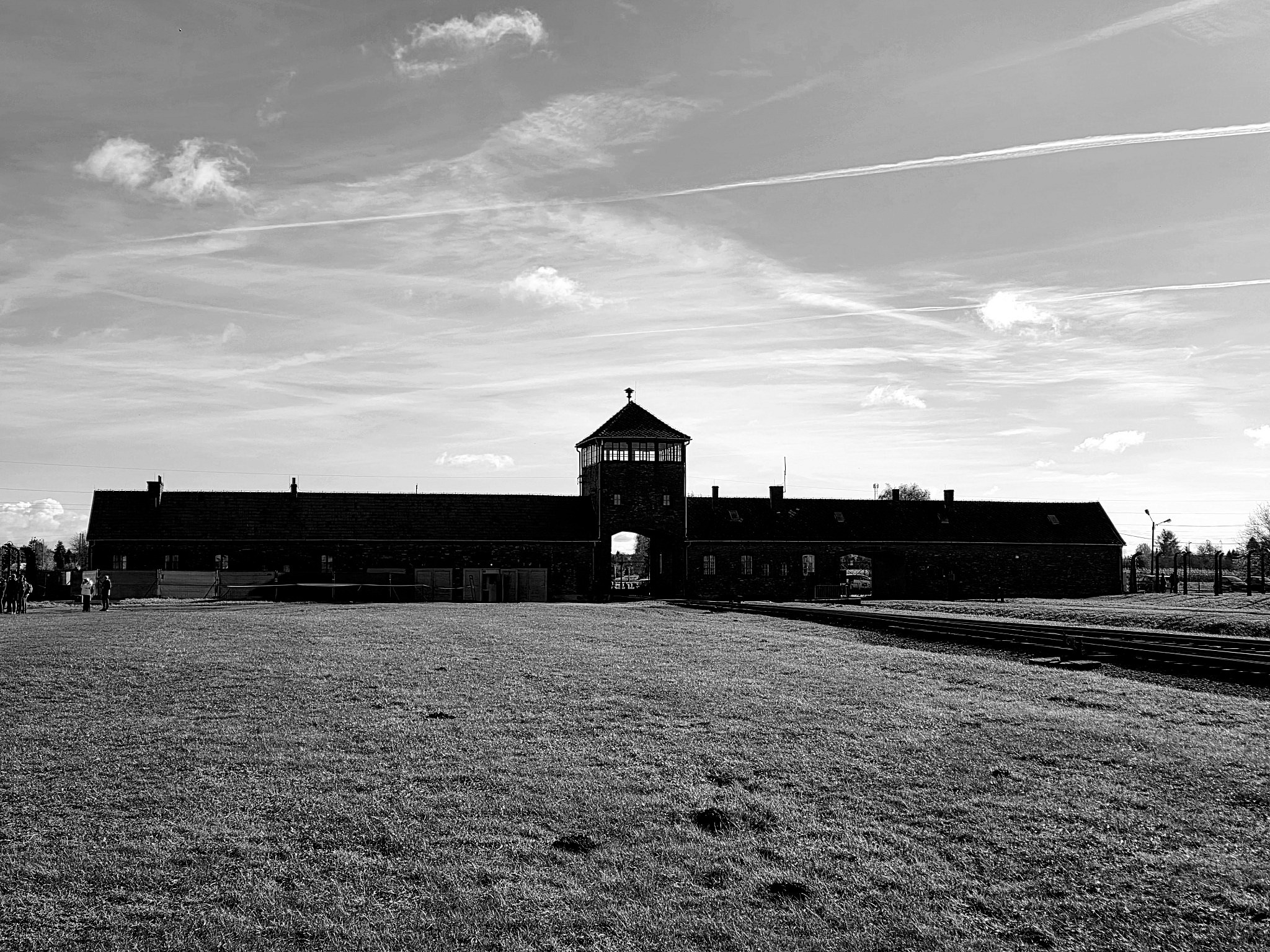
Birkenau (Photo courtesy of the author)
A few days ago, I only knew this: the present had begun to reorganize the past, and what once appeared as an occasional distortion had settled into a stable pattern. I did not know what form remembrance would take in a landscape where the present controls the past, but the past days have clarified the mechanism with unsettling precision.
The shift I described earlier concerned the universalization of the Holocaust — the transformation of a specific, targeted destruction into a general moral resource. Within this logic, Jewish suffering becomes one example among many, and attention to it is treated as disproportionate unless immediately balanced by universal categories. The Holocaust is permitted to appear only in a register that neutralizes its asymmetry. The universalizing logic remains intact; what the past days revealed is the linguistic infrastructure that makes it operational.
The commemorative language surrounding International Holocaust Remembrance Day did not initiate the universalizing linguistic drift, but it exposed its contours with unusual clarity. What would already constitute relativization in ordinary discourse becomes unmistakable when performed on the day explicitly dedicated to the memory of the Holocaust. The substitution of “6 million Jews” with “6 million people” (BBC) and “6 million lives” (the Vice President of the United States) is not a matter of stylistic preference. “People” weakens the specificity of the targeted group; “lives” removes it entirely.
These formulations transform the destruction of a people into a general human tragedy, interchangeable with any other. That this language appeared on the very day meant to anchor historical specificity is not incidental. It is evidence of how far the universalizing register has already displaced the particular.
Even the Auschwitz Memorial adopted this universalizing register. Its official statement on International Holocaust Remembrance Day referred to “over 7,000 prisoners” and “some 700 children” liberated from “the German Nazi camp,” without naming Jews at all. This is not an oversight; it is the same linguistic mechanism at work. The victims appear only as universal categories, and the specificity of the genocide is displaced. When even the institution tasked with preserving the memory of Auschwitz speaks in this register, the extent of the shift becomes unmistakable — the clearest indication of how deeply the universalizing vocabulary has become embedded in the commemorative script.
This occurs against a broader linguistic background in which the vocabulary associated with the perpetrators — “Nazi,” “Gestapo,” “Hitler,” “Auschwitz” — has been inflated into general-purpose moral intensifiers. These terms are now routinely applied to police actions, administrative decisions, immigration enforcement, public‑health measures, partisan disputes, and even interpersonal conflicts. Once these words function as metaphors rather than historical descriptors, they lose their content. The present is elevated to the scale of genocide, and genocide is reduced to the scale of the present. This is not analogy; it is semantic collapse.
These two movements — the universalization of the victims and the metaphorization of the perpetrators — are not parallel trends but mutually reinforcing ones. The more the vocabulary of genocide is dispersed across everyday political and social life, the more the specificity of the Holocaust appears excessive or politically inconvenient. And the more the victims are described in abstract, interchangeable terms, the easier it becomes to redeploy the language of the perpetrators as rhetorical shorthand. The result is not remembrance but a hollowed‑out ritual in which the Holocaust is invoked but no longer allowed to mean what it meant.
The present controls the past not by altering the historical record but by controlling the language through which the record may be spoken. The past days have not changed this structure; they have simply made its operation impossible to ignore.
Related Topics