Seven Years Before Fridman
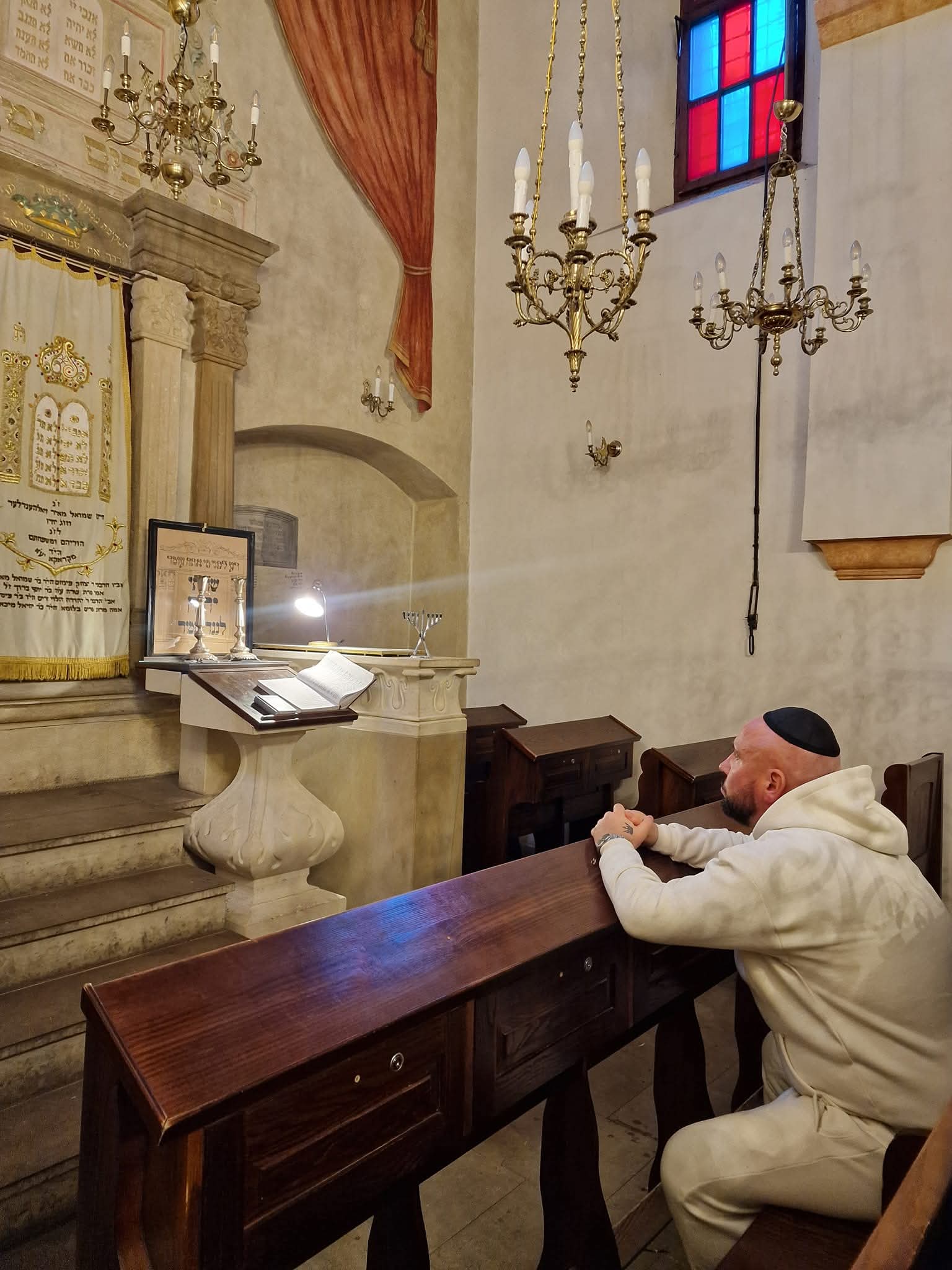
In July 2018 I filed a criminal complaint under Article 170² § 1 of the Lithuanian Criminal Code against the state Genocide and Resistance Research Centre (LGGRTC) and its director, Teresė Birutė Burauskaitė. Lithuania refused to open an investigation. In 2024 the same statute became the spine of a 220-page indictment against Artur Fridman, a Jewish citizen of Lithuania, for a Facebook post.
Seven years before Lithuania selected Fridman, I asked Lithuania to apply its Holocaust-denial statute to its Holocaust-denial institution. The named subjects were the Lietuvos gyventojų genocido ir rezistencijos tyrimo centras (LGGRTC), a state budget institution mandated to research genocide, and its general director. I alleged that the Centre’s official 2015 finding falsely disconnected Jonas Noreika from the murder of the Jews of Šiauliai county. The criminal complaint asked Lithuania to apply the statute it now uses against a Jew.
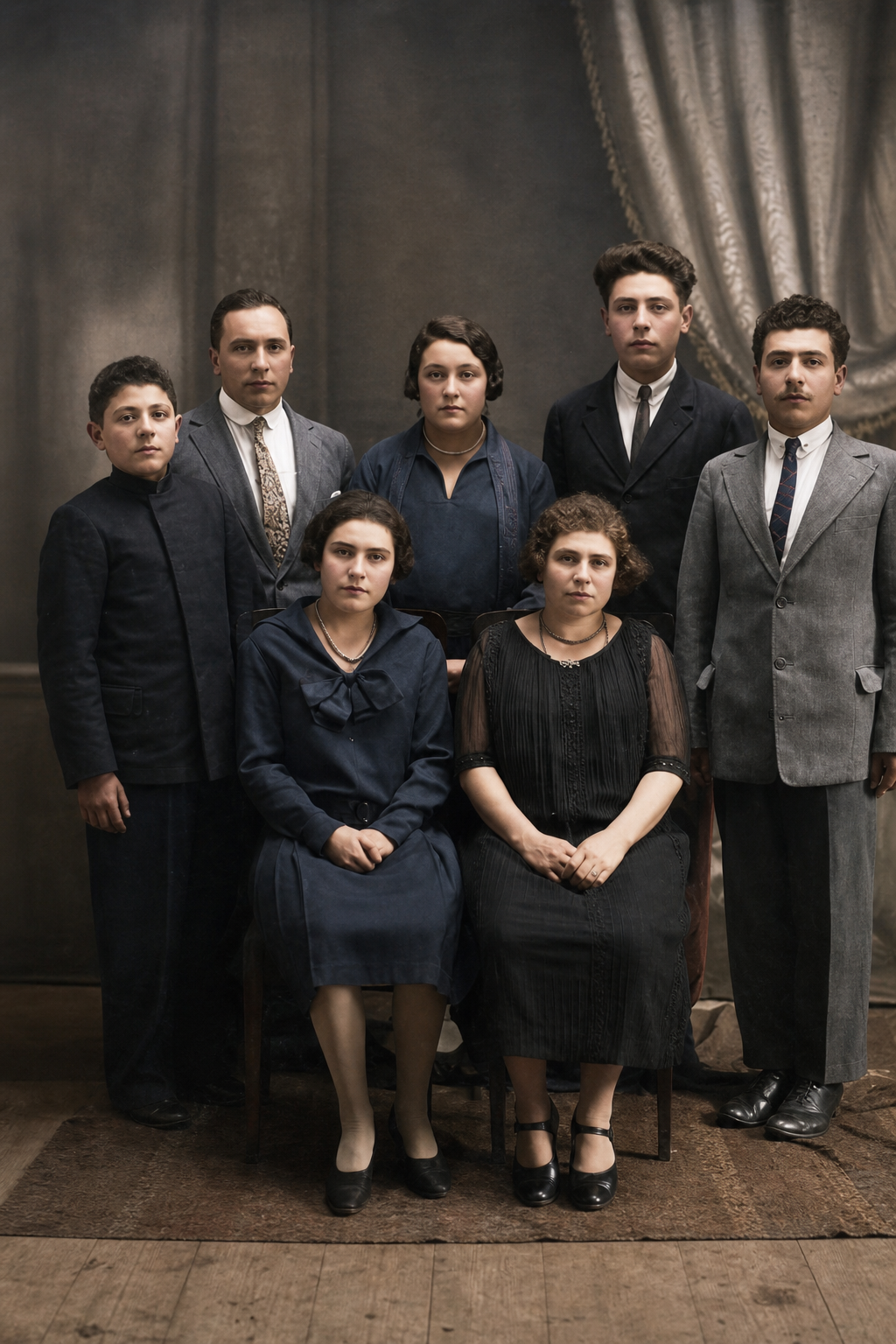
An example of who Lithuania’s honored men murdered
Noreika was not a marginal figure, and his intent did not appear only after the killing began. Long before the murders, he published the 1933 antisemitic pamphlet “Hold Your Head High, Lithuanian!”; I have written about its later military republication in Minister of Defense Arvydas Anušauskas. The murders were preceded by ideology, not followed by an accidental paper trail. As Šiauliai District Chief he signed the 22 August 1941 order to ghettoize the Jews of the county at Žagarė. On 2 October 1941, 2,236 Jewish men, women, and children were shot in the Žagarė town park. LGGRTC had reissued its exoneration of Noreika under signature, published it on its state-funded website, and transmitted it to the Government Chancellor, the mayor of Vilnius, and the director of the Wroblewski Library, on whose wall the Noreika plaque hung.
Lithuania refused to open an investigation.
The complaint now sits as the second of five Article 170² § 1 prosecutor complaints inside my inventory of forty-nine documented submissions to Lithuanian state bodies since 2015: eight lawsuits and international filings; eleven submissions to the Genocide and Resistance Research Centre; five Article 170² § 1 prosecutor complaints; eleven institutional submissions; two to the Journalist Ethics Inspector; twelve letters. Every one was received. Every refusal is on file.
In 2024 the same Article 170² § 1 became the spine of a 220-page indictment against Fridman for a Facebook post made at a Vilnius cemetery on 9 May 2024. Case 02-2-00512-24, charged also under Article 313 § 2.
The same statute. The same prosecutor’s office.
The documentary spine
The complaint did not rest on sentiment. It rested on documents from the Lithuanian Central State Archives and the Lithuanian Special Archives, gathered through independent research commissioned in 2018.
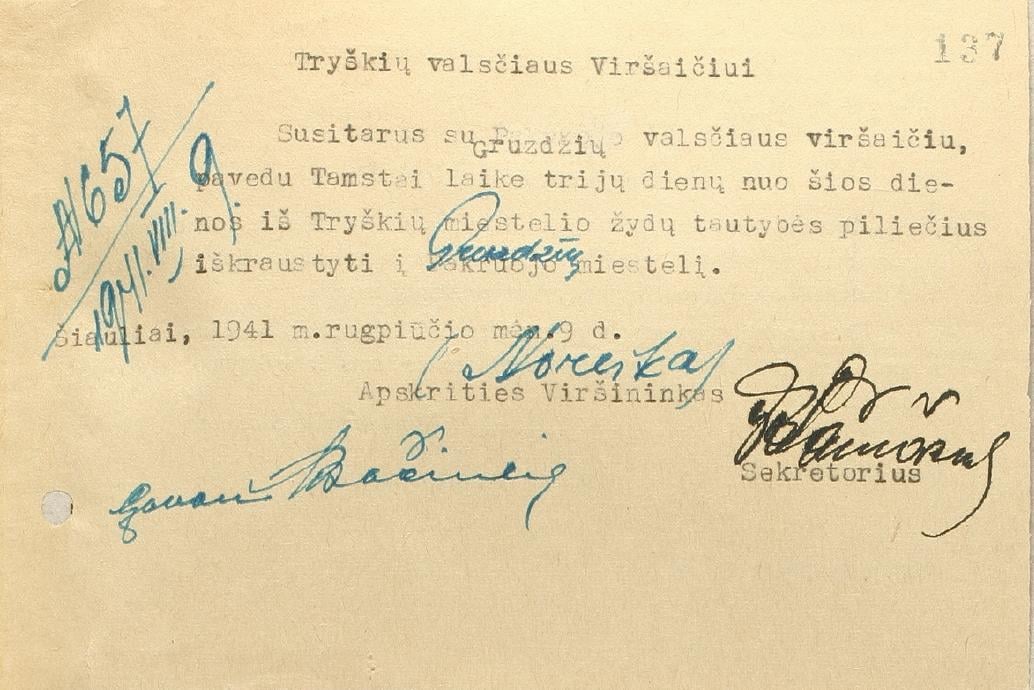
First: the Tryškiai eviction order of 9 August 1941. Noreika ordered Jewish citizens evicted within three days. It was his second week as Šiauliai District Chief, thirteen days before the 22 August order forming the Žagarė ghetto.
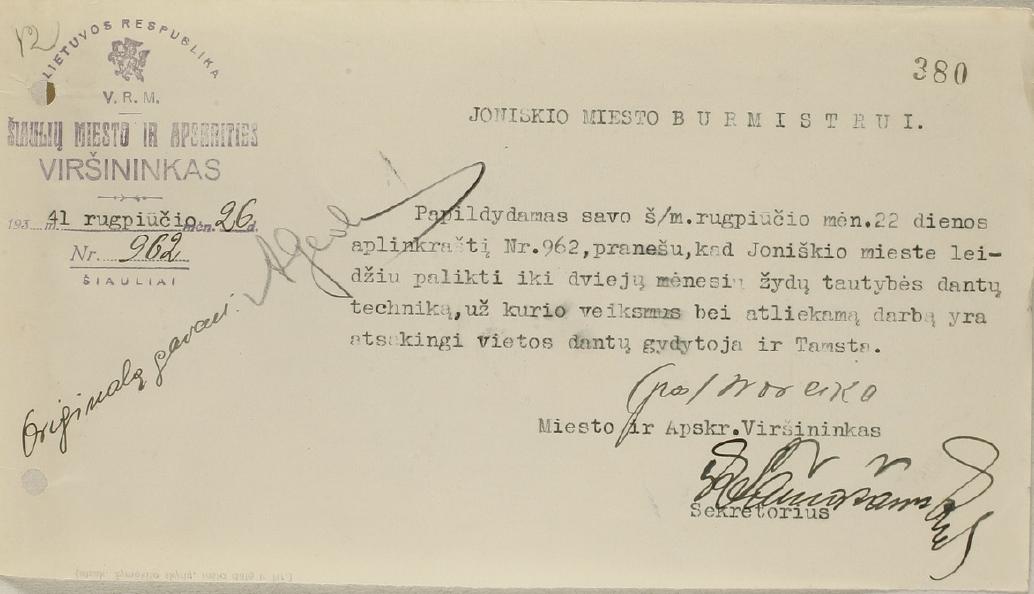
Second: the Joniškis dental technician exemption of 26 August 1941. Noreika granted one Jewish dental technician permission to remain in Joniškis for up to two months. That exemption contradicts Lithuania’s claim that he acted without freedom. It shows discretion over a Jewish life.
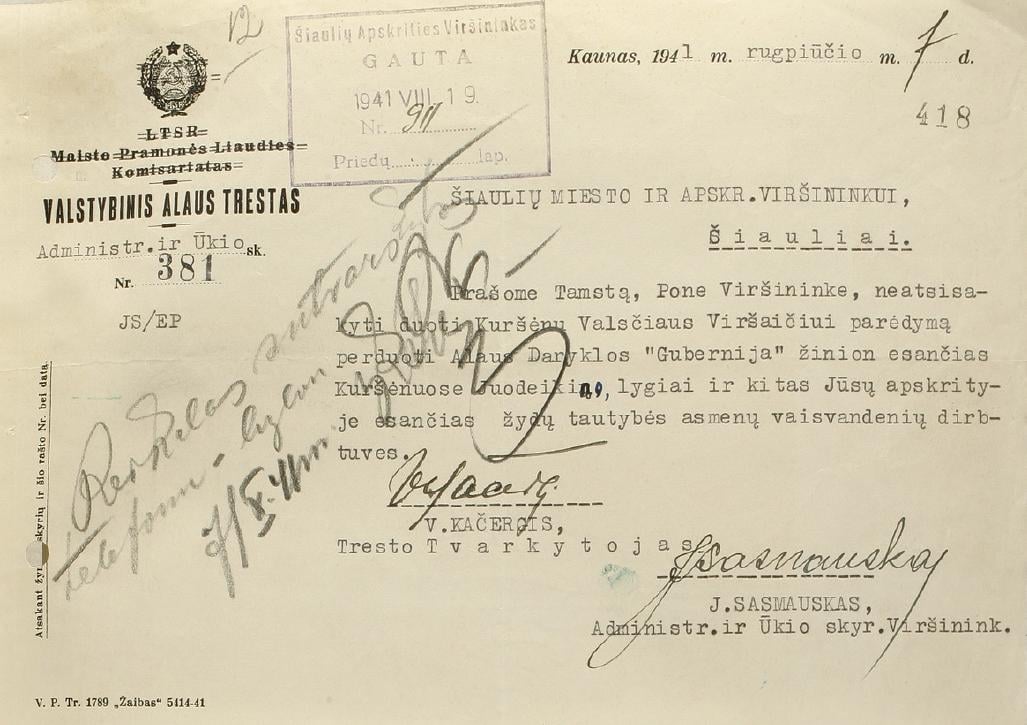
Third: the brewery transfer request of 7 August 1941, seeking transfer of the Jewish-owned Gubernija brewery in Kuršėnai, the Juodeikių brewery, and other Jewish-owned beverage works. Dispossession arrived on Noreika’s desk in his first week.
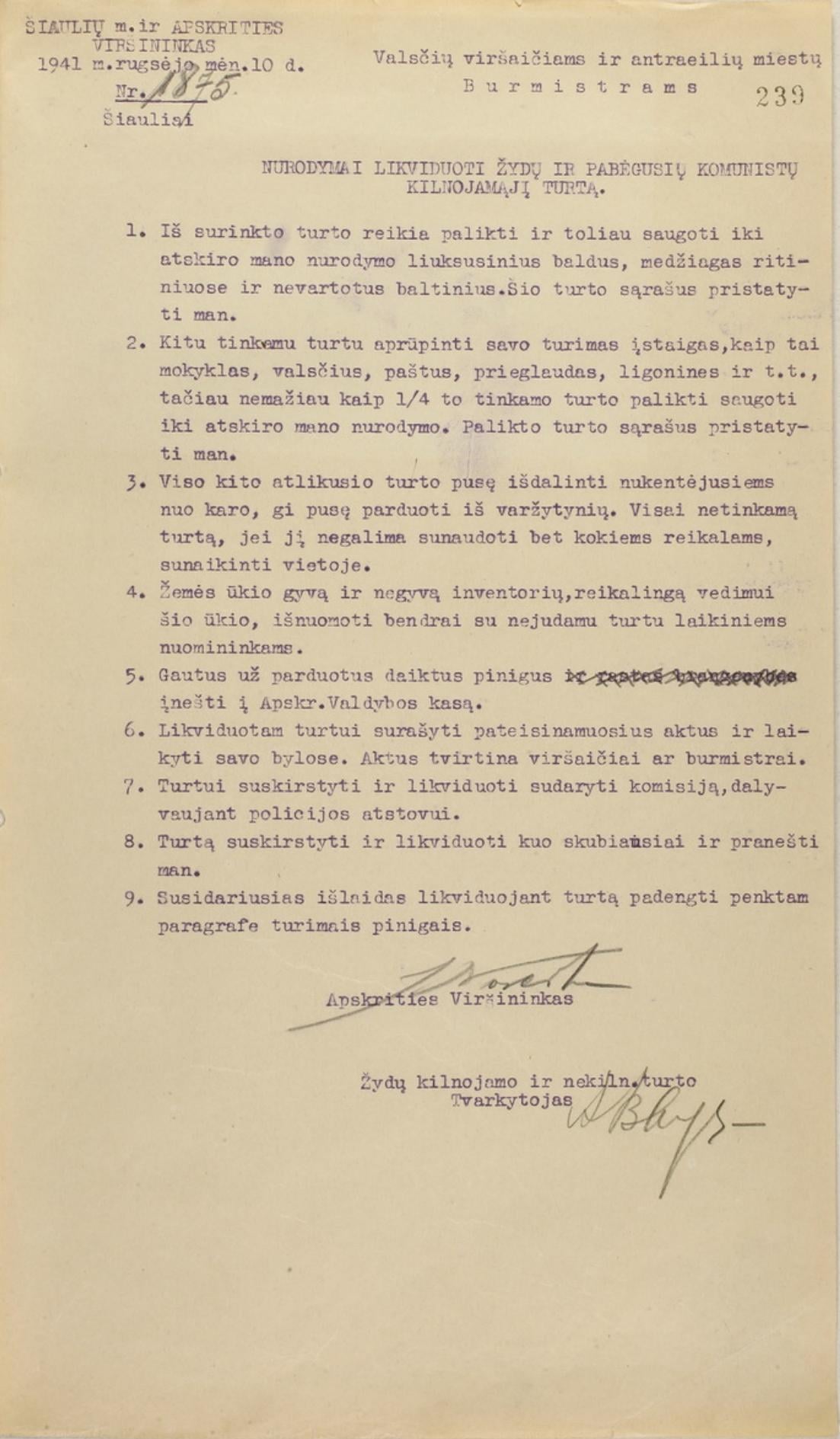
Fourth: the 10 September 1941 circular on liquidation of Jewish movable property. Noreika signed “Instructions to Liquidate Jewish and Fugitive Communist Movable Property.” Cash from sold items went to the District Administration account. “Found valuables” was struck through; jewelry was removed from the deposit requirement.
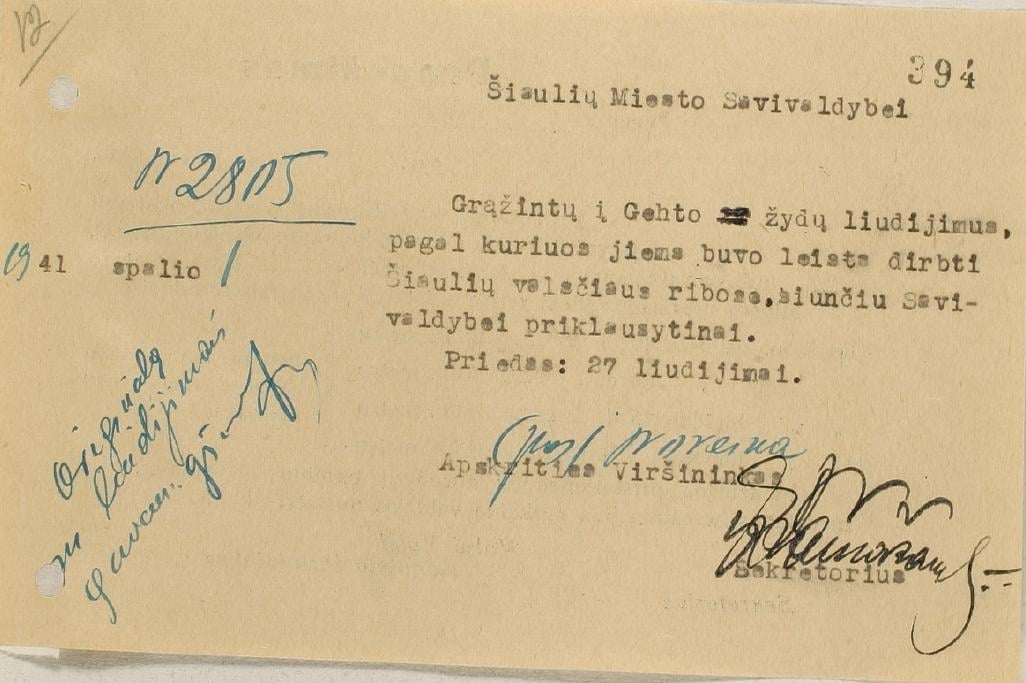
Fifth: the 1 October 1941 transmittal of twenty-seven Jews returned to the ghetto. Noreika forwarded certificates of Jews returned to the Šiauliai ghetto after prior authorization to work outside the perimeter. One day later, the Jews of Žagarė were murdered.
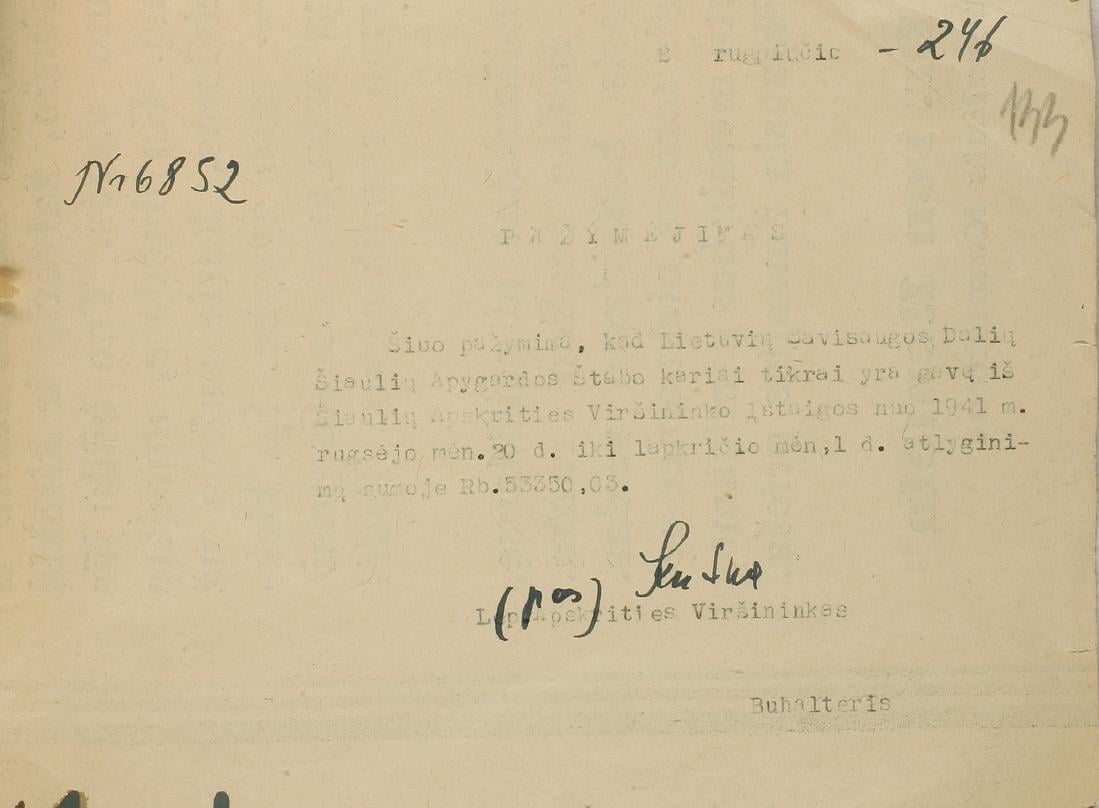
Sixth: the 24 August 1942 salary certificate confirming payment of Rb. 53,350.03 to Lithuanian Self-Defense soldiers for 20 September through 1 November 1941. Noreika’s monthly salary was 1,000 rubles. His office disbursed approximately fifty-three months of his own pay to men in the field.
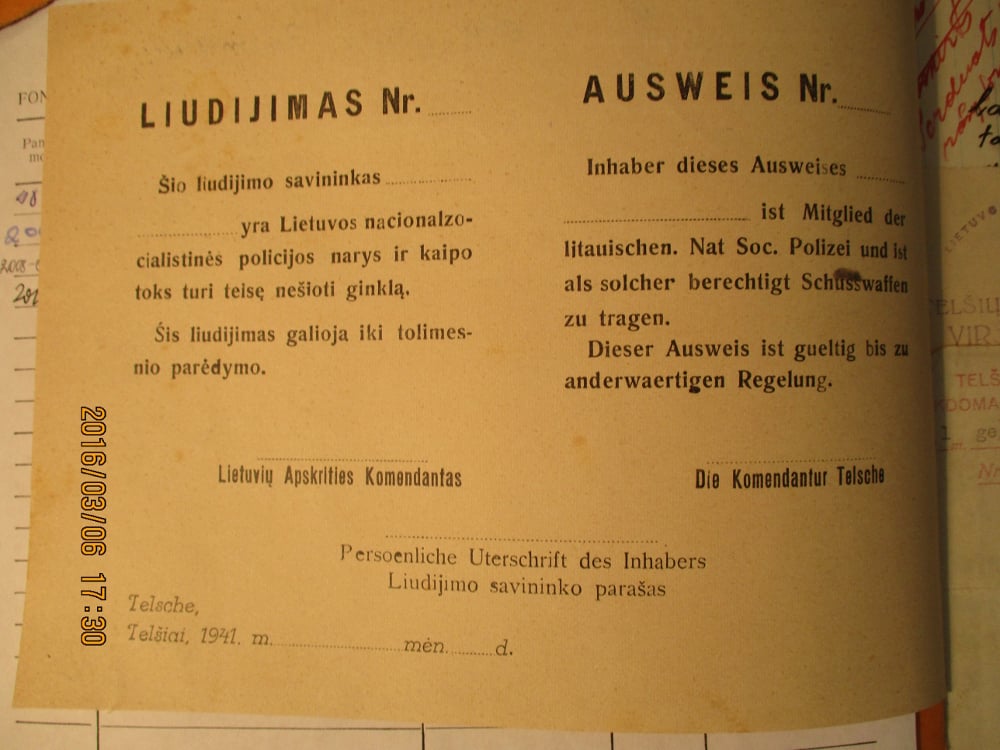
Seventh: the Lithuanian National Socialist Police gun permit, a bilingual Lithuanian-German arms credential identifying the bearer as a member of “Lietuvos nacionalsocialistinės policijos” / “litauischen Nat. Soc. Polizei.” A self-organized Lithuanian National Socialist Police issuing armed credentials contradicts the claim that all Lithuanian action was merely German command.
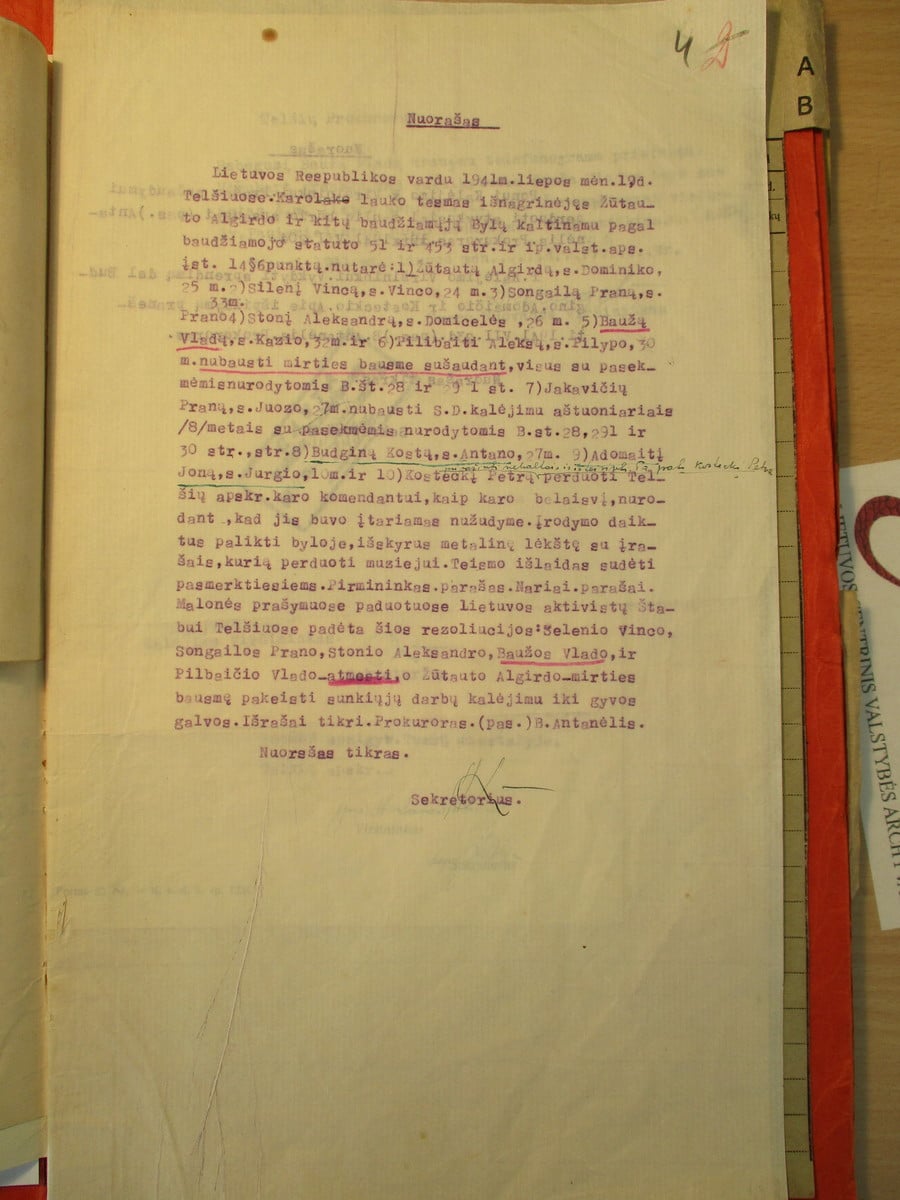
Eighth: the Vladas Bauža Telšiai field court death sentences of 19 July 1941. The field court at Karolakas, Telšiai issued death sentences by firing squad and reviewed clemency petitions. Independent Lithuanian capital jurisdiction existed in summer 1941. It was exercised in Lithuanian, by Lithuanians.
The complaint listed twenty-nine annexes. The Centre’s reply addressed none of them.
An answer that addressed nothing
My counsel’s contemporaneous observation of the Centre’s response is preserved in his 25 July 2018 cover letter: their answer did not mention a single document presented and contained no analysis of them whatsoever.
That sentence is the operating mode of state-issued denial in Lithuania. Not engagement. Not contestation. Silence as method. Eugene J. Levin named that mechanism in The Silence Lithuania Chose: in Soviet-style bureaucratic culture, silence is not the absence of an answer; silence is the answer. Lithuania applied that method to Congressman Brad Sherman and to my 2018 prosecutor complaint. Where replies are issued, silence mutates into non-engagement: acknowledgment without substance, receipt without accountability, procedure without truth.
The Centre’s defenses were not separate mistakes. They were the architecture of state exoneration. LGGRTC is not a private historical society. It is a statutory budget institution, funded by the Lithuanian treasury and assigned authority to speak in the state’s voice about genocide, resistance, occupation, and national memory. In practice, that authority has been used to rewrite Lithuania’s national history around innocence. Each answer moved evidence away from Lithuanian responsibility and toward state protection.
When Lithuanian officials acted, the Centre treated them as instruments of German command. When Lithuanian newspapers incited against Jews, it recast them as Nazi-controlled. When Antanas Pakalniškis, who worked in the Plungė commandant’s office, recorded that Noreika ordered the murder of the Jews of Plungė in the synagogue, the Centre disqualified him because he lacked command authority. Independent archival research was rejected as “not scientific” because the researchers were not institutionally approved. The Lithuanian Activist Front was insulated from criminal characterization. Ghettoization was severed from murder, as if forced isolation were not part of the killing process. Article 16 of the LAF statute, withdrawing civic hospitality from Jews, became a possible Soviet forgery. Missing LAF Telšiai documents became the excuse for not compiling Noreika’s subordinate list.
The method is visible: remove Lithuanian agency, discredit witnesses, credential-gate the archive, detach administrative persecution from murder, and convert evidentiary gaps into acquittal. This was not historical research. It was state work. The Centre acted as the government’s memory agency, laundering the documentary record into a usable national mythology.
That is not scholarship. It is not mistake. It is Holocaust denial as state administration.
Lithuania refused to investigate it.
The treasury and the paymaster
The 10 September circular set the rule: cash from sold seized Jewish property went to the District Administration account. The requirement to deposit “found valuables” was struck through.
Only on 5 November 1941, after the Žagarė massacre and second-wave killings were complete, were District funds moved to the Reich Credit Bank Šiauliai for the Gebiets Kommissar account. For approximately eight weeks, while the Jews of Šiauliai county were being murdered, the proceeds of their dispossession sat in Noreika’s administrative cash account.
The salary certificate records what that office disbursed in the same window: Rb. 53,350.03 to Lithuanian Self-Defense soldiers from 20 September through 1 November 1941, approximately fifty-three months of the District Chief’s own pay.
The arithmetic is brutal. Einsatzkommando 3A under Hamann, with approximately 150 men in Kaunas district, accounted for approximately 32,000 killings to October 1941. Einsatzkommando 2A, with approximately 30 men in Šiauliai district, was officially credited with approximately 42,000 killings in the same window. Five times fewer German personnel. Thirty per cent more murdered Jews. The math forces the conclusion: the killing in Šiauliai county was overwhelmingly Lithuanian-executed under Lithuanian command, paid through a Lithuanian cash account, and inventoried in a Lithuanian administrative office. The District Chief was the paymaster.
The complaint set out these documents and this arithmetic. The Centre’s reply addressed none of it.
Three steps of one asymmetry
Step one. Valdas Rakutis, Member of the Seimas, published an article on International Holocaust Remembrance Day, 27 January 2021, accusing Jews of perpetration of the Holocaust. The U.S. Ambassador called the article “shocking.” U.S., German, and Israeli diplomatic concern followed. Lithuania did not punish Rakutis under Article 170² § 1. The prosecutor’s office did not act. Rakutis remained a Member of the Seimas.
Step two. Teresė Birutė Burauskaitė, director of the state Genocide and Resistance Research Centre, was named in 2018 as the criminal subject of an Article 170² § 1 complaint for state-issued Holocaust denial, supported by the documentary record above. Lithuania did not open an investigation. Burauskaitė retired. The Centre’s Noreika exonerations remain.
Step three. Artur Fridman, a Jewish citizen of Lithuania, posted on Facebook from a Vilnius cemetery on 9 May 2024. Lithuania’s prosecutor’s office produced a 220-page indictment against him under Articles 170² § 1 and 313 § 2. The case is live. The trial is proceeding. Michael Kretzmer’s formulation in Times of Israel stands as the operative reading: Lithuania has put itself, not Artur Fridman, on trial.
The same statute. The same prosecutor’s office. Three subjects. One Lithuanian Member of Parliament accused Jews of the Holocaust on the day of its commemoration: not punished. One Lithuanian state official was the named subject of a Holocaust-denial complaint: not investigated. One Lithuanian Jew posted on Facebook: 220 pages.
The seven-year arc is intact. Article 170² § 1 in Lithuania is not a Holocaust-denial statute. It is a statute reserved for the Jewish citizen who speaks.
The absurdity of the 157-point plan
Lithuania can publish a 157-point plan. It can convene committees, host delegations, issue educational language, invoke European standards, attend remembrance ceremonies, praise rescuers, and speak the vocabulary of Holocaust memory fluently enough for foreign consumption.
Fridman’s prosecution exposes the plan’s absurdity. A Holocaust-memory plan that coexists with a 220-page indictment of a Lithuanian Jew for speech is not a plan against antisemitism. It is a public-relations instrument wrapped around antisemitism. A state that refuses to investigate its own Holocaust-denial institution, protects a parliamentarian who blamed Jews on Holocaust Remembrance Day, and prosecutes a Jew for cemetery speech has revealed the hierarchy beneath the paperwork.
This is not confusion. It is pure antisemitism in legal form. The Jew may be commemorated as a victim once he is dead. The Jew may be praised if he helps decorate Lithuanian innocence. The Jew may appear in ceremonies, plaques, plans, school programs, and diplomatic photographs. But when a living Jew names Lithuanian memory fraud, the machinery turns on him.
That is the difference between Holocaust memory and Holocaust control. Lithuania does not lack a plan. Lithuania has a plan. Fridman shows what the plan protects.
The granddaughter’s testimony
The complaint also contained the testimony of Silvia Foti, granddaughter of Jonas Noreika and author of Storm in the Land of Rain. Her statement to Lithuania’s prosecutor’s office was direct: the cover-up of her grandfather’s role as Lithuanian Activist Front commander and Holocaust executor in Žemaitija and Šiauliai county was one of the largest conspiracies of the past century in Lithuania.
The granddaughter testified against the Lithuanian state institution rehabilitating her own grandfather. Her testimony entered the prosecutor’s file as Annex 29. The prosecutor did not investigate. The Centre’s rehabilitations remain.
The pattern is the demonstration. A single refusal can be an oversight. Five Article 170² § 1 refusals against named state targets, set against a 220-page indictment of a Jewish citizen for a Facebook post, is not oversight. It is operating policy.
The exhibit
Michael Kretzmer formulated the principle for the Fridman case. The state’s exhibit of force is the state’s exhibit against itself. The principle applies backward as well as forward.
The 2018 complaint is the prior demonstration. Lithuania, asked by a Jewish petitioner to apply its Holocaust-denial statute to its Holocaust-denial institution, refused. The refusal is itself the documentary record. It places Lithuania, not the petitioner, in the dock.
The Genocide and Resistance Research Centre continues to operate. Burauskaitė retired. The Noreika exonerations remain. The 157-point plan circulates. The 220-page indictment of Artur Fridman remains live.
Seven years before Lithuania built the indictment of Artur Fridman, I named the institution that was the documentary precondition of it. I supplied the documents. I named the director. I named the statute. Lithuania declined to investigate.
Lithuania chose Fridman instead.
That is the record Lithuania made against itself.