

Middle East specialist focusing on conflict, human rights, and media narratives.
Seventy Kilometres of Guilt
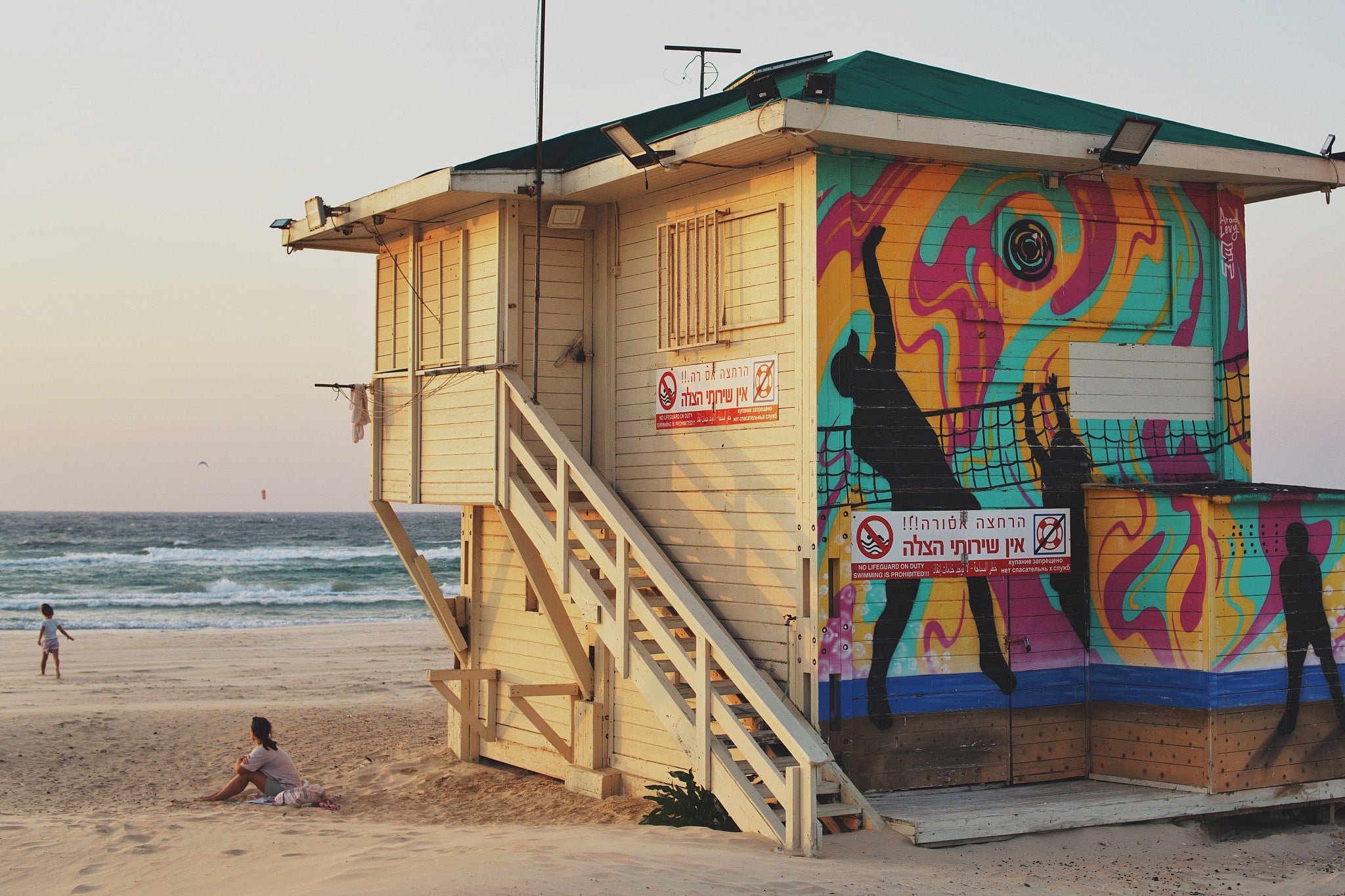
(Shir Danieli via Pexels)
When simply going to the beach becomes a political judgement
I sometimes think the beach today is a little like the ice used to be: it belongs to everyone and no one. On the ice, the usual rules governing land and water did not quite apply, which is why stalls appeared selling food and hot drinks. Something similar happens on a beach. Differences in social class, education and political preference seem to disappear in the sand as easily as an ice cream melts in the sun. People swim, read, play with their children, drink coffee or do absolutely nothing. That is precisely what makes a beach such a peculiar place from which to judge the political views of an entire country.
Yet that is more or less what NRC, one of the Netherlands’ leading national newspapers, did on 20 August in a feature about beach life in Tel Aviv. Reading it, you could easily come away with the impression that even an afternoon by the sea has become a political act.
The headline, translated from Dutch, leaves little to the imagination: “On Tel Aviv’s packed beaches, Israelis like to bury their heads in the sand.”
So the conclusion has already been reached before the first sunbather has even spoken. Not some Israelis, not a number of beachgoers interviewed for the article, but Israelis. An entire country, conveniently squeezed onto a beach towel in the sun. And they are not simply going to the beach. Apparently, they rather enjoy burying their heads in the sand.
We are then taken past cafés and restaurants pumping out loud music, surfers walking across the sand with their boards, runners, cyclists, rollerbladers and people out for a stroll. Matkot is being played. People are having fun. There is nothing particularly remarkable about any of this. It is August, it is Tel Aviv and it is hot.
But seventy kilometres away lies Gaza. And Gaza, if international media, selective activists and the average university lecturer are to be believed, has become more or less the centre of the world. Suddenly, even a day at the beach in Tel Aviv looks suspicious.
That distance keeps returning throughout the article and changes the meaning of everything around it. The beach is “approximately 70 kilometres from Gaza”. Later, Gaza is “just an hour’s drive from Tel Aviv” and, for good measure, “on the same coastline”.
Libya is on that same coastline too, with its horrific detention centres, human trafficking and modern slavery. A little further around the Mediterranean, Turkish resorts are bursting with holidaymakers happily helping themselves to all-inclusive buffets, while Morocco apparently becomes a land of milk and honey the moment the sun loungers come out. Strangely enough, people there are rarely asked what an afternoon by the sea says about human rights abuses in the country where they have put down their beach towel.
Apparently, going on holiday only becomes suspicious when a line can be drawn to Gaza. Otherwise, human rights are something to worry about after the holiday.
The contrast NRC wants to establish is clear enough: here, people are lying on the beach; there, a territory lies in ruins. The reader hardly needs to be told what to make of it.
But what exactly do those seventy kilometres prove?
People carrying on with their daily lives while a war is being fought relatively nearby is hardly unusual. It happens in almost every war. People go to work, children go to school when they can, restaurants open their doors and, on hot days, people go swimming. Ordinary life does not automatically stop because people are dying somewhere else.
A visit to the Dutch Resistance Museum in Amsterdam illustrates this rather well. During the German occupation, daily life continued for most Dutch people too. They worked, married, went to school and enjoyed themselves. That sits rather less comfortably with our national image of grandad bravely joining the resistance in May 1940. Some of those grandads will instead have pocketed 7.50 guilders for turning in a Jew in hiding. No occupied country in Western Europe ultimately lost a greater proportion of its Jewish population than the Netherlands.
In other wars, moreover, we often describe this determination to carry on with ordinary life as resilience. A café that stays open in Kyiv while fighting continues elsewhere in Ukraine is a sign that people refuse to be broken. A concert held during wartime becomes a symbol of endurance. Someone who tries to live normally despite air-raid sirens is refusing to let war dictate every part of life.
In Tel Aviv, the same behaviour acquires a different meaning. There, it suddenly becomes evidence that people are burying their heads in the sand.
Because Gaza.
The strange thing is that NRC then introduces us to one Israeli after another who does nothing of the sort.
Gal Elalel surfs every day and even stayed in the water when the air-raid sirens sounded during the Iranian attacks. “If I stop going to the beach, we have lost the war,” she says.
Sensible? Probably not. But I understand her. A woman who deliberately stays on her surfboard during an air raid because she refuses to allow war to dictate her life is a rather peculiar example of an Israeli who supposedly does not want to know what is happening around her.
Nor does Karen Gaf fit the bill. Whenever a military helicopter flies overhead, she thinks of a soldier being taken to hospital. She is fed up with Netanyahu, fed up with the endless “Iran, Iran and more Iran”, and is considering leaving the country if Netanyahu wins another election.
Other people NRC interviews also talk about emigration and the political situation. One woman even volunteers to protect Palestinians in the West Bank from settler violence.
For a bunch of Israelis who supposedly enjoy burying their heads in the sand, they are remarkably well aware of what is going on around them.
And perhaps that is the most interesting thing about the whole article. The Israelis NRC speaks to simply do not fit neatly into the story promised by the headline. They oppose Netanyahu, or they do not. They are frightened, angry, weary of war or distrustful. Some are thinking of leaving the country. One helps Palestinians. Others distrust the images coming out of Gaza or point out that Hamas itself bears a great deal of responsibility for the suffering of Gazans.
That, too, is a story. Of course there are Israelis who deny Palestinian suffering, play it down or simply do not want to see it. Write about that. Please do. Find out how large that group is, why people think that way and what almost three years of war have done to the way they look at Gaza.
But be clear about who is denying what. Distrusting images coming out of Gaza is not the same as denying that civilians have been killed. Holding Hamas responsible for suffering in Gaza is something else again. You may profoundly disagree with any of those views, but that does not make them interchangeable.
And this is precisely where NRC begins throwing a little sand in the reader’s eyes.
“The images from Gaza that the rest of the world sees are not shown in Tel Aviv,” NRC writes.
The rest of the world is quite a claim. As though everyone outside Israel sees the same images through the same media and then draws the same conclusions from them. NRC goes a step further when it says that on the beach there is “widespread denial” of “the civilian deaths, starvation and destruction that Israel has caused in recent years”.
“Widespread” is doing a remarkable amount of work there, because the article never tells us what that judgement is based on. How many people were actually interviewed? How many deny that civilians have been killed, that much of Gaza has been destroyed or that people are going hungry? And how many acknowledge all of those things but have a different view of who bears responsibility for them?
That distinction matters. You can see what is happening in Gaza and hold Israel responsible. You can hold both Israel and Hamas responsible. And you can, quite rightly in my view, believe that Hamas bears an enormous responsibility for the suffering of its own population. None of that is the same as denying that the suffering exists.
NRC rather casually lumps these very different things together.
The article itself certainly does not provide enough evidence to justify doing so. We hear from two women. Sara Paz says she does not believe the images from Gaza. Shira Kaufman says Hamas is responsible for “the people there”. The first can reasonably be described as distrust, perhaps even denial. The second is something quite different. Holding Hamas responsible for the fate of Gazans does not mean denying that Gazans are being killed, that people are going hungry or that much of Gaza has been destroyed.
Yet both comments appear beneath the subheading “Denial of the destruction of Gaza”. NRC has therefore already told the reader how to understand the quotations before the reader has had a chance to decide for themselves.
When I did my minor in Journalism and New Media at Leiden University, we simply called that framing. But I digress.
Then B’Tselem enters the story. The Israeli human rights organisation described what was happening in Gaza as genocide in the summer of 2025, NRC writes, “in the wake of countless genocide experts and human rights organisations”.
B’Tselem has, incidentally, been documenting abuses in Israel and the Palestinian territories for years: the occupation, apartheid and settler violence. Outside a relatively small circle, hardly anyone seemed terribly interested before 7 October 2023. These days you can barely walk into a university building without tripping over Palestine, while half of Western Europe appears to lie awake at night worrying about Israel. Where all that concern was while B’Tselem spent years writing about those same Palestinians remains an interesting question.
That B’Tselem now accuses Israel of genocide obviously belongs in the story. So does the fact that other organisations and experts have reached the same conclusion. But genocide is not a competition in which whoever gathers the largest number of experts, commentators or human rights organisations eventually wins. Whether a state has committed genocide is ultimately for the International Court of Justice to determine, not the media or whoever has already written the judgement on social media.
NRC does not merely say that experts have described what is happening as genocide. There are “countless” experts. As though the number of people making an accusation somehow changes the fact that it remains an accusation. An accusation does not become a judgement simply because you put the word “countless” in front of it.
And that is how this article works more often. Nothing in it necessarily has to be demonstrably false. It is about which facts you choose, which words you put around them and what you leave out. A little nudge here, a convenient subheading there, Gaza another seventy kilometres away, and the reader eventually arrives exactly where the writer wants them to be. The sunny beach is placed beside devastated Gaza, Israelis enjoying themselves beside misery seventy kilometres away, and someone who says she does not believe the images is promptly followed by B’Tselem and “countless genocide experts”. Step by step, perfectly ordinary behaviour is made to mean something it did not mean on its own.
And in doing so, NRC misses what I think is a far more interesting story. What does a society look like after almost three years of living with the consequences of 7 October, the war in Gaza, hostages who have returned traumatised or in coffins, reservists repeatedly called back to duty, soldiers killed in action, rocket attacks, war with Iran, political turmoil and mass protests against its own government? And how, amid all of that, do people still go to work, raise children, fall in love, argue, go out for dinner or, yes, spend an afternoon at the beach?
That story is hidden all over NRC’s own reporting. It is there in the woman who hears a military helicopter and immediately thinks of a wounded soldier, in the surfer who refuses to leave the water during an air-raid siren and in the volunteer protecting Palestinians from settler violence. It is there in the Israelis seriously considering emigration and even in the suspicion directed at a foreign journalist, who is immediately asked whether she is going to write “good things” about Israel.
I do not have to find that suspicion sympathetic to wonder where it comes from. After almost three years of international reporting on Israel, that strikes me as a rather interesting question. In fact, that is the story I would have liked to read.
But to write it, you first have to look at the people you interview as people, rather than as extras in a story whose conclusion has already been written above the opening paragraph.
Of course the contrast between Tel Aviv and Gaza is enormous. It is jarring to see people lying on beach towels beside the same Mediterranean while, a few dozen kilometres away, others are living in appalling conditions. That contrast is worth describing. By all means describe it. But its existence does not prove that the people on those beach towels are indifferent.
Going to the beach is not a denial of Gaza. Playing matkot tells us nothing about what someone thinks of the war, surfing does not make someone a Netanyahu supporter, and having a beer by the sea after years of war is not a political statement. Sometimes a beer is just a beer and a beach is just a beach.
If you want to turn all of that into a judgement about Israelis, you need more than seventy kilometres of coastline. NRC had already reached that judgement in its headline: Israelis like to bury their heads in the sand.
Yet the people NRC itself interviews are acutely aware of what is happening around them. They worry, they are angry, they consider leaving the country, they protest against their government or protect Palestinians from settler violence. And yes, sometimes afterwards they go to the beach.
Perhaps that is the strangest thing about the whole article. NRC went to the beach looking for Israelis with their heads in the sand and found, for the most part, people trying to carry on living in a country that has been turned upside down for almost three years.
There was a wonderful story in there.
NRC, 20 August 2026 “Op de afgeladen stranden van Tel Aviv steken Israëliërs graag hun kop in het zand”
About the Author
Domicela Heijmeriks is a Dutch Middle East specialist and independent journalist, specialising in women’s rights and media framing. She holds an MA in Middle Eastern Studies from Leiden University.
Related Topics
Related Posts


Domicela Heijmeriks