
Seventy Two Hours Inside the Ping Pong
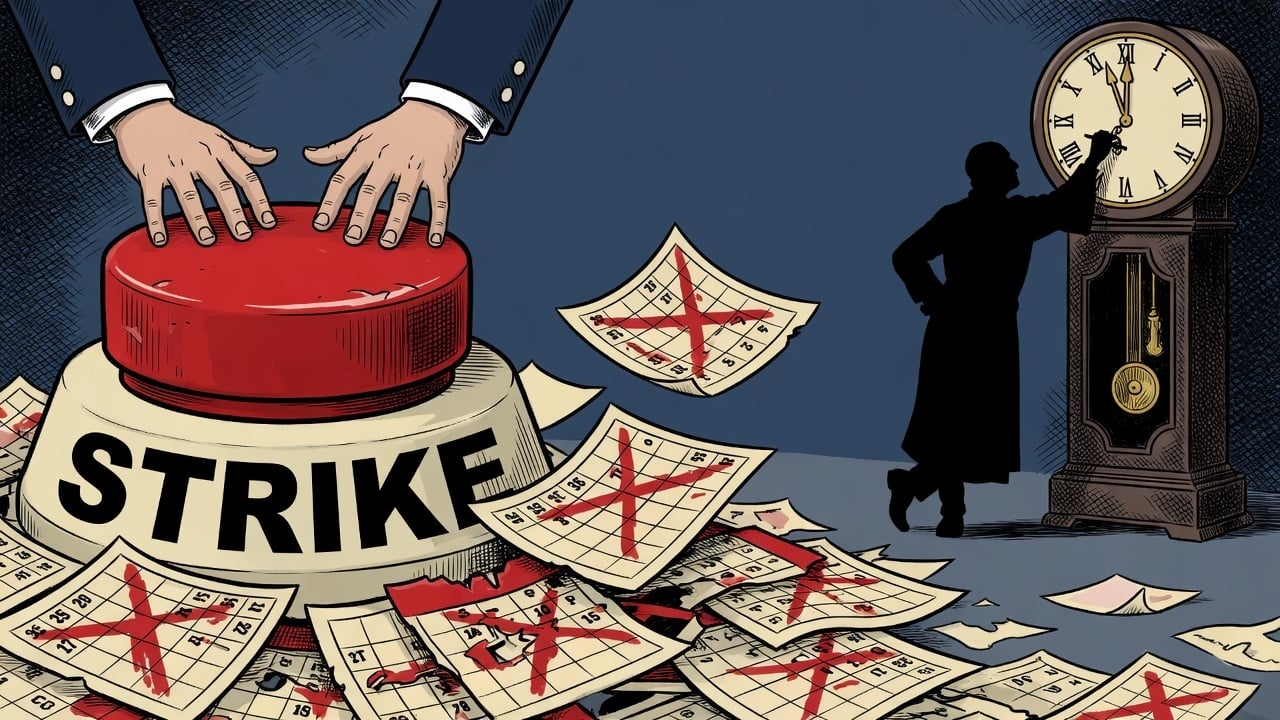
The deadlines keep moving, the Strait stays closed, and Israel keeps living in the gap
I live in Israel, and since the end of February I have gone to bed more than once believing that the night was the night.
The deadlines are always set in Eastern time. Eight in the evening in Washington lands at three in the morning here. So the country with the most at stake in whether Iran keeps its capability sits awake on somebody else’s clock, waiting to learn from a social media post whether the region is about to change.
Then the morning comes, and the strike is off. Talks are going well. A deal is close.
Watch what the past few days alone have looked like.
Sunday, the president called off what he described as the biggest attacks since the Second World War, saying the Iranians did not want the United States to go through with it. Negotiations were to begin Monday afternoon. Monday morning, Tehran denied that talks had resumed, and the president posted that Iranian leadership is unbelievably duplicitous. Later that day Iran was given a last chance. Tuesday he told Fox News that very good discussions were underway and that the Strait would open soon or Iran would be hit very hard. He also told reporters he wanted to give them every last chance before decapitation. Iran again denied direct talks. Today the word is that more details arrive in forty eight hours.
That is three days. The full record since the war began on February twenty eighth runs longer.
A forty eight hour ultimatum on the Strait of Hormuz with a promise to hit the largest energy plant first. A five day delay for conversations described as good and productive. A ten day pause because negotiations were going very well. A two week hold after phone calls from Pakistan. An indefinite postponement while Tehran prepared a proposal. A cancelled attack at the request of Saudi Arabia, Qatar and the Emirates. A deal to be announced shortly. Strikes threatened at dawn as bigger and more powerful, then called off by nightfall. Strikes halted at Tehran’s own request. And Sunday, the whole package stood down again.
By the middle of June, reporters had counted eight publicly cancelled deadlines. We are past ten.
I want to be precise about what sits on the other end of this. The Iranian regime does not object to Israeli policy. It objects to Israeli existence. That has been stated by its leadership, printed on its missiles, and funded through every proxy it built from Lebanon to Yemen to Iraq. This morning the air force struck Hezbollah positions in southern Lebanon after a ceasefire violation, with an evacuation warning issued to a village near the coast. The network does not pause while the principals negotiate. Treating a regime built around our elimination as an ordinary counterparty misunderstands the thing being negotiated with.
Which is why the stopping and starting is so corrosive.
Every pause is presented as restraint. From here it reads as instruction. Tehran learns that a threat is an opening bid. It learns that a deadline is an appointment. It learns that the phrase serious negotiations buys another two weeks of rebuilt air defense and another two weeks of dispersal. Nothing in the past five months has taught the Iranian leadership that American force arrives when it is promised.
Iran has never won a war. It has never lost a negotiation. The regime survives by converting military weakness into diplomatic time, and it has been handed more of that time since February than in any comparable stretch I can remember.
Meanwhile we live in the gap.
Israelis have now spent close to three years inside a permanent condition of not knowing. Not knowing whether the next round begins tonight. Not knowing whether the miluim call goes out this week or next month. Fathers have missed a birthday, then missed the next year’s birthday, and cannot tell an employer when they will be back at a desk. Families in the north went home, then packed again. Business owners stopped signing anything more than a quarter out. Children ask what the noise was and get an answer that is technically true and completely useless.
Uncertainty carries a cost, and it is not measured in headlines. It is measured in marriages under strain, in companies that will not hire, in a generation of Israeli kids who treat a stairwell as furniture.
I am not asking for a wider war. I have served, and I know exactly who pays for one. I am asking for an end state. A threat either dismantled or verifiably contained, with terms confirmed rather than announced. Anything short of that is a pause dressed as a resolution, and we have lived through enough of those to know how they end.
The Strait of Hormuz is still closed. Iran and Oman are drafting a joint statement about vessel passage. Maritime risk remains elevated and traffic remains a fraction of what it was. That is the scoreboard. Not the framework, not the assurance, not the imminent breakthrough. The waterway.
We do not get to choose which version of this we live in. We only get to live in it.
So we keep the safe room stocked and the bags packed. We keep answering the call when it comes. And we keep watching a clock that belongs to somebody else.