Shabbat Meets Urban Planning
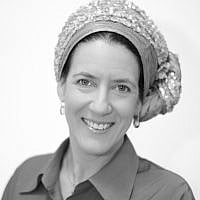
I’m sitting at a Shabbat table, surrounded by new acquaintances. When they learn that I’m a student at Yeshivat Maharat, a rabbinical school for Orthodox women, I usually get the following question, “Why did you want to become a rabbi?” For me, it’s not a simple answer. I grew up in an interfaith family, far from the tight-knit center of Jewish life and learning where I now make my home. And in the middle of a thriving career in urban planning, I made a radical pivot: from bicycle and pedestrian transportation planning to Jewish leadership. Instead of spending my days planning future bikeshare systems, or transportation design guidance, I am poring over ancient texts. The inevitable next question is, “How do you bring urban planning into your rabbinic life? What do the two have in common?”
Both professions look at the world as it is and image a more perfect world. From my experiences in both, it’s clear that insights from urban planning, and active transportation (bicycling and walking) can shed light on and enrich our Jewish experiences. As one example, the concepts and practice of bicycling and urban planning adds to our understanding of Shabbat.
Traditionally, the vast majority of Jewish communities do not drive, take transit, or bicycle on Shabbat. Some of these modes of transportation are powered, in the traditional mind, by “fire” or electricity, which are forbidden on Shabbat. For bicycling, the question is a bit murkier. Some Jewish sources are concerned about the idea that one might have to fix a bicycle on Shabbat.
On a broader level, traditional Jewish communities worry that bicycle riding runs counter to the spirit of Shabbat. In the Talmud (Shabbat 113a), the Rabbis teach that “the way of your walking (or, travelling) on Shabbat should not be like the way of your walking during the week.” We are meant to move through the world in a different way. Rather than rushing to and fro, Shabbat forces us to slow down, to focus on family and spiritual aspects. Perhaps this even means when we drive or bicycle during the week, or we walk quickly, we are meant to travel in a different way on Shabbat.
How is the experience of walking different than other modes of transportation? When we walk, we move slower (2.5-3 miles per hour according to some estimates). However, this slower speed means that we experience the world differently. Urban planners suggest that we should design cities differently when we focus on the pedestrian. When we walk, we need a greater level of detail and visual interest, at the street level–this is often referred to as “human scale” design. When we walk frequently, we interact with our city and with other people differently. When cities work well, sidewalks are hubs of activity and diversity.
In my many years of life as an avid pedestrian, I’ve observed this at work as well. In all the cities I’ve lived in, it’s clear when walking routes feel safe, beautiful, or diverting. And at the scale of a pedestrian, there is space for human interaction, for chance meetings. We see these urban planning insights at work on Shabbat. In my neighborhood on Shabbat, often groups of Orthodox Jews congregate on the sidewalk, catching up with friends, running into acquaintances. The sidewalks of Riverdale seem to spill over with community. These relationships are strengthened at the speed of walking.
What of bicycling on Shabbat? The prevailing custom is not to bicycle on Shabbat. However, the Ben Ish Chai, a 19th century Baghdadi rabbi and expert in Jewish law, felt differently. His ruling, which is accepted by the Syrian community in Brooklyn, NY, was that bicycling is permitted on Shabbat.
I asked a colleague and member of that community what this practice looks like on the ground. She shared that many community members in Brooklyn and Deal (New Jersey, where there is a significant contingent) do bicycle on Shabbat, primarily traveling to the synagogue or to visit friends. In this community, bicycling is not viewed as antithetical to the spirit of Shabbat. Observant Jews, some in their Sabbath finery, are seen commonly bicycling to their Shabbat meals, to attend services, and to socialize.
I wonder how Shabbat feels different in this kind of community. Returning to the idea of “the way we walk on Shabbat”, would we bicycle differently on Shabbat? From my urban planning practice, there is a framework of different types of bicycle users. Some bicycle riders–such as the avid sports cyclist, will ride confidently on almost any street. Others are more cautious, preferring to ride more slowly on calm streets or separated facilities. I see this latter group as a model for how we might ride bicycles on Shabbat. Bicycling doesn’t need to be a frenetic activity–it can be calm, relaxed, and perhaps in keeping with the spirit of Shabbat. If a person does permit bicycling on Shabbat, the bicycling should feel different.
From my years of bicycle riding, it’s possible to ride a bicycle in a Shabbat-appropriate way. I would seek out “low-stress” streets and trails. I would bicycle more slowly. Although I find myself in a community that does not bicycle on Shabbat, urban planning insights teach me that walking on Shabbat is a slower, social, and reflective experience. And my understanding of bicyclist user types points out that there are different ways we can approach travel, on Shabbat or a weekday.
So, as an urban planner turned future rabbi, my two world need not remain separate. They can enrich each other, and help to shift how we view the experience of both Shabbat and how we walk through the world. When we walk on Shabbat, our worldview changes. The fact that we are walking allows for not only a slower pace, but also greater social interaction and an appreciation for the streetscape. And if we bicycle on Shabbat, we should think about how and where we travel, embracing “low stress bicycling” as part of the spirit of Shabbat.