She Saved Her Sister From the Nazis. The War Never Let Her Go.
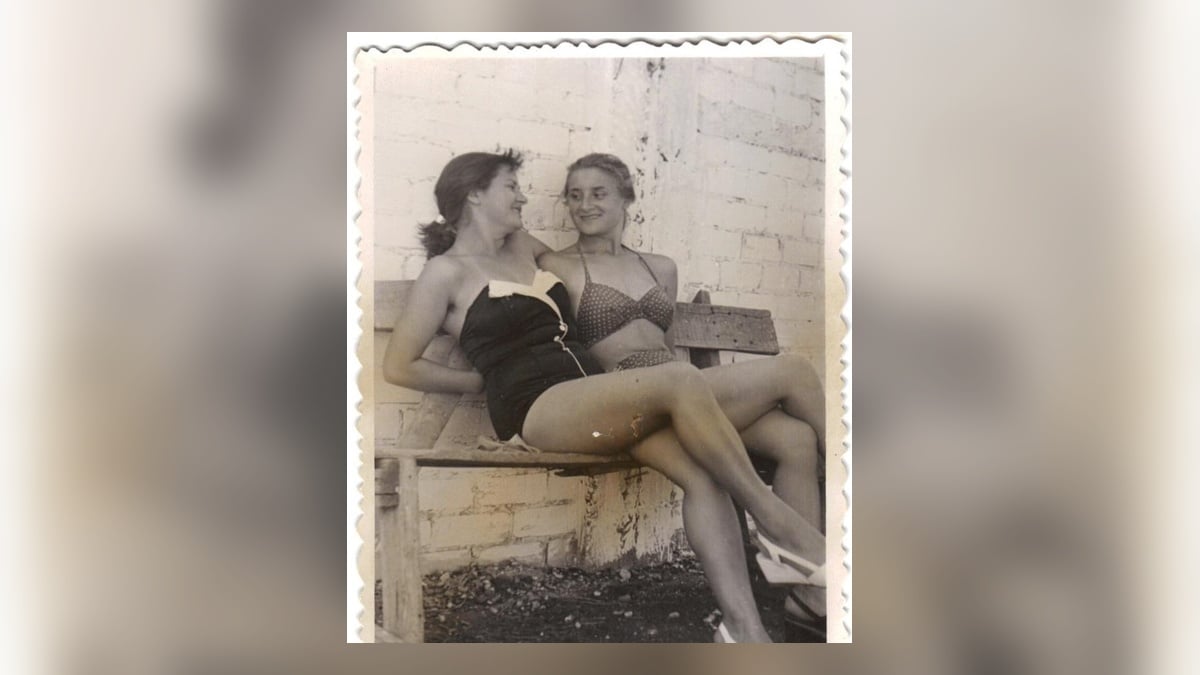
Miriam Szurek walked into the most feared address in occupied Warsaw and came out alive.
She was a Jewish girl hiding as a Polish Catholic child under the name Krystyna-Marja Skółkowska, a name taken from a tombstone. Arrested on suspicion of being Jewish, she was taken to Aleja Szucha, the Gestapo interrogation house. There, to save herself, she performed.
Then she did something harder. She asked them to bring her younger sister.
The two girls sang and danced for the Gestapo. In return, they received the papers that said they were not Jews.
Those papers saved Edna. They also began, or perhaps merely prolonged, the war that would never end for Miriam.
The war in Europe ended in 1945. For Miriam Dranger, it did not. It went on, underground and unannounced, for another thirty-three years, and what it finally did to her is written down, not in a history book but in the ordinary papers a life leaves behind. Those papers came down to my husband and me. They are how I know her.
Miriam and her younger sister Edna survived the German occupation of Warsaw as Polish Catholic girls. Their false names belonged to real sisters who had lived and died in 1919. Edna was six years younger. For most of the war, Miriam was, in every practical sense, the adult in her life: the one who kept them both alive.
Their survival was an art, and the art was performance. Day after day, in courtyards and on the streets of Aryan Warsaw, two Jewish girls performed for coins. The performance was both their livelihood and their disguise: Polish songs and steps delivered flawlessly enough, in plain public view, that no one looked twice.
It was the older sister who led. She set the terms. She steered them both through a city that would have killed them for what they were.
The first paper in this story is the one I will never hold. Miriam won it in the worst place imaginable.
At Aleja Szucha, to save her life, she performed, and she was convincing enough that the officers spoke of sending her to Germany. She could, in that moment, have saved only herself. Instead she made them an offer: she had a sister, and if they brought the sister, both girls would perform in exchange for papers.
So Edna walked into the torture house. The two sisters sang and danced for the Gestapo. And they left with kennkartes: identity documents, stamped by the Reich, certifying that they were not Jews.
The two sisters sang and danced for the Gestapo. And they left with papers saying they were not Jews.
The papers that protected Edna for the rest of the war were won by Miriam in the one building in Warsaw a Jewish child was least likely to leave alive.
Edna would not have survived without her. That is not a sentimental way of putting it. It is as nearly literal as the record allows.
Then the war ended, the one with a date. The sisters were liberated. The occupation was over; the papers had done their work. Edna would go on to be taken prisoner, reach Israel, marry, raise a family, and live to eighty-four.
By every public measure, they had won.
But there is a kind of war that does not end when the shooting stops, and Miriam was still in it.
The second paper arrived eighteen years later. In February 1963, Yad Vashem inscribed a dedication to her — formal, handsome, sealed in violet ink with the stamp of the Martyrs’ and Heroes’ Remembrance Authority — inside a book in which a chapter of her childhood had been recorded:
To Mrs. Miriam Dranger, a chapter of whose life became a building-stone in this book.
Here it is, given to you as a gift of honor, for your childhood that was not shamed, and for your stand of courage in the war of life.
It is a generous thing, and a careful one. It honors her childhood that was not shamed, answering, in advance, the ugly postwar suspicion that surviving by one’s wits on the Aryan side was somehow less than clean. And it honors her courage in “the war of life.”
That last phrase is an idiom. In Hebrew, milchemet hachayim, the war of life, is what everyone is loosely said to be engaged in: the struggle of getting through. The directorate meant it kindly, and generally.
But it was describing Miriam. And for Miriam, the war of life was neither general nor metaphorical. It was the same war, still running.
Yad Vashem called it “the war of life.” For Miriam, that was not a metaphor.
The institution had named it without knowing it had. It had written, on a certificate of honor, the exact truth about a war it believed was over.
The third paper proves it.
It is not one document but a folder: Miriam’s German reparations file, assembled in 1975.
It is written in a different register, the clinical German of medical examiners. It contains three psychiatric certificates from 1964; a gynecological opinion documenting sterility, traced to the pelvic tuberculosis she had contracted in the POW camp; and a five-page report by Dr. Marcel Kastner of Shalvata Hospital, outside Tel Aviv, recording a persecution-induced personality change, with anxious-depressive disposition, rated permanent.
Permanent is the word the war left behind.
The file notes, almost in passing, what that meant from day to day: by the early 1970s, Miriam could no longer leave the house alone. She traveled to each examination accompanied by her second husband, himself a double amputee, two survivors propping each other up across a city at peace.
The girl who had once sung and danced for the Gestapo with her life on the line could no longer sit before a doctor without someone beside her.
The performance that had saved her was over, and what it had been holding up came down.
In 1978, she took her own life. She was forty-nine.
Set the three papers side by side and they tell one story in three different hands: a child’s forged identity, a state’s certificate of honor, a physician’s permanent diagnosis. They are the documents of a single war, fought by one person from 1939 until 1978.
The cruelest arithmetic in it is the simplest. Edna, the sister who was saved, lived to eighty-four. She married, raised a family, and carried life forward. Miriam, the sister who did the saving, did not reach fifty.
The war had taken almost everything from her: her family, her safety, her childhood, her body’s peace, her mind’s rest. It had also taken from her the possibility of bearing children. The tuberculosis she contracted in the POW camp left her sterile. Edna was able to build the family life that Miriam’s courage had helped make possible. Miriam was not.
The war did not only take Miriam’s past. It took her future.
This is another way the war did not end. It continued not only in memory or fear, but in the body itself: in the children who could not be born, in the home that could not be made whole, in the future that had been stolen before it could arrive.
Two of those three papers are in our house now: the certificate of honor and the medical file. The paper that actually saved her, the forged identity she won at Szucha, did not survive the peace. It did its work and then vanished, as though it had belonged to the war alone and could not cross into whatever came after.
What remains is the record of a war that did not end when the world decided it had.
For Miriam, as for so many who survived, 1945 was not an ending but a change of form. The war moved indoors. It entered the body, the mind, the marriage, the doctor’s file. It lived on in terror, illness, loneliness, and the impossible work of continuing.
The least I owe her is to refuse the tidy date.
Miriam Dranger survived the Holocaust, but she did not outlive the war.
–
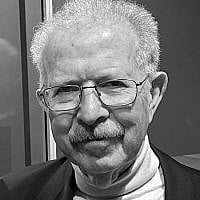
Janet Bond Brill, PhD, is the author of Little Edna’s War, the true story of her mother-in-law’s survival of the Warsaw Ghetto and the Polish resistance, released on International Holocaust Remembrance Day, January 27, 2026.