Should Family Physicians Encourage Patients to Vote?
What Does Voting Have to Do with Health?
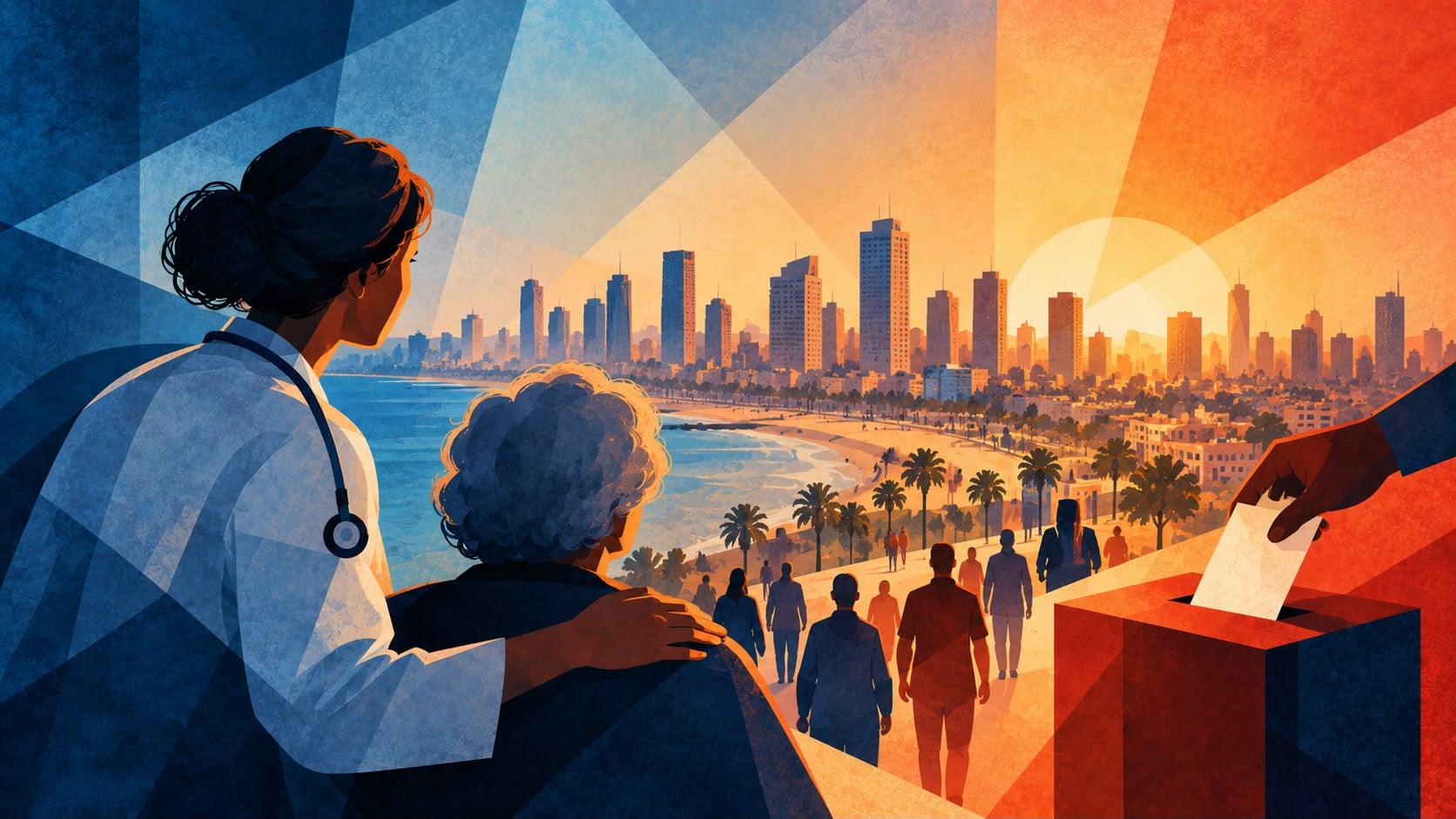
What does voting have to do with health? More than you might think.
A study of 170 countries found that those with stronger democratic institutions tended to have healthier populations, particularly when those institutions had endured over time. This is hardly surprising: democratic governments depend, to a greater or lesser extent, on “the consent of the governed,” so it makes sense that they pay attention to the wellbeing of those who determine their fate every few years.
We also know that people in poor health vote less. But does the arrow run in the other direction? Could greater participation in democratic life contribute positively to wellbeing?
Here, the evidence is thinner, but not absent. A study published in 2026 found that older adults who voted in the 2008 Wisconsin election had 45%, 37% and 29% lower mortality risks at 5, 10, and 15 years respectively than non-voters. The authors controlled for baseline health, socioeconomic status, civic engagement, and political affiliation.
Closer to home, Israeli researchers enabled psychiatric inpatients to vote in a 2007 national election. They concluded that exercising this basic democratic right contributed to patients’ sense of belonging to the wider community, rather than leaving them feeling like members of a marginalized group whose civic rights did not matter.
None of these studies proves that democratic participation improves health. But if greater involvement in democratic life can strengthen a sense of belonging and social connection and might even contribute to longevity, should family physicians encourage patients to vote and to participate more broadly in democratic life?
Something that has been happening repeatedly in my own consulting room makes me think the answer is yes.
The Consulting Room
Since October 7, 2023, family doctors have seen a marked increase in mental health problems and associated physical symptoms and illnesses. Almost three years later, the war still enters my consulting room almost every day.
One of my most challenging consultations came just weeks after the attack. I was packing away my stethoscope one afternoon when I heard a raised voice at reception. “I must see my doctor now. You don’t understand. This is an emergency.”
Tzipi, whom I knew well, insisted to me that she needed only a minute. Nearly an hour later, as she reached the door, she turned back. “You won’t forget to call her, will you, Doctor?” Her nineteen-year-old daughter, Eden, had spent the previous three weeks in bed since driving herself home from the Nova music festival. She had refused all help.
Just months earlier, I had conducted the medical assessment Eden needed to join an IDF combat unit. I remembered a bright, lively young woman full of enthusiasm for the future. When I called that evening, she answered in monosyllables but agreed to see me.
Eden came into my consulting room nervously a few days later. Without making eye contact, she pulled a chair away from my desk and sat on it cross-legged at the back of the room, staring at the floor. Every question was met with silence.
Eventually, I said, “Eden, I need your help. I have never had a patient who has undergone an experience like yours. I am as out of my depth as you are. But I’ll stay with you while we try to work through this together. If all you can manage is to come here and sit in silence, we will start there.”
She stood up. “Can I go now?”
It took three visits before Eden began to talk, and months before she trusted me with the full story. Home from her all-female tank crew for Simchat Torah, she had gone to Nova with four close friends. Three were murdered. Eden survived by concealing herself beneath their bodies, terrified that the slightest movement would betray her presence, eventually escaping and driving herself to Jerusalem in a bullet-ridden car.
I would like to tell you that she recovered. Almost three years later, Eden survives rather than lives. She never returned to active military service or began the architecture degree she had planned. Instead, she struggles through each day with intermittent counselling and part-time work in a fast-food restaurant.
The war also struck my own social circle. A close friend in his late thirties, a hi-tech worker, a husband, and a father of two, spent more than 450 days on reserve duty in Gaza. He saw friends killed and wounded. On one occasion he helped recover the bodies of more than twenty young recruits after a booby-trapped school collapsed on them.
When he returned to work, he sat staring at his computer, unable to absorb the meaning of the words on the screen. It took several months and an army-sponsored therapeutic retreat with his unit before he began working again. At home, his six-year-old daughter had reverted to bedwetting and his four-year-old clung to him, refusing to let him out of her sight.
A third patient taught me about the reach of a single death. Anat, 75, came with severe upper abdominal discomfort and a persistent sensation of something stuck in her throat. She had a history of reflux with esophageal inflammation, but the usual treatments did nothing. Given her age, I could not simply attribute her symptoms to stress, but gastroscopy found nothing to explain them.
At her next consultation I asked, “Anat, is everything all right at home?” The tears came almost immediately. Her nephew, a combat medic, had been killed six months earlier while helping distribute food in Gaza. He had recently become the father of twins and had been accepted to medical school.
“The only way I have been able to cope with my nephew’s death is to pretend it didn’t happen,” she told me. “His death has shattered our whole family and every single resident on his moshav.”
Anat had neither been in Gaza nor witnessed his death. Yet six months later, she was sitting in my consulting room with severe physical symptoms for which investigation offered no adequate explanation. The consequences of a battlefield death reverberate through families, friends, and entire communities.
Beyond the Individual Patient
As the months passed, the consequences of war continued to arrive in my consulting room in many forms: grief, sleeplessness, depression, financial hardship, chronic pain, and trauma.
One theme surprised me or, rather, the intensity with which it was expressed. Among reservists and their families, I rarely encountered regret about military service itself. They spoke of fear, exhaustion, prolonged separation, and careers placed on hold, yet generally regarded these as sacrifices worth making.
What many found harder to bear was the feeling that the enormous burden they and their families carried was not shared equally by all elements of Israeli society. Some patients were angry, others disappointed. Many felt helpless, more and more alienated from the democratic institutions they believed they had faithfully served.
One reservist expressed it in words I will not soon forget: “I can cope with what the enemy has done to us. What I cannot cope with is feeling that my own country no longer values what we have done.”
My patients were presenting with grief, exhaustion, frustration, and chronic stress unlike anything I had previously encountered. Anxiety, major depression, and post-traumatic stress disorder became increasingly common. Psychological distress also presented physically. I saw more bruxism – teeth grinding causing facial pain and headache – and globus, Anat’s problem, the persistent sensation of a lump in the throat despite no physical obstruction.
Patients also began experiencing symptoms resembling illnesses from which they had recovered years earlier. Old patterns of pain, numbness and other physical sensations returned, without evidence that the original disease had recurred. People missed work, children missed school, and the strain spilled into family life.
The Family Physician’s Role
Family physicians are trained not simply to identify and treat illness, but to ask why it has appeared in this particular patient at this particular time. Sometimes the explanation goes beyond biology. When childhood asthma becomes common, we think about housing and air quality. When obesity rises, we think about education, poverty, and the food environment. Health is shaped by the conditions in which people are born, grow, live, work, and age.
The immediate causes of much of what I was seeing after October 7, 2023, were obvious. Fighters suffer injuries, physical and mental. Relatives suffer with them. A whole society can become sick. But so many patients were also describing helplessness and alienation from the institutions for which they were fighting that I began to wonder whether this was a problem in need of a solution, too. Could participation in shaping these institutions empower them by restoring some sense of agency, belonging, and connection, and improve my patients’ mental and even their physical health?
We have seen that healthier people are more likely to vote. Surely, we ought to investigate whether that relationship runs the other way, too.
This raises an obvious question for family medicine: should encouraging patients to vote and participate more broadly in democratic life become one more arrow in our preventive medicine quiver?
Is Encouraging Political Participation a Legitimate Role for Family Physicians?
Today, preventive medicine has expanded from direct influences on people’s health – diet, exercise, and so on – to a broad array of indirect influences, including education, housing, employment, and social connection. Doctors have advocated for clean water, road safety, tobacco control, and environmental protections. There is, then, ample precedent for physicians looking beyond traditional medical boundaries. But any role proposed here requires strict guardrails.
Family physicians must never tell patients which political party to support, or which candidate deserves their vote. The consulting room operates on trust, and that trust depends on patients knowing that their doctor is concerned with their health, not with advancing a political agenda. But encouraging patients to vote and to participate more broadly in democratic life generally – to become informed, to read party manifestos, to question candidates, and to consider how different parties’ policies might affect their health and wellbeing and that of their families and of society – seems to me to fall within the purview of the family doctor.
To repeat: Such encouragement should never become pressure, and information should never become persuasion. For many practices, posters, websites, or neutral reminders may be more appropriate than raising the subject during a consultation.
We should never tell our patients how to vote. But perhaps we should be reminding them that taking part matters.
References
- Bollyky TJ, Templin T, Cohen M, Schoder D, Dieleman JL, Wigley S. The relationships between democratic experience, adult health, and cause-specific mortality in 170 countries between 1980 and 2016: an observational analysis. Lancet. 2019;393(10181):1628-1640. doi:10.1016/S0140-6736(19)30235-1.
- Handy F, Konrath S. Voting behavior and mortality risk in older adults: Evidence from the Wisconsin Longitudinal Study. J Gerontol B Psychol Sci Soc Sci. 2026;81(5):gbag034. doi:10.1093/geronb/gbag034.
- Melamed Y, Doron A, Finkel B, Kurs R, Behrbalk P, Noam S, Gelkopf M, Bleich A. Israeli psychiatric inpatients go to the polls. J Nerv Ment Dis. 2007;195(8):705-708. doi:10.1097/NMD.0b013e318123fc10.