
Simon and Schuster’s Double Standard with Susan Abulhawa
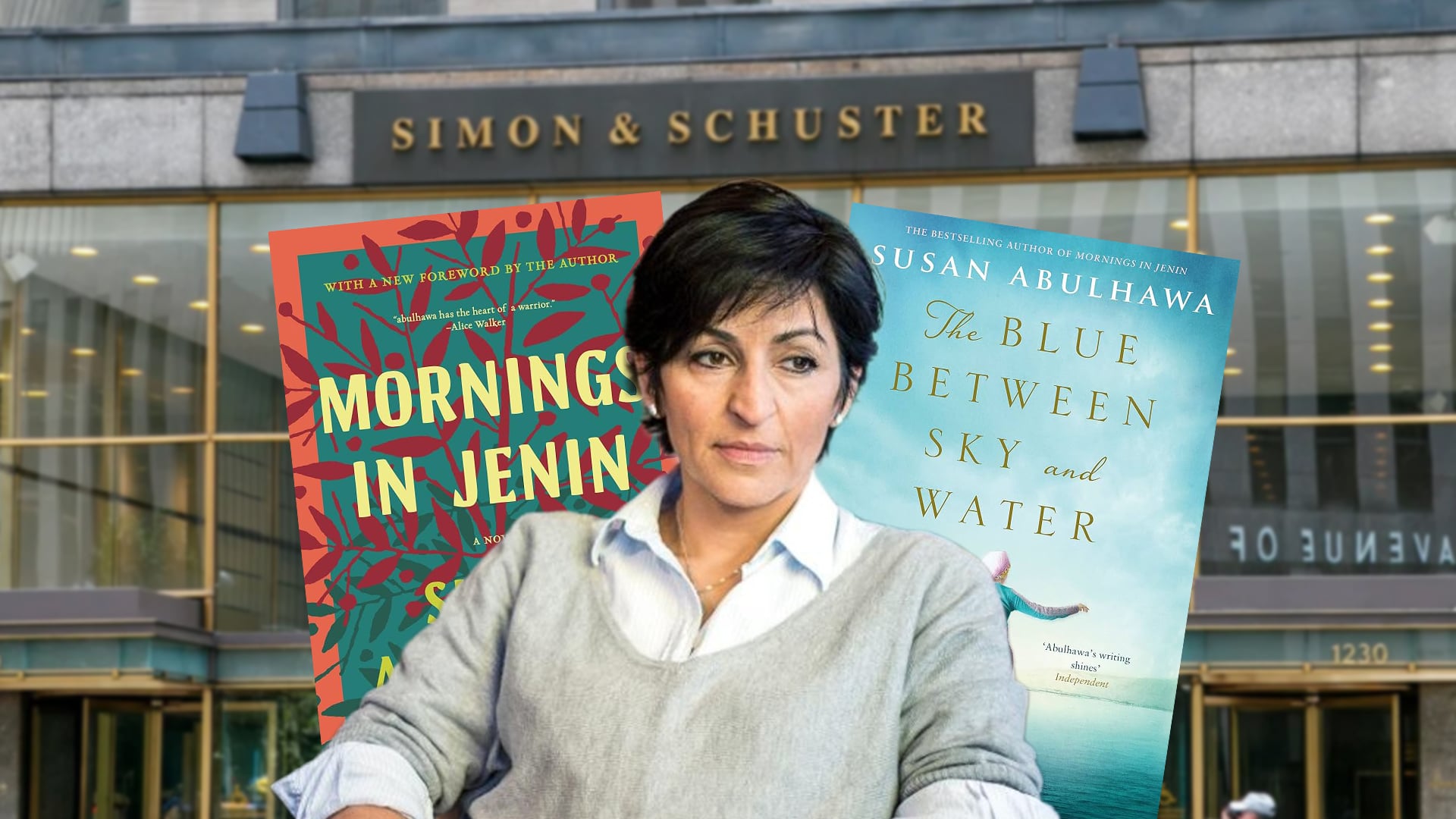
On September 29, Simon & Schuster published new editions of two novels by Susan Abulhawa.
Its Washington Square Press imprint released both a 20th-anniversary edition of Mornings in Jenin and a new edition of The Blue Between Sky and Water.
The decision raises a serious question about the possibility of a double standard of publishing created by Simon & Schuster’s own history.
The company has previously canceled planned books by prominent figures on the political right after determining that their public conduct or statements crossed a line. Yet Abulhawa, a prominent anti-Zionist activist associated with the political left, remains on its publishing roster despite a documented record of extreme rhetoric targeting Jews, Zionists, and Israel and supporting terror and violence.
Exactly what standard is Simon & Schuster applying?
Simon & Schuster Has Said an Author’s Conduct Can Matter
In 2017, Simon & Schuster was preparing to publish Dangerous by right-wing provocateur Milo Yiannopoulos through its conservative Threshold Editions imprint.
Even before canceling the book, then-CEO Carolyn Reidy publicly defended the company’s approach while drawing a clear boundary. She told concerned authors that Simon & Schuster did not “support or condone” hate speech.
Weeks later, after recordings resurfaced in which Yiannopoulos appeared to defend sexual relationships between younger boys and older men, Simon & Schuster canceled Dangerous. Yiannopoulos disputed the characterization of his comments, but the publisher stood by its decision.
Then came Republican Senator Josh Hawley.
Following the January 6, 2021 riots on the U.S. Capitol, Simon & Schuster canceled the planned publication of Hawley’s book, The Tyranny of Big Tech. In explaining the decision, the company said it had weighed its commitment to publishing a variety of viewpoints against its “public responsibility as citizens.” Simon & Schuster said Hawley’s role surrounding the events of January 6 meant it could no longer support publishing his book.
Whatever one thinks of those individual decisions, they established something important: Simon & Schuster has previously treated an author’s personal conduct as relevant to whether it would continue publishing that author.
Susan Abulhawa Presented a Different Test
Abulhawa’s record goes beyond criticism of Israeli policy or advocacy for Palestinians.
The Anti-Defamation League has documented her praise for Hezbollah leader Hassan Nasrallah following his death. Abulhawa shared footage from his funeral and placed Nasrallah among leaders who “dedicate their lives in service of others” and “inspire and give us hope.” Hezbollah is designated as a foreign terrorist organization by the United States.
Her public record has also included repeated inflammatory rhetoric calling for and supporting violence against Jews and Zionists.
Following the May 2025 killing of two Israeli Embassy employees outside the Capital Jewish Museum in Washington, D.C., Abulhawa celebrated their murders and posted that “no genocidal Zionist should be safe anywhere in the world.” In July 2026, Abulhawa eulogized terrorist Kozo Akamoto, who murdered dozens in the Lod Airport Massacre of 1972, as “an inspiration to all who knew you.”
Despite this very public pattern of commentary, Abulhawa’s books were reissued by Simon & Schuster.
The Contrast is Difficult to Ignore
The circumstances surrounding Yiannopoulos, Hawley, and Abulhawa were different, and publishers are entitled to evaluate individual cases differently.
But there is an obvious contrast.
Simon & Schuster has shown willingness, ability, and motivation to cancel publication plans involving figures on the political right when their conduct or public rhetoric became incompatible with standards the company considered important.
With Abulhawa, a prominent anti-Zionist voice on the left, the company has reached a different conclusion despite a substantial and well-documented public record.
The difference merits explanation.
Simon & Schuster Knew About the Concerns
Protect Our Campus contacted Simon & Schuster in August regarding Abulhawa and the upcoming publications. CEO Greg Greeley responded that Simon & Schuster opposes antisemitism and does not endorse the statements of its authors. He also stated that he personally objects to Abulhawa’s public statements.
Protect Our Campus subsequently asked how continuing to publish Abulhawa aligned with Simon & Schuster’s history of canceling other authors over their personal conduct.
When Greeley responded, he only doubled down on his previous sentiment and added, “As I am sure you can understand, I am not able to discuss the terms of individual publishing agreements, including past ones.”
And yet, is that not what Simon & Schuster exactly did when they issued statements after canceling Milo Yiannopoulos and Josh Hawley?
Does Political Direction Change the Standard?
Publishers should not be expected to agree with every writer they publish. A healthy literary culture does include controversial, unpopular, and provocative viewpoints.
Simon & Schuster, however, has already demonstrated that viewpoint diversity is not its only consideration when publishing.
When Hawley’s book was canceled, the company explicitly invoked a broader public responsibility. When Yiannopoulos was under scrutiny, its CEO publicly stated that Simon & Schuster would not publish hate speech.
Did the company not have a public responsibility to not legitimize Susan Abulhawa’s rhetoric by backing her with institutional support and resources? Does the company deny that its own CEO acknowledged that Susan Abulhawa’s rhetoric aligns with hate speech the company claimed it “did not support or condone” back in 2017?
The Reissuing of Susan Abulhawa’s Novels Deserves Scrutiny
Simon & Schuster has already decided that an author’s conduct can outweigh its commitment to publishing controversial viewpoints.
After canceling books by figures on the right over their conduct, the company owes readers an explanation for why Susan Abulhawa’s record apparently warrants a different standard.
Evidently, CEO Greg Greeley disagrees. With him at the helm of the publishing company only since March 2026 when he took over saying he would “lead Simon & Schuster into its next stage of growth,” this is more than a defense of one author.
Under Greg Greeley, is Simon & Schuster applying a consistent standard for author conduct? Or reserving accountability only for the ones it finds easier to drop?