
Highlight Nepal’s presence in the Global Context
Sirens Above, Holi Below: Nepali Workers in Israel Preserving Tradition Amid War

quiet expression of solidarity with the country where they live and work.
The situation in Israel is not normal these days. Sirens sound without warning, and within minutes people must reach a safe shelter. Emergency alerts flash across mobile phones. Authorities have issued clear instructions: avoid unnecessary movement, do not gather in large numbers, and suspend conferences and public events.
Amid this tense environment, Holi arrived.
Holi is usually a festival of open spaces, crowds, colors, and water. But for Nepali workers in Israel this year, the scene was very different. There were no public parks, no large cultural programs, no mass celebrations. Respecting security guidelines, those living nearby or working at the same place marked the festival in small groups, inside secure bunkers and shelters.
As soon as the siren sounds, everyone heads to safety. Caregivers move into protected rooms at their workplaces. Agricultural workers gather in nearby shelters on the farms. Inside those small concrete rooms, a packet of colored powder is opened. A gentle tika is placed on each other’s foreheads. Someone plays a Nepali Holi song on a mobile phone. Through video calls, families back home are reassured with a simple message: “We are safe.”
Outside, the tension of conflict continues. With heightened alert across the country due to the Israel–Iran conflict and regional military activity, the government has urged people to avoid large gatherings and limit movement to essential needs. The Nepali community has fully respected these rules.
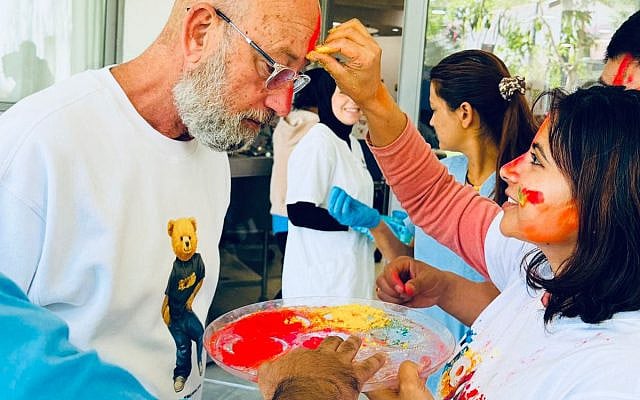
This year’s Holi, therefore, is not about crowds. It is about responsibility.
Not only about color, but about restraint.
The celebration proves that preserving culture does not require a grand stage. It requires heart. For a brief moment, that small circle inside a bunker becomes Nepal. It becomes home.
Families in Nepal watch the news with concern. But when they see smiling faces with light traces of color on their foreheads, sitting safely inside shelters, they find comfort. There is fear, but no panic. There is caution, but morale remains strong.
At the same time, the Jewish festival of Purim is also being observed in Israel. Due to the security situation, celebrations have been more limited this year, with fewer public gatherings. Yet in some places, Israeli friends joined Nepali workers in small, quiet Holi moments, offering a powerful message of coexistence. In times of crisis, cultures often come closer, and bonds grow deeper.
The reality is that being able to celebrate even in this limited way, while strictly following security guidelines, is itself a sign. It shows that the situation is not chaotic. The security system is active. Shelters are available. Life continues carefully, but steadily. In that sense, it is also a message that Israel remains resilient and functioning.
At its core, Holi symbolizes the victory of truth over injustice. For Nepali workers in Israel today, it has become more than a tradition. It is a symbol of inner strength. When sirens echo above and colors are shared below in a bunker, it may seem like a simple act. In truth, it reflects courage. It is also a quiet expression of solidarity with the country where they live and work.
War can change circumstances. It cannot erase culture. By following safety measures with discipline while honoring their festival, Nepalis in Israel have shown maturity, unity, and unwavering spirit.
Related Topics
Related Posts