
Feminist, social activist and CEO of Tsofen-Tashbik
Social Cohesion at Work: The Strategic Lever for Business Success
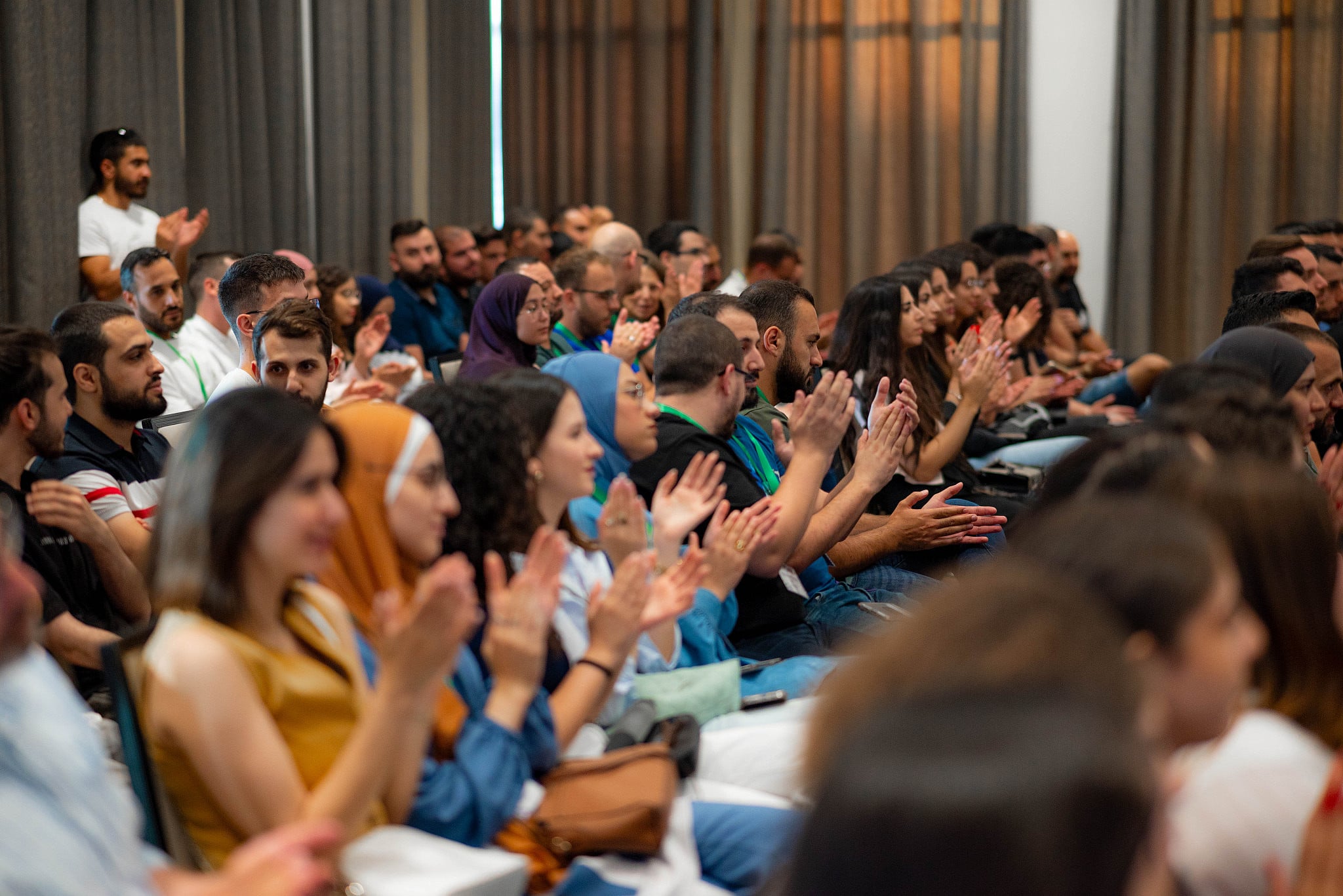
Tsofen-Tashbik Career Fair (Tsofen-Tashbik)
Why social cohesion and community matter for profitability and corporate goals
In today’s competitive landscape, managers seek levers to boost profitability and performance. One key lever? Building internal community. Research confirms: the answer is yes.
The simple equation for business success
Surveys from top firms like Facebook show that peak employee performance depends on three factors:
- Professional development.
- Community and social cohesion.
- Sense of purpose.
These must coexist. When they do, employees become “super employees,” enhancing their own and others’ performance.
Managers as architects of cohesion and belonging
While development and purpose can come from various sources, building community is a leadership responsibility. It requires a strategic, top-down approach.
From organization to community: redefining the workplace
Nilofer Merchant, former tech executive, TED speaker, and bestselling author, has written that “The social object that unites people isn’t a company or a product; the social object that most unites people is a shared value or purpose.” She defines community as a drawn-together, organized collection of people with a common purpose mutual trust, in a safe setting where, feeling less alone, its members can be their true selves. In other words, a genuine community rests on the three pillars of shared purpose, mutual trust and safety (requiring deliberate leadership cultivation), and space for authenticity. These pillars create “togetherness”—a powerful force for motivation and commitment.
Direct impact on the bottom line
The results of investing in cohesion and community are clear:
- 23% boost in employee productivity.
- 31% lower turnover than the industry average.
- 18% higher profitability compared to similar competitors.
- 87% of senior leaders see a direct business benefit.
Cohesion isn’t a perk—it’s a bottom-line driver.
How to build effective social cohesion
It has been said that “All it takes to build community is a sense of appreciation for others, seeing them as potential partners to advance a shared initiative.” For managers, this means:
- Highlight each employee’s uniqueness as strategy, not just courtesy.
- Encourage authentic expression from employees.
- Showcase strengths across the team.
- Promote teamwork that unites diverse talents.
Beyond demographics: cohesion as a universal need
Gallup’s 2023 global State of the Global Workplace report confirms that community matters across all ages, sectors, and industries. Humans thrive in social environments—workplaces included.
Managers as strategic leverage for business success
Leaders can transform their organizations through community-building. This strategic investment delivers engaged, high-performing teams that drive profitability and long-term success.
The Israeli reality since October 7, 2023: a concrete business challenge
Moving to our practical experience, since the October 7 attacks and ensuing conflict, tensions between Jewish and Arab employees—particularly in hi-tech—have surged, posing a real business threat.
Key data:
- 65% of Arab employees feel less belonging at work.
- 47% of Jewish employees report discomfort working with Arab colleagues.
- Mixed teams saw a 23% drop in productivity.
- 82% of managers lack training to address these tensions.
- Firms ignoring diversity-related tensions saw an 18–27% drop in output.
Against a backdrop of war, economic decline, and investor pullback, failing to address intercommunal workplace issues has deepened fractures—leading to reduced collaboration, absenteeism, and talent loss.
The business cost of ignoring the crisis
The toll is clear:
- Firms that did not address intercommunal tensions saw a 31% drop in team efficiency.
- ₪2.7 billion loss to hi-tech GDP due to reduced cross-community collaboration.
- 38% of firms without community-building efforts downsized staff, compared with 17% among those with such efforts.
- 42% rise in hiring costs since October 2023, increasing pressure to retain talent.
The workplace as a refuge from external turmoil
Conversely, organizations that fostered cohesion showed resilience:
- 12% productivity gain amid a shrinking market.
- 89% of employees said work was a “safe haven.”
- 68% drop in minority employee turnover.
- 74% of managers reported improved top talent recruitment.
The takeaway: creating a community is not just ethical—it’s a smart business move.
Addressing the cohesion crisis in hi-tech

As leaders of Tsofen-Tashbik—a collaborative Arab-Jewish non-profit that develops hi-tech in the Arab community as a catalyst for economic development and shared society in Israel—we witnessed firsthand the growing rift post-October 7. Arab engineers shared feelings of isolation and reported inaction by leadership on rebuilding workplace ties.
A quick study we commissioned confirmed their sense of belonging was deeply eroded. In response, Tsofen-Tashbik provided emotional support and counseling and began training managers in trust-building and conflict resolution.
Some companies avoided addressing the issue entirely—either due to global HQ directives or competing business pressures—leaving the task of restoring community neglected.
As Gallup’s 2023 global survey confirmed, the need for workplace belonging is universal and remains one of the top drivers of employee performance.
Conclusion
In today’s turbulent environment, companies that foster social cohesion won’t just survive—they’ll thrive. Building community at work is a high-return investment in long-term success.
—
Maisam Jaljuli, CEO, and Merav (Boozy) Boaz, Deputy CEO of Tsofen-Tashbik, jointly authored this post.
Related Topics
Related Posts