
Journalist and Host of The Spiro Circle Podcast
What Europe can learn from Israel’s Startup Nation

Europe should be turning its talent and startup base into more globally scaled companies, mirroring Startup Nation's formula. Photo: ChatGPT
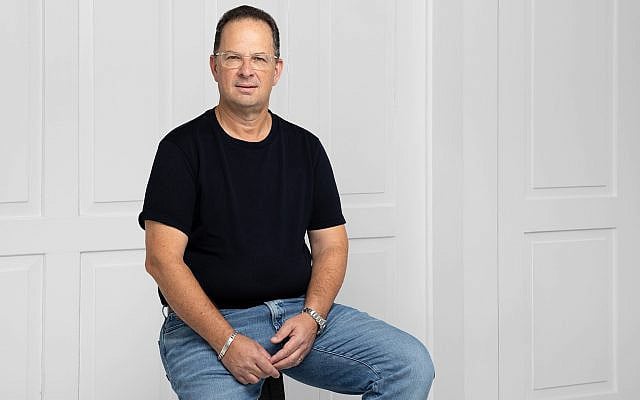
Eran Westman said something to me during a much longer conversation we shared last week that stuck with me. “I think Europe has most of the ingredients of a world-class tech ecosystem. What has been missing is the ability to connect them at scale, and I think we’re starting to see that change.”
A simple way to explain this might be to point to a shortage of human talent, or its reputation for having a complex regulatory environment that can make it harder for innovation to scale. But Eran, who is a Managing Partner at Zurich-based venture fund Planven, spends his working life moving between European capital and Israeli companies. He sees the picture differently.
“I don’t think Europe is lacking talent or education,” he added. “If anything, we’re seeing a new generation of European founders with much more global ambition. They’re not building for France, Italy or Germany … they’re building global companies from Europe.” He also listed off examples like the French company Mistral AI, or Swedish streaming giant Spotify, and acknowledged highly rated engineering schools in Italy and Switzerland. His point was that good ideas and good engineers alone are the wrong things to count when it comes to what Europe can achieve across the continent.
What he counts instead is the companies themselves: the ones that reshape an industry rather than get acquired by one. “How many big companies that are not consumer… are coming from Europe in tech?” he asked, thinking out loud. His own answer, SAP, he noted, is now well over 50 years old.
Where is Europe’s Startup Nation?
The data paints a similar picture. According to the State of European Tech 2025, Europe has produced just 48 tech ‘decacorn’ companies valued above $10 billion, against 206 in the United States – less than a quarter of the US total. Above the $100 billion mark, the ratio remains almost identical: Europe counts just five companies (SAP and Spotify among them), while the US has 23.
On our call, he told me that this is, in part, because capital hasn’t always grown alongside the companies it backs, although he sees that changing. “Historically, Europe has been very good at funding innovation at the early stage, but the capital hasn’t always grown with the companies. What is interesting now is that this is beginning to change,” Eran said. “There is more growth capital, more experienced founders and investors, and much greater ambition to build category-defining companies in Europe rather than sell them too early.”
The European Central Bank has identified a similar bottleneck. Total venture fund size in the US runs to roughly €930 billion, around six times the roughly €150 billion held by funds in the EU. It’s not that Europe can’t start companies – evidently it can. The challenge has been building the machinery to help more of them scale into technology giants, particularly when they reach the capital-intensive stages of growth.
His argument also turns to the dynamics of the ecosystem itself. We spoke about Israeli founders whose companies are acquired by major global technology companies. Teams spend a few years inside a massive global company, absorb how it actually runs with front-row seats to its standards, size, and ambition, before leaving to once again build something of their own.
The clearest case is Adallom, which was sold to Microsoft in 2015 for around $320 million. Its founders spent time operating inside the company before leaving together to start something new. That new company, Wiz, was sold to Google in 2026 for $32 billion. Even on a domestic level, I have written about Argon Security, which was acquired and absorbed into Aqua Security before its founders both left years later to start their next adventure, Echo.
Startup Nation is a kind of apprenticeship dependent on having a critical mass of people who have already made the trip somewhere bigger and come home changed by it.
What Israel’s small market teaches its founders
I recognize that loop because I’ve spent years writing about it. Israel doesn’t have the luxury of a market big enough to stay inside; the founders I speak to understand that they are pushed outward almost as soon as they start. It’s a consequence of size and scope. But circumstances shape ecosystems, and once enough founders had gone global, been acquired, worked inside major companies, and returned to build again, the ecosystem began reproducing itself.
Eran is quick to highlight European companies that have achieved global success, while arguing that the continent has had fewer technology companies reach the kind of scale seen in the US or Israel. As AI reshapes the high-tech sector, Europe’s next challenge is turning its talent and startup base into more globally scaled companies. Israel offers one possible model for how an ecosystem can compound experience and ambition over time.
“I think we’re at an inflection point,” Eran concluded. “Europe already has the talent, the research and the technical foundations. Now we’re starting to see more capital, more repeat founders and more global ambition coming together. Ecosystems compound over time, and I think Europe is entering that compounding phase.”
The talent was always there, and so was the ambition. But now, Europe should build an ecosystem in which success feeds the next generation of success.
I spend a lot of time speaking to founders and investors across Startup Nation. You can read my work on my independent platform and podcast, The Spiro Circle.
[FLASHBACK: In April, I spoke to Eran about whether Europe is still open for business with Israel:]
Related Topics
Related Posts