Somaliland
Somaliland’s Washington Moment: A Nation Ready to Be a Strategic Partner
Somaliland’s Washington Moment: A Nation Ready to Be a Strategic Partner
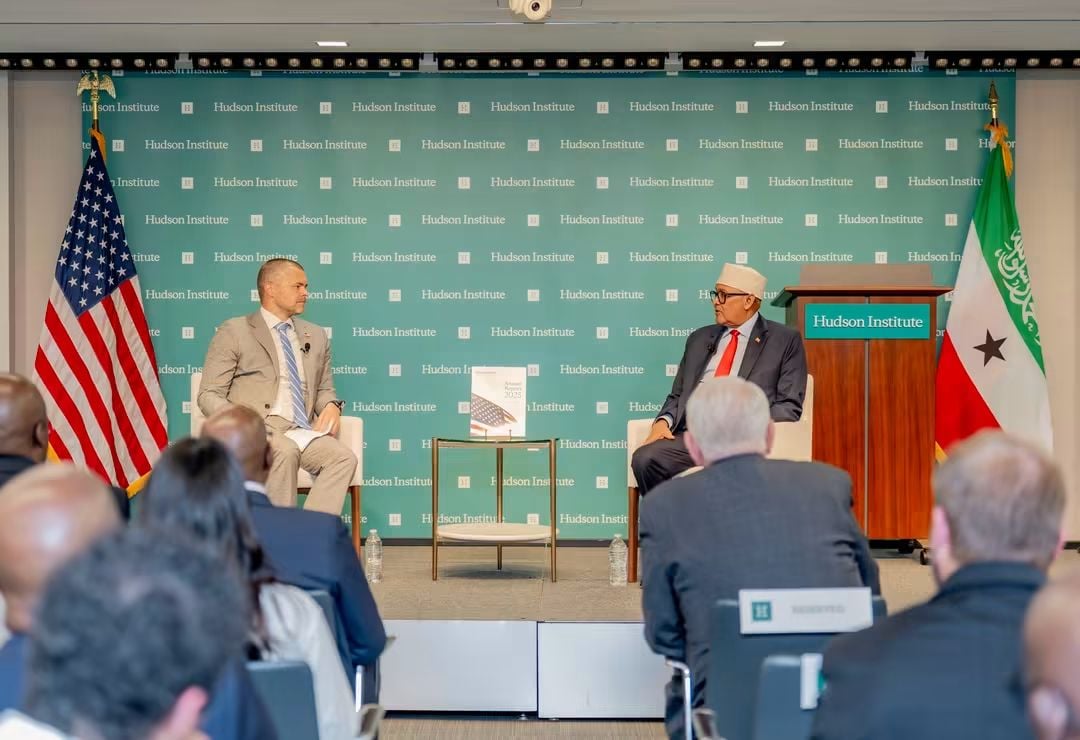
Somaliland’s diplomatic journey has entered a new and consequential phase. On September 14, President Abdirahman Mohamed Abdullahi “Irro” stood before the Hudson Institute in Washington and made a case Somaliland has earned the right to make: “Somaliland as a Strategic Partner in the Horn of Africa.” The title was the argument. Recognition should follow from strategic value, not the other way around. It was Irro’s first U.S. visit since his November 2024 election, and the timing was no accident. The Red Sea crisis, Houthi attacks on shipping , this week, the Houthis’ maritime embargo against Saudi-linked vessels has already forced ships bound for Saudi ports to turn back, while their growing control around the Bab el-Mandeb has heightened concerns over one of the world’s most critical maritime chokepoints., and China’s, Russia’s and Iran’s expanding footprints in the region have all raised the strategic price of the Horn of Africa. a shift Hudson itself has highlighted. For Somaliland, Washington is not simply another capital – it is the world’s most consequential center of power. That a Somaliland president now commands a serious hearing there, thirty-five years after Hargeisa declared the restoration of its sovereignty, is itself worth marking.
From asking to offering
For three decades, Somaliland’s case rested on its record: a functioning government, peace, competitive elections, political parties, free media, peaceful transfers of power, self-rule sustained without a single dollar of international recognition to underwrite it. That case still matters, and Irro restated it with conviction, framing Somaliland’s claim not as secession but as restoration: “Our case is not one of secession. It is based on the dissolution of a failed union.” What was new was the tone. Somaliland was no longer asking Washington to acknowledge what it had built. It was offering to help protect what Washington and its partners are trying to secure — a stable, disciplined, democratic actor on a coastline where reliability is in short supply. That is a shift Somaliland can be proud to have earned, not merely announced.
Berbera, and why USA should care
That offer has a physical location: The Port of Berbera, a deep-water facility AFRICOM has assessed and DP World has backed with $442 million in investment. Irro called it “a port ready for cooperation with and use by the United States government.” Its value lies in geography — proximity to Bab al-Mandab, the strait through which, Irro noted, more than 12% of global trade passes daily. For the United States and key regional partners, including Israel and Saudi Arabia, that geography is not abstract. Houthi attacks out of Yemen have targeted shipping bound for Eilat and vessels linked to Israeli interests, forcing costly rerouting around southern Africa. A stable, cooperative Somaliland astride the Bab al-Mandab approach is a genuine asset for USA and its regional partners — a counterweight positioned exactly where Iran’s proxies have been projecting pressure. That context is what gives Israel’s December 25, 2025 recognition of Somaliland its real weight. Irro called it “the right decision,” made “based on strategic interests,” and described the two nations as “democratic countries located at opposite ends of the Red Sea” with shared stakes in keeping that corridor open. It is a relationship with real room to grow — in maritime security, agricultural, security, and water technology, and shared vigilance over a coastline both nations have every reason to watch closely.
The Mogadishu contrast
Irro drew a sharper line against Somalia than in past appearances, calling its federal government one that “lacks the legitimacy and capacity to govern beyond Mogadishu” and has become, in his words, an “epicentre of instability” in the region. It is a bold framing, and it sharpens the choice Irro wants Washington to see: a functioning, disciplined partner on one side of the border, a contested and struggling state on the other. Somaliland’s citizens have lived that contrast for three decades; it is right that their president finally said so plainly, in Washington, on the record.
What Comes Next for Somaliland?
I believe Hudson is a think tank, not the U.S. government, and this address was an opening bid, not a breakthrough. What follows matters more than the speech itself: sustained engagement with the State Department and Congress, a concrete maritime-security offer built around Berbera, and continued investment in the democratic governance that makes Somaliland’s case credible in the first place. Within days, Somaliland showed that it understood the difference. President Irro followed his Hudson address with meetings on Capitol Hill, including with Congressman John Rose of Tennessee and Congressman John Moolenaar of Michigan, to discuss security cooperation, trade, investment and stability in the Horn of Africa. He also hosted a breakfast in Washington with members of Congress and ambassadors from across the international community, carrying the same case into quieter diplomatic rooms: Somaliland as what he called a “reliable strategic partner” peaceful, institutionally functional and strategically positioned where Red Sea and Gulf of Aden security now matters most.
These steps demonstrate that Somaliland intends to make the most of this new opening. They are more than protocol; they show a deliberate effort to present Somaliland’s capabilities, strategic position and potential contribution to regional security. At a time when instability is reshaping the Gulf of Aden, Bab el-Mandeb and the wider neighbourhood, Somaliland has an opportunity to position itself as a constructive and reliable partner. The task now is to turn this momentum into sustained diplomatic engagement, strategic partnerships and tangible national interests.
The President of Somaliland opened a door in Washington this week, and he did so with dignity, clarity and a case Somalilanders have waited three decades to see presented so directly on a major American policy stage. Whether this moment becomes a milestone will depend on what Hargeisa does next and whether it can sustain the diplomatic momentum and political engagement that this visit has set in motion.
Related Topics
Related Posts