The views expressed herein are solely mine.
Spain Bites the Hand That Saved It
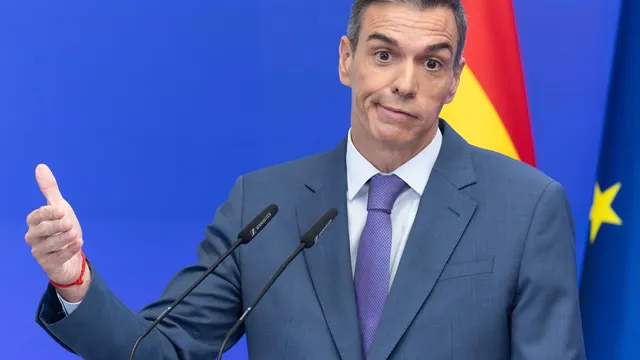
Eduardo Parra/EUROPAPRESS
Spain did not defeat terror alone—and Madrid knows it. For decades, when ETA stalked city centers and jihadist cells metastasized from Madrid to Barcelona, Israeli intelligence shared methods, leads, and liaisons that helped Spain’s services harden up and hunt. This was not a rumor mill—it was formalized. On December 4, 1989, Spain’s CESID and Israel’s Mossad signed a cooperation accord that opened structured intel channels, training, and exchanges—an agreement cited repeatedly in research on Spain–Israel security ties.
From there, cooperation deepened in interior and policing: Spain’s Interior Ministry and Israel’s Public Security officials publicly affirmed “total collaboration” on terrorism and organized crime, reflecting the behind-the-scenes reality Spanish officers already knew. Even on civil-protection and emergency management—key for mass-casualty scenarios born from ETA and later jihadists—Madrid and Jerusalem inked MOUs to share best practices that Spain folded into training pipelines. These ties mattered when Spain battled Al-Qaeda networks culminating in 3/11; Spanish scholarship has mapped those networks in detail, and practitioners will tell you the broader Western intel lane—including Israel—kept Spain’s learning curve steep and fast.
Even today, after banking on the benefit, Spain’s government performs moral theater against the very ally that helped it survive. An example of this, is how Madrid has randomly decided to freeze or cancel Israeli defense links in a sweeping political purge.
For example, the Spanish government scrapped Israeli-designed SILAM rocket launchers (≈€700m), detonating years of work with Elbit’s technology base; multiple outlets obtained the document trail. On the other hand, they also killed a police ammunition purchase from an Israeli firm under coalition pressure (the only bullets the Spanish Civil Guard weapons work with).
And just last week, the Defense Ministry cancelled a Rafael laser-guidance/targeting package for Spain’s new Eurofighters, part of a declared “military disconnection” from Israel—an own-goal that now forces Madrid to scramble for inferior or unproven alternatives.
The rhetoric is worse. Senior officials have repeatedly labeled Israel “genocidal,” including Spain’s defense minister on national TV—language that would have sounded obscene to Spaniards who remember Atocha or Hipercor. Deputy Prime Minister, Yolanda Díaz, has amplified the “river to the sea” slogan and branded Israeli strikes “war crimes,” posturing for applause while her government quietly banked decades of Israeli know-how.
Meanwhile, Prime Minister Pedro Sánchez just detonated a diplomatic firebomb: remarks widely reported as lamenting that Spain lacks “nuclear bombs” to stop Israel sound more like a threat than a serious concern. Doubtlessly, Spain has no nukes, but the phrasing sparked global outrage and “nuclear threat” headlines even as fact-checks parsed his context. Again, if this was not a threat, it was reckless enough to be heard as one.
This is cynicism, not policy. You do not ride Israeli intelligence through your darkest years and then boycott Israeli kit because it is fashionable on campus. You do not leverage Mossad-modeled tradecraft to break ETA and Al-Qaeda networks and then parade in Brussels calling for permanent embargoes on the state that helped you build those tools. Spain’s permanent-ban drive and fresh embargo language are not “humanitarian”—they are political stunts that degrade Spain’s forces and reward Hamas and Tehran’s narrative.
To Spanish readers: ask your own professionals. Ask the veterans who sat across liaison tables with Israelis, the CNI officers who learned how to fuse HUMINT and telecoms in real time, the civil-protection planners who borrowed Israeli mass-casualty playbooks. The record of official communiqués and agreements is public; the results are written in the lives not lost.
To Israelis: call Madrid’s bluff. Friendship is measured in deeds. If Spain’s government wants to cancel Israeli systems while denouncing Israel in international courts and boycotting Israelis from defense events and European forums, then say it plainly: this is ingratitude disguised as virtue.
Certainly, it is time to let Sanchez’s Pegasus file talk and make sure that the Mossad working group that is uncovering the true face of Sánchez and his corruption racket in Morocco yields reliable and strong results. Doubtlessly, the time has come for this.
In the past, Spain prospered when it chose seriousness over slogans. Today, no Madrid is choosing the opposite. And the irony is brutal: the same Spain that once relied on Israel to beat back terror is busily cutting the ties that kept it safe—right when Europe is least able to afford another lesson in the cost of forgetting.
Related Topics
Related Posts