New York City-Based Writer
“Split: Life in the Israeli Mixed Cities”
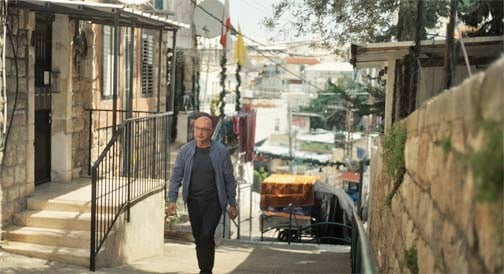
What separates Jewish Israelis and Palestinians Israelis from each other? What prevents them from living together without rancor, suspicion, and entrenched narratives that are unable to expand?
“Split,” a documentary directed by Shady Srour and Dina Zvi Riklis, examines this question by looking at five “mixed cities” in Israel. They are Jaffa, Haifa, Acre (Akko), Ramla, and Lod (Lydda). They face two possible paths: “co-existence or conflict.” Is there room for what historian Mustafa Abbasi terms “mutual understanding”?
In November of 1947, Haifa was home to 70,000 Arabs and 80,000 Jews. Ramla, Akko and Lydda were Arab cities. When the partition plan was put into play, war began. By Passover of 1948, the Haganah had taken over targeted Arab neighborhoods, determined by the “strategic value.” Anthropologist and professor Danny Rabinowitz states unequivocally that there was “an agenda to intimidate, harass, and cause people to flee.” Within fourteen days, 70,000 Palestinians left Haifa.
The British, still on the ground, helped facilitate their physical departure. Many moved to Akko, where the city’s inhabitants had departed for Lebanon. Abbasi, in an emotionally charged statement, said, “I lost my childhood like all the children of Palestine who lost their childhood.”
Cities where both groups had previously lived together “became battlefields.” Ramla and Lydda had been primarily Arab cities. They were slated to fall under the 1947 United Nations-proposed Arab state. However, in 1948, the Israeli military captured those cities. Black and white photographic images document the exit of Palestinians, which left merely five percent of the original population by the war’s end.
A Palestinian man whose family had lived in Lydda since the 12th Century related how Jews told the inhabitants, “Go to Abdullah.” During the Ramadan fast, in mid-July, houses were confiscated, and Palestinians were forcibly expelled. One resident’s home was taken, along with 60 dunams of their land. The man explained the illegal disenfranchisement from their homes, as Jews “who arrived in 1949 were told of abandoned houses in Ramla.”
Adam Raz, author of “Loot: How Israel Stole Palestinian Property,” addresses the “Massive participation [of Jews] in the looting of Palestinian property.” Professor Hillel Cohen defines how circumstances for each city were different, but how the Palestinian inhabitants of all the locations became refugees when the Israeli government determined in July 1948 that none of them were returning to their homes. Raz underscores that what is currently in play is “two different forms of experience, of citizenship in general.”
These metropolitan areas were then taken over, and the occupancy demographic shifted to incoming streams of Jewish immigrants. An Israeli woman born in 1941 tells her story. After her parents met in Russia, where she was born, the family returned to Poland after the war. Everything was destroyed; the mother’s family had perished in Treblinka. They decided to emigrate to Israel, and landed in an immigrant camp. They lived in tents until they heard about “an empty house in Ramla,” which they shared with others.
The film shifts to Haifa in the 1970s, when integration increases. Noam Semel, the former CEO of the Haifa Theatre, which presented political material, is interviewed. He discussed how both government censorship and Israeli public outrage stifled productions of thought-provoking material.
Haifa is often called the “Tel Aviv of Arabs.” Yet, as one Palestinian resident points out, “There’s a museum for Chinese culture, but no museum for Arab culture.” A restaurateur offers, “If the Palestinian narrative were taught, we would have avoided all the problems.” Sami Abu Shehadeh, Chairman of Balad, notes, “The municipal government and central government see the mixed cities as a danger to what’s called the demographic balance.”
With unequal financial resources available in Haifa, education is largely segregated. It was shown that 85 percent of Jews and Arabs were opposed to joint studies. The Jews were concerned about the potential for future “mixed marriages.” The Arabs feared a “loss of identity.”
In Jaffa, gentrification shifted the population from Arab-centric neighborhoods to becoming Jewish. In Lod/Lydia, “designated neighborhoods” are reserved for army veterans and Haredi Jews. Lod/Lydia is made up of many displaced Palestinians with relatives in Gaza. It didn’t help when, in May 2021, the city’s civil government welcomed extremists from settlements to join the community.
When a demonstration in an Arab section, home to 400 people, decided to take down an Israeli flag and replace it with a Palestinian one, settlers who had come to the district in the past decade called the police. An escalation ensued.
Stories of despair emanate from both sides. After October 7, many Jews left Jaffa. One Jewish woman speaks of her grandmother from Germany and her grandfather from the Jewish Quarter in 1948, referencing the personal fear that is “in her DNA.”
Can a society be fostered that is “blended” rather than “mixed”? A culture where people speak both languages and live together?
The filmmakers leave us with a potential vision in the example of the Kulna Yachad School in Jaffa, led by principal Gidi Yehoshua. He sees his Zionism defined by “living a shared life” where “20 percent of the population” needs to feel at home “because this is their home, too.”
Looking to the future, Yehoshua delivers a speech at a school event. He suggests that from the young children gathered before him, perhaps “in a few decades” will come new leaders who “will learn to choose compromise over messianism, partnership over incitement, and peace over war.”
One can only hope.
Related Topics