
Writer covering Israel–Africa, Jewish affairs, and Israel worldwide
Stone-Throwers, Rocket Launchers, and Storytellers: Palestinian Sympathy Show
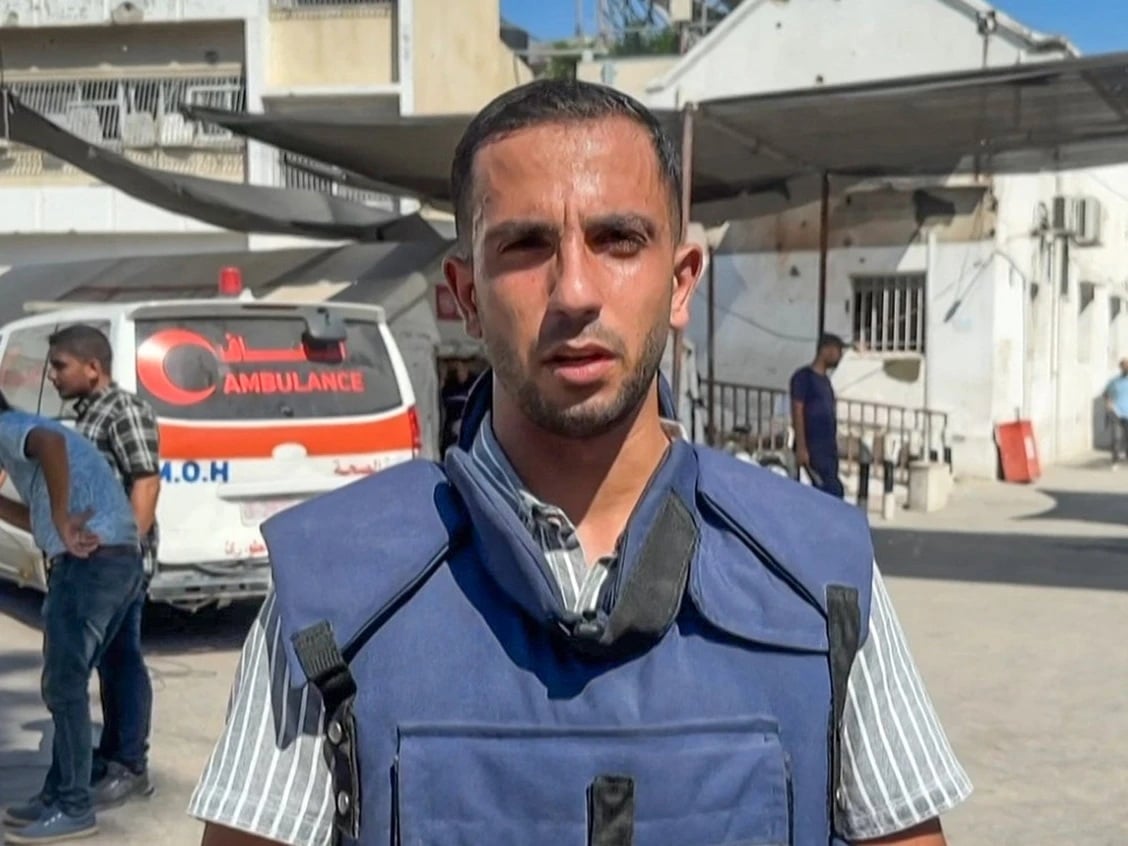
This screen grab taken from AFPTV on August 11, 2025 shows Anas al-Sharif speaking during an AFP interview in Gaza City on August 1, 2024. Photo by - /AFP/AFPTV/AFP via Getty Images
Every tear on camera tells a story — carefully framed, theatrically performed, and sold to the world as innocence, while the real show rages behind the scenes.
The Cameras Come First
I remember a certain scene like a film I’ve watched too many times: a blurred snapshot of suffering promoted as instant truth, stitched together not by context but by emotion. During the past year, international social media and news outlets circulated images of Gazan children — skeletal figures and gaunt faces — presented as visual proof that mass starvation at the hands of Israeli forces was unfolding. One photo after another marched across screens and headlines, each more heartrending than the last, each demanding sympathy before scrutiny. All it took was a label and a hashtag, and the world exhaled empathy on cue.
Except the details on the marquee weren’t the full story. One widely shared image of a five-year-old boy, paraded as evidence that famine was ravaging Gaza, turned out not to be famine at all but a severe genetic illness unrelated to the conflict — a fact confirmed by medical treatment he was receiving abroad. Another, of an apparently emaciated toddler, was shown through investigative reporting to reflect a pre-existing condition (cerebral palsy) rather than war-induced starvation. The narrative didn’t collapse so much as it shifted backstage while the original feelings kept playing front row.
And here’s the punchline: none of this erases the real suffering that existed in Gaza — it complicates the applause. Because when the world reacts first and asks questions never, you end up with a global sympathy machine that runs on images, not facts; on gut emotions rather than context. What matters most today isn’t what actually happened, but what looks like it happened — preferably with a haunting soundtrack. And just like that, the cameras come first and the facts are left limping behind.
Liberty Granted, and the Script They Chose
Self-determination — that noble aspiration endlessly invoked, loudly declared from every international podium. Gaza was supposedly the proving ground: the Palestinians had long painted themselves as helpless victims of occupation, crying to the world for sovereignty. And then, in 2005, they got it. A chance to govern themselves. A stage set for competence, for enterprise, for the proof that “we can do statehood too.”
The absurdity? Predictable chaos. Instead of taking the reins seriously, the Palestinian leadership seemed to treat self-rule as a performance art piece in anti-Israel dramaturgy. The very same cries of occupation and oppression had, it turns out, always been less about governance than about eradicating the one and only Jewish state. If freedom were truly the goal, one might have expected constructive institutions, flourishing industry, even a semblance of peace.
Israel’s withdrawal had been painful, painstakingly humane, almost heroic in its restraint. Homes and settlements uprooted, decades of life dismantled, infrastructure left intact for the Palestinians to inherit — greenhouses, thriving enterprises, a chance to demonstrate capability. And what did they do with it? Almost theatrically, they wrote chaos. Synagogues burned, buildings razed, industry abandoned or destroyed — all while keeping the global narrative of “oppressed victimhood” alive and thriving.
From a distance, one could admire the consistency of it. A people long framed as oppressed, given the keys to their own governance, yet proving the cynics right: it wasn’t about self-determination, not really. It was about spectacle, grievance, and the age-old script of confrontation. Liberty was granted, and the script? Oh, they certainly chose it — with a flourish.
The Mechanics of Victimhood
If there were an Olympic sport for turning tragedy into propaganda, the Palestinian narrative would be a perennial gold medalist. The mechanics are devilishly simple: select a human story, frame it with heartbreak, and broadcast it to an audience primed to clutch their pearls. Sometimes the footage is raw, sometimes edited, sometimes staged — but always optimized for maximum emotional impact. Hands twitch, eyes flicker, moments replay differently than the mournful captions suggest — and yet the spectacle sells.
Consider one infamous case: the Muhammad al-Dura incident of 30 September 2000: a twelve-year-old boy and his father, allegedly caught in the crossfire of Israeli soldiers, broadcast in sixty seconds of heart-wrenching footage on France 2. The selective presentation — omitting shots that contradicted the narrative — sparked international outrage, mass demonstrations, and riots, while shaping a global perception of Israel as the aggressor. Later examination revealed what sharp-eyed observers had suspected all along: key moments were staged or selectively framed, the boy moved after supposedly being killed, and the footage was cut to maximize emotional impact. The drama had its desired effect: sympathy weaponized, moral panic manufactured, and the real story — the mechanics of manipulation — largely invisible to an audience eager to clutch its collective heart.
In short, the Al-Dura moment — like many others — was not just reportage. It was a masterclass in the mechanics of victimhood: a script of sorrow, rehearsed and deployed for maximum impact, leaving the world mesmerized by the drama while the deeper narrative quietly did its work behind the scenes.
The Darker Reality
A society voting, teaching, and cheering in ways that make any observer’s cynicism feel modest. In 2006, Hamas swept the Palestinian parliamentary elections, capturing 74 of 132 seats, an unmistakable democratic endorsement of an organization openly committed to the destruction of Israel. One could almost admire the irony: a population yearning for self-determination chooses as its government the group most explicit about denying the very state they supposedly seek to live alongside.
The textbooks tell the next generation exactly what to expect. Palestinian school curricula, even in early grades, are suffused with lessons in martyrdom and hostility toward Israel. One can flick through the pages and see how narratives of victimhood seamlessly morph into instructions on confrontation, glorification of violence, and disdain for coexistence. Education, it seems, is less about nation-building and more about preparing students for the next act in the drama.
Polls confirmed the broader societal embrace of this script. In the aftermath of October 7, overwhelming majorities voiced support for the attacks, underscoring that the admiration for violence is not limited to fringe elements. Public opinion aligns neatly with the staged heroics captured on camera: real-life aggression meets the same performative logic as the sorrowful footage broadcast worldwide. Sympathy, in Gaza and beyond, is selective; the applause is reserved for acts that reinforce the narrative, not acts that foster genuine statehood.
And the final act? Glorification of terror in the curriculum itself. Textbooks instructs students that dying as a martyr is not only honorable but desirable, a moral pinnacle. Innocence is weaponized; education becomes a rehearsal for the theatre of violence, the training ground for the next generation to perform on cue. A society structurally, systematically, and deliberately primed to produce both the spectacle and its eager audience.
Real Suffering vs. Manufactured Narrative
Let’s be perfectly clear: not every tear is staged and not every tragedy a performance. Real suffering exists — children caught in conflict, families losing homes, lives disrupted by violence. Those moments deserve acknowledgment, empathy, and action. But here’s the problem: when the manufactured drama floods the cameras, the lines blur. The audience, dazzled by the tears, rarely notices that the spectacle has its own agenda.
The carefully framed images that travel across continents — these are often chosen not for their newsworthiness but for their propagandistic potency. A 15-year-old throwing stones isn’t a toddler lost in innocence; it’s a minor in arms with deadly consequences. Sympathy has its limits when the actor on stage is also wielding a weapon, yet the narrative conveniently forgets this inconvenient fact.
The real suffering — mismanaged governance, internal oppression — rarely makes the highlight reel. In Gaza, the theatre of victimhood often merges seamlessly with the theatre of violence. The child in the photograph may genuinely cry, the family may truly grieve, but the camera is always directing — shaping perception, curating outrage, and ensuring that the audience consumes the story the directors want you to believe. And let’s be honest: if melodrama were a currency, Gaza would be printing in unlimited supply.
The lesson is simple, if uncomfortable: recognize real suffering without surrendering your judgment to the performance. Not every tear is a lie, but every performance demands scrutiny — and sometimes, a wry smile at the predictability of it all. Sympathy, once weaponized, is a theatre, and the world keeps buying tickets.
The Curtain Falls, But the Deception Remains
Enough of the performances. Enough of the sob stories curated for the world’s tear ducts. Gaza is and has been less a place of governance and more a stage for grievance theatre, where sympathy is weaponized, outrage is choreographed, and morality plays out in 24-hour news cycles. The cameras roll, the audience gasps, and behind the scenes, the scriptwriters — the political and militant leadership — grin. They’ve proven time and again that the narrative matters far more than the reality, and that victimhood, once polished for international consumption, is a far more useful tool than building a functioning society.
Let’s call it as it is: the Palestinian “performance of suffering” isn’t innocence; it’s strategy. A tear on camera isn’t virtue; the teenager hurling stones isn’t a playful rebel. And the coverage? Relentless. The misdirection? Masterful. So, to everyone following: stop mistaking the curtain for reality. Sympathy is not the same as understanding. Tears are not always truth. When the cameras catch another dramatic tear, consider — are you witnessing suffering, or just a well-directed act?
If you’ve followed this far, you now know the stage, the actors, and the script. Now it’s your turn: laugh, cry, rage, or argue — just don’t be fooled again. And for those still clinging to the Palestinian drama as untouchable morality theatre, consider this your cue: the stage is set, the actors are practicing, and your sympathy might just be financing the next act.
Related Topics
Related Posts