Stop Rebranding Islamic Regime Insiders—and Stop Trying to Break Iran Apart
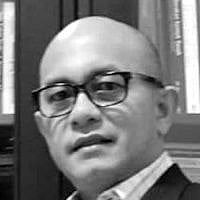
The insistence on presenting Mehdi Karroubi as an “opposition leader” is not analysis—it is historical fraud.
Mehdi Karroubi did not become opposition because he later fell out with Ali Khamenei. He is a founding insider of the Islamic Republic: a regime cleric, former Speaker of the Islamic Parliament, a sworn IRGC member, and a lifelong beneficiary of the system that devastated Iran.
Mehdi Karroubi was the speaker of the Islamic Republic’s parliament from 1989 to 1992 and 2000 to 2004, and a presidential candidate in the 2005 and 2009 Islamic Republic’s presidential elections. As head of the Islamic Republic Parliament, Karroubi was a key architect of the clerical regime, actively participating in the consolidation of power and the establishment of the Islamist terrorist state that emerged in 1979.
Internal factional conflict is not opposition. Power struggles within a criminal system do not confer moral legitimacy.This narrative—along with the parallel push to portray Iran’s national disintegration as “the only solution”—did not emerge from Iran’s uprising. It is being manufactured and amplified primarily outside Iran, through Western media, academic, and NGO ecosystems, with London as a central hub and Islamist ideological influence flowing indirectly through South Asian clerical frameworks.
Mehdi Karroubi: Not a Dissident, But an Enforcer
Mehdi Karroubi ran the “Martyrs’ Foundation” from 1980 to 1988, founded on Ruhollah Khomeini’s orders. Officially, it was meant to aid the families of those killed during the Islamic “Revolution” and the Iran-Iraq War. In reality, it was a machine of control, rewarding loyalty to the regime while punishing the vulnerable. He also headed the “Imam” Khomeini Relief Committee, a parallel body that offered help—but always on terms designed to reinforce clerical power.
This is not theoretical for me. It is personal—and it was systemic.
My mother ran her own art academy—she was both president and teacher, shaping her school with her hands. Several of her students were war widows, their husbands killed in the Iran-Iraq War. These women were not isolated cases. One by one, they were summoned to Karroubi’s office and told, in no uncertain terms: accept temporary marriage (sigheh) to men he designated, or lose your pensions—the only lifeline keeping you alive. Refusal came at a heavy cost. Some were pressured. Some were assaulted. One of my mother’s students who was a pregnant widow lost her unborn child after being physically abused by Karroubi himself.
I was a teenager, sitting in my mother’s office, listening to the sobs of widows—crying, pleading, broken—one story repeated over and over, until it seared itself into memory. This was not a marginal abuse. It was systematic. Karroubi weaponized religion and state power, turning a clerical loophole into a tool of extortion against those left desperate by war. Decades later, criticism of the regime does not erase this. Calling Karroubi a “dissident” whitewashes a long record of cruelty.
A later dispute with Ali Khamenei does not erase this record. Criticizing the Islamic Republic’s “Supreme Leader” decades later does not transform a regime enforcer into a dissident.
Internal power struggles are not opposition. Yet Western circles—particularly those invested in “managed transitions,” identity fragmentation, and post-national frameworks—continue to sanitize figures like Mehdi Karroubi while silencing the voices of those harmed by the system he helped administer. Supporting him while erasing the lived experiences of women and war widows is not progressive. It is moral cowardice.
Now contrast this manufactured discourse with reality inside Iran.
Iranians living under the Islamic Republic—at enormous personal risk—have been explicit about whom they recognize as their national leader: Crown Prince Reza Pahlavi. His name is chanted in the streets, whispered in prisons, and echoed across cities in acts of defiance. This is not a Western projection. It is a grassroots demand, paid for in blood.
Alongside that demand comes another equally clear message: Iranians reject foreign meddling that seeks to override their will. They will not accept recycled regime figures, clerical rebrands, or externally designed “inclusive” transitions. Nor do they accept the parallel fantasy now being pushed from the same external ecosystems: that Iran must be broken apart to be free.
This idea, too, is not rooted in Iran. It is promoted largely through Western academic and NGO frameworks—again, disproportionately based in the UK—that frame Iran through ethnic fragmentation rather than shared oppression.
Iran’s crisis does not come from its peoples or its borders. It comes from a brutal Islamofascist regime that has oppressed everyone within them. Kurds, Azeris, Arabs, Baluch, Persians, Turkmen, and others have lived within Iran for centuries. All have suffered under the same clerical tyranny. None were liberated by it.
Fragmentation would not bring freedom. It would bring warlordism, ethnic cleansing, and endless proxy conflict—the same outcomes seen in Iraq, Syria, Libya, and the Balkans. This chaos serves only two forces: the Islamic Republic, which thrives on instability, and foreign actors who benefit from a weak, divided Iran. The solution is neither clerical rehabilitation nor national dismemberment.It is the dismantling of the Islamic Republic in its entirety and the restoration of a sovereign, secular Iran with equal rights for all citizens—regardless of ethnicity, language, or religion.
The Iranian uprising was not waged so repentant insiders could reenter power through the back door. Iran does not need clerical makeovers or Islamic Republic leftovers. It does not need to be broken apart to be free.
Iran needs a clean break—from the Islamic regime and from everyone who propped it up.
Stop speaking for Iranians. Before you lecture us, confront the truth: the damage of Islamist movements stretches far beyond Iran—through England, across Europe, into the US, Canada, and around the world. The suffering is real. The destruction is real. And denial will never erase it.
Iran will not forgive erasure. It will not bow to pretense. The reckoning is coming—and only a free, sovereign Iran can answer it.