
Sukkot – A Celebration with the Nations
You wouldn’t expect the largest contingent in a Jerusalem parade to be non-Jews, yet that’s precisely what unfolds each year during the “Tzaadat Yerushalayim (Jerusalem March),” which lights up the city streets every Sukkot. Thousands of non-Jews, waving national flags and dancing in traditional garb, wind their way through the city’s ancient streets in what has affectionately been dubbed, “The March of Nations.” This year, marchers come in solidarity with a people in deep pain – marking the first anniversary of October 7th, but this march has been a Sukkot staple since 1995. Participants spend small fortunes not for the sake of a political demonstration or a vacation in the Middle East-– they come to celebrate Sukkot—a Jewish harvest festival that holds profound meaning for them as well.
Sukkot’s connection to the nations of the world is as ancient as the festival itself. Our sages teach that the 70 bulls offered in the Temple during the holiday symbolized the 70 nations, underscoring our responsibility to pray for the welfare of all humanity, even during our most intimate communions with God. The prophet Zechariah, in the Haftorah for this holiday, envisions a time when all nations will make annual pilgrimages to Jerusalem during this “Festival of Booths”, recognizing their shared dependence on Divine providence. Sukkot, at its core, beckons both the Jewish people and the nations of the world into a shared moment of reflection—a moment for Jews to consider their responsibility toward the wellbeing of humanity and for humanity to acknowledge the unique Jewish role in that endeavor.
With this understanding, the sight of non-Jews marching through Jerusalem on Sukkot is less surprising. Yet what is most evocative about this imagery is what thousands coming to celebrate Judaism in Jerusalem actually represents – a deep respect, without hesitation or conditions for the journey of the Jewish people, acknowledging their enduring ancestral ties to the land of their history. This is no simple parade, but a vibrant and insistent affirmation that the Jew is not alone, the world is indeed capable of witnessing and honoring what we have struggled to preserve for millenia, without asking for apology or compromise.
This sentiment holds particular weight as we commemorate one year since October 7th. In the aftermath of that tragic day, Jews around the globe have rallied in grief and solidarity. Yet many continue to confront a rising tide of pressure to disavow their Zionism in exchange for a seat at society’s table. The response to this challenge has varied. Some rise with a defiant pride, seeing the disdain of others as an invitation to fiercely embrace their heritage, knowing that Jewish identity is neither negotiable nor erasable. Others retreat into silence, scrambling to cram 4,000 years of heritage under the floorboards in an attempt to deny any and all affiliation with their nation that seems to be the perennial pariah.
Still a third way has emerged as increasingly popular among my own generation – the impassioned college student, the hubristic young adult. In this approach, Judaism is indeed embraced, albeit rebranded. In this “new and improved” version, values that have shaped the rise and fall of empires are deftly pruned away, and chronicles of survival and resilience heavily redacted, all to protect the sensitivities of new fair weather friends. Promising a meaningful way to connect to the very heritage that has been scrubbed meticulously clean of anything praiseworthy this “Judaism” eagerly molds itself to the ever-shifting trends, presenting itself as something nebulous and elusive, all while masquerading as a legitimate representation of tradition.
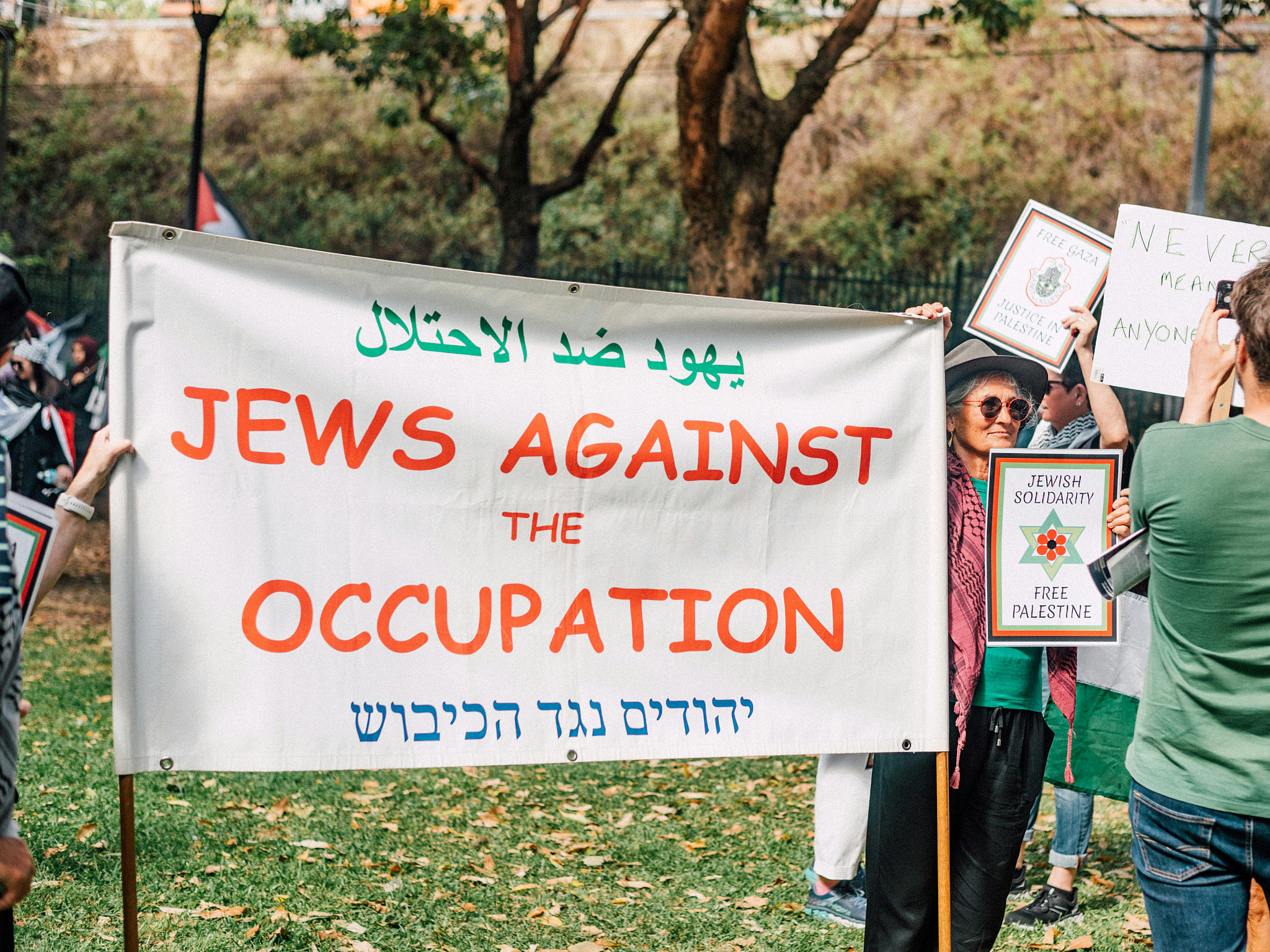
Consider Jewish Voice for Peace (JVP), heralded as the world’s “largest progressive Jewish anti-Zionist organization.” In their “Interfaith Sukkot Guide,” they highlight Sukkot’s universal themes, proclaiming, “our safety is bound up in the safety of everyone around us.” While one could generously interpret this as a nod to the ancient Temple sacrifices echoing such sentiments, this opening line is where the guide’s fidelity to tradition unravels. Rather than encouraging participants to embrace the lulav and etrog—the biblically mandated palm frond and citrus fruit indigenous to Israel—JVP invites followers to “create your own lulav and etrog bundle using plants that grow locally in the place where you live.” The guide presses forward, urging people to infuse their shaking of the lulav with a commitment to “ending the occupation of Palestine”. In this repackaging, one is left wondering what Judaism looked like before there was a Palestine to free, as every bit of its rhetoric and practice seems inextricably tied to a political movement born out of the 1960s.
This isn’t merely a misunderstanding of tradition by well-meaning revolutionaries; these are calculated distortions presented to well over a million followers as an authentic expression of one of the world’s oldest peoples. Judaism here is not being merely altered, but hijacked to serve a political agenda designed around the demise of the same people it purports to represent. The erasure of 3,000 years of sacrifice and struggle that underpin the preservation of Jewish values, turning them into easily digestible sound bites to support foreign agendas is perhaps exactly what the Talmud (Sukkah 31b) warned of when it ruled,
לֹא מָצָא אֶתְרוֹג — לֹא יָבִיא לֹא רִמּוֹן וְלֹא פָּרִישׁ וְלֹא דָּבָר אַחֵר. פְּשִׁיטָא! מַהוּ דְּתֵימָא: לַיְיתֵי, כִּי הֵיכִי שֶׁלֹּא תִּשָּׁכַח תּוֹרַת אֶתְרוֹג, קָא מַשְׁמַע לַן, זִימְנִין דְּנָפֵיק חוּרְבָּא מִינֵּיהּ – “One who cannot find a citrus fruit may not use a different species as a substitute – if the meaning behind the Etrog is forgotten (and replaced with something else) the practice will bring destruction.
Most alarming is not JVP’s reframing of Jewish practice but their outright distortion of Jewish values themselves. Invoking a Hasidic tradition where each day of Sukkot corresponds to a divine attribute, JVP presents “Gevurah” (strength) instead as “commitment,” effectively severing any link between Judaism and the Jews fighting today with unwavering and undeniable *strength* for the right to live at all. In this reworking, it is the anti-Zionist diaspora Jew who is elevated as the representative of “true Jewish values,” while Jews who embody the indomitable spirit of the Maccabees, Bar Kochba, the defenders of the Warsaw Ghetto, and the warrior-king David himself, are portrayed as tragically misguided in their belief that a steadfast will to survive could ever be considered “Jewish”. Nevermind that the very name “Israel” is to “struggle valiantly with God”, here the soldiers of Israel’s Defense Forces—sacrificing their own dreams and futures—are stripped of their rightful identity as authentic representatives of Judaism, all so that anti-Zionist Jews in the Diaspora can decry that their actions are “not in our name”.
This distortion is not just upsetting; it is a direct contradiction what Sukkot represents. As we inhabit the sturdy confines of our homes, those opaque walls serve to protect us from the outside world while simultaneously concealing us within. Yet for seven days during Sukkot, God beckons us to step beyond the protective barriers we carefully construct for ourselves and into the vulnerable embrace of the Sukkah. In this exposed state, we invite the nations of the world to Jerusalem to witness us in our full authenticity.
The nations who answer the call of Zachariah (14:16) to “make a pilgrimage… to observe the Feast of Booths” come not to see a sanitized, diluted version of the Jewish people. They travel from the four corners of the globe to witness a people who have remained steadfast through history’s storms, unyielding in their covenant and resolute in their destiny. The rituals of Sukkot are declarations of survival, a statement that in preservation of our identity through times of trial, it is that very identity that has preserved us.
The pull to compromise Jewish identity for the sake of acceptance is as old as the Jewish exile. Throughout history, Jews have been tempted to trade in their heritage for the fleeting promise of safety or societal approval, yet history has shown that such self-compromise has been a wasted sacrifice.
Ironically, it was Johann David Michaelis, an 18th-century antisemite, who highlighted this truth in his objections to Jewish emancipation. In response to the 1782 Edict of Toleration, inviting Jews to participate fully in civil society, Michaelis pointed to Torah laws that precluded full participation in secular society and reminded that Jews are deeply tied to a homeland in Zion, arguing that the Jew could never be a patriot of any other nation. While this observation is not unique to Michaelis, he continues – while a Jew could certainly trade in his faith, and swear allegiance to another land, another people, another god, this does not strengthen his case for emancipation but weakens it. A Jew who betrays his own history has revealed himself as one who will trade principle for profit, a denier of his truth and values. Either a Jew is a Jew, Michalies insisted, or he is a liar.
A Jew who attempts to blur his identity and apologize for his inherent strength hollows out his essence. This does not create a more acceptable version of himself but reduces him to a shadow—and shadows cannot illuminate. With any ability to share the richness of Judaism now voided, these phantoms relegate themselves to the recesses of society, carving away more and more of their true selves until nothing remains to offer—all for the promise of an acceptance that will never come, for one cannot accept that which is not genuine.
Sukkot emphatically insists upon this truth. As we sit in the sukkah, at the mercy of the elements, we are reminded that it is not the presumed safety of physical structures or the comfort of societal approval that has brought us to this moment in our national story; it is our unwavering faith in God and in a rich tradition that informs our strength. In this exposure, the Jew realizes that revealing all he is and has been does not weaken him as he feared. Embracing our vulnerability allows us to connect to our truest selves—the very values and traditions that some would have us hide or soften—which most empower our ability to impact the world.
Has there been a more poignant example of this than the IDF’s recent military triumphs during these weeks surrounding the holiday? In just six weeks, Israel has eliminated more names from America’s most wanted list than the United States has managed in two decades, culminating in the defeats of Nasrallah and Sinwar—marking an end to reigns of terror that resulted in the deaths of thousands worldwide. It is only when Jews stand firm, refusing to dilute principles or seek permission from the world to be themselves, that they truly make meaningful strides on the global stage.
The myth that assimilation or self-erasure brings acceptance is precisely that—a myth, shattered time and again by memory and by Sukkot itself. As we gaze upon the lulav and etrog—symbols of our enduring bond with the land of Israel—let us stand tall and unyielding. As we welcome representatives from the world over who come to celebrate with us, we reaffirm that our strength does not lie in bending to the whims of those who both came after us and will leave before us, but in embracing the roots that anchor us to something eternal.