
President of Shahvand Think Tank
Taiwan
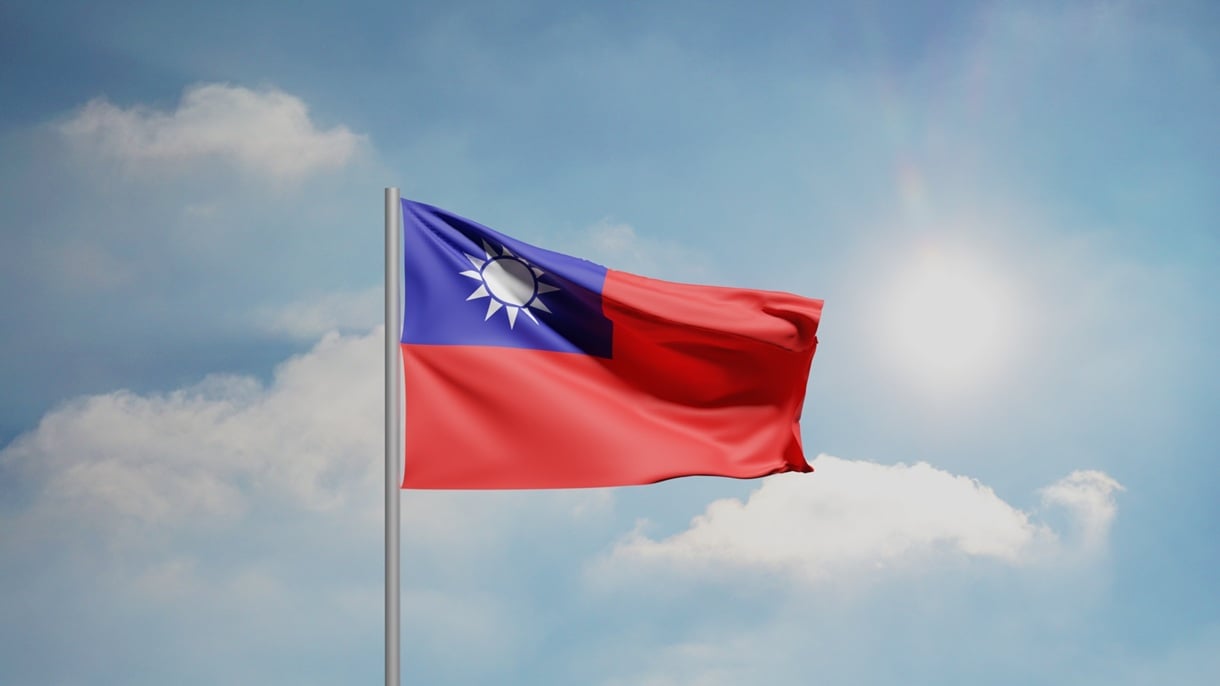
wikimedia / Taiwan Flag
Taiwan Already Functions as a State
Beijing insists there is only one China. Taiwan’s political reality provides a stronger argument: peaceful coexistence between two states.
The Taiwan debate too often begins with Beijing’s claims rather than Taiwan’s existence. Governments weigh diplomatic language, historical narratives, and strategic interests, while overlooking the essential fact: Taiwan governs itself. Its people elect their leaders, its institutions administer its territory, and its military answers to its government. Taiwan already functions as a state.
The question should therefore be how China and Taiwan can coexist peacefully as separately governed states. Reunification, in whatever form it is presented, would require Taiwan to surrender the independence it already exercises.
Two Systems, Separate Authority
Beijing’s “One Country, Two Systems” formula promises institutional differences beneath a single sovereign authority. Developed under Deng Xiaoping and implemented in Hong Kong and Macau, it has also been offered to Taiwan as a framework for unification.
But Taiwan’s democracy depends on its citizens holding the final authority over their government. Accepting Beijing’s sovereignty would place that democracy beneath a political leadership Taiwan’s voters could neither elect nor remove.
Different systems can exist within one country. Their existence alone does not prove separate statehood. Taiwan’s case rests on something more substantial: Beijing exercises no governing authority over it. The People’s Republic of China has never governed Taiwan.
Taiwan collects taxes, enforces laws, issues passports, administers public services, and maintains armed forces. Elections determine who governs. These are the daily functions of an existing state.
Sovereignty in Everyday Life
The separation extends beyond political institutions. Taiwan uses the New Taiwan dollar, while China uses the renminbi. Separate monetary authorities manage their financial systems. Each side controls entry into its jurisdiction.
Currencies and entry requirements alone cannot establish sovereignty. Some independent states share currencies, while some territories have separate immigration arrangements. In Taiwan, however, these distinctions belong to a comprehensive structure of self-government.
Businesses operating in Taiwan answer to Taiwanese laws, courts, and regulators. Commercial ties with China do not alter that authority. Economic interdependence creates relationships between political communities; it does not establish ownership of one by another.
Diplomatic recognition is important, but it must be distinguished from effective government. Withholding recognition can restrict Taiwan’s international participation. It cannot make Taiwan’s institutions disappear or transfer their authority to Beijing.
Hong Kong’s Warning
Hong Kong exposes the weakness of promises made under “One Country, Two Systems.” The national security law imposed in 2020 and subsequent restrictions have narrowed political freedoms and the space for opposition.
The structural problem is clear: the authority promising autonomy also retains the power to determine its limits. When Beijing’s interpretation prevails, local institutions cannot provide an independent guarantee against intervention.
For Taiwan, accepting such an arrangement would mean exchanging existing self-government for conditional autonomy. Its democratic order would depend on assurances from a government that rejects democratic competition at home.
Taiwan has no reason to make that exchange.
Coexistence, Not Reunification
Even the term “reunification” carries a political assumption: that Taiwan’s separate existence is an unfinished problem whose proper solution is incorporation into China. That assumption should be challenged.
Historical connections, cultural inheritance, and economic relationships do not give one government the right to absorb another political community. Shared heritage does not cancel separate sovereignty.
Taiwan should reject reunification in every form that transfers its ultimate political authority to Beijing. “One Country, Two Systems” would subordinate its institutions. “One Country, One System” would abolish their independence. Renaming either arrangement would not change the outcome.
For Israeli readers, the importance of retaining control over national security and political institutions should be readily understandable. Taiwan’s circumstances are distinct, but its people face a fundamental question: who decides their future?
Rejecting reunification does not require rejecting dialogue, trade, tourism, or cultural exchange. Peaceful relations can flourish between independent states. None of those relationships requires Taiwan to surrender its government or accept Beijing as its sovereign.
The diplomatic objective should be peaceful coexistence, founded on mutual restraint and respect for Taiwan’s self-government.
Taiwan does not need Beijing to grant it autonomy. It already exercises political independence. The task is to preserve that reality: two states living in peace, with neither claiming the right to govern the other.
Related Topics
Related Posts