Writer, Filmmaker, Citizen
Teardrops of Hope
With the third anniversary of Hamas’s October 7 invasion now passed, I find myself thinking about peace in Israel. The concept seems near obsolete.
Yet, there I was last week harvesting olives in the West Bank with a group of peace activists and Palestinian farmers as part of an event organized by The Community of Mindfulness in Israel, which embraces the philosophy of the late Zen master Thich Nhat Hanh.
Born in Vietnam, Nhat Hanh founded the Engaged Buddhism movement, applying meditation and mindfulness to social, political, and environmental issues. During the Vietnam War, while promoting nonviolence, he refused to take sides and was exiled from his country. The Plum Village Monastery, which he founded in southwest France, is now the largest Buddhist community in the West.
Having moved from the US to Tel Aviv seven years ago, I am not part of Israel’s mindfulness community, nor am I a sign-carrying activist. I went to lend a hand.
Since the start of the Israel-Hamas War, I had volunteered many times to support Jewish farmers around the country whose Thai workers had fled and Gazan workers were no longer welcome. I had cut cauliflower and pruned orange trees on the Gaza border and picked raspberries up north near Lebanon. At this point, collecting olives with West-Bank Palestinians was potentially more dangerous.
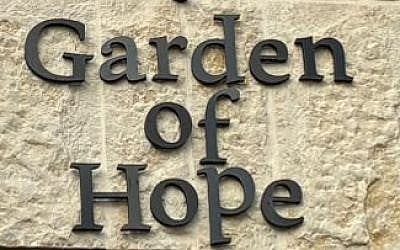
The day began at the Garden of Hope, a meeting place built last year in the Palestinian village of Hares. The building represents the vision of Issa Souf, a Palestinian activist who was shot by Israeli soldiers and left paralyzed from the waist down. A Muslim who combines his religion with teachings from the Plum Village tradition, Souf’s goal is, in part, “to oppose occupation, oppression and violence against civilians, while affirming nonviolence and justice,” according to The Mindfulness Community website. He was not around when I arrived at the center.
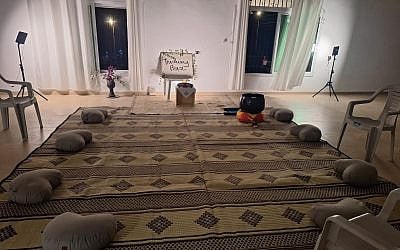
Though I reject how demonstrators the world over have chanted the words “occupation” together with “genocide” and “Free Palestine from the river to the sea,” I journeyed to the Garden of Hope because a friend told me that it stood as proof that despite the atrocities of October 7, the wars with Hamas, Hezbollah, and Iran, the Houthis of Yemen, and the growing violence in the West Bank, the Israeli peace movement lives on.
Situated in what the Israeli government calls Area C, Hares is subject to full Israeli security and civil control. The specter of interference by Jewish settlers who believe that the olive orchard where we worked sits on land they call Samaria and should be Israel’s by divine decree, hung in the air. In referring to previous attacks, Abed, the grove’s overseer, said, “We’re still waiting for the police to show up.”
There were about a dozen volunteers who took part the day I showed up. Most of them had connections to the mindfulness community. More than half, like me, were over 70. Several came from Neve Shalom, a cooperative village near Jerusalem founded by Israeli Jews and Arabs in the 1970s as an experiment to show that the two people could live together peacefully.
One of the Neve Shalom residents told me that the village (population approx. 330) is home to some anti-zionists who have accused Israel of genocide, but she was not one of them. I didn’t ask the other Neve Shalom residents where they stood on the issue. As I said, I had come to pick olives, not fights.
That day, no one interfered. Abed told us that this was unusual, noting that incidents of settler violence and vandalism in his area have increased over the past year. He blamed the uptick on the upcoming Israeli elections. I wondered if the increase was a reflection of the Netanyahu government’s laissez-faire attitude; unchecked lawlessness leads to more lawlessness.
During a break for tea, Abed thanked the volunteers. “We appreciate your work, but it’s your support, your spirit, that matters more,” he told us, reporting that 60 volunteers appeared earlier in the week to help.
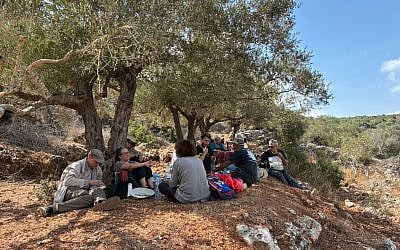
In the grand scheme of things, a dozen supporters today, five dozen yesterday, amount to a few teardrops of hope. Working beside Abed did little to lessen my pessimism about what lies ahead for the State of Israel, its soul seemingly on fire.
That said, even one teardrop is preferable to complete despair. As a participant who shared my dark vision of the future told me, “This is the work we should be doing.”
Related Topics
Related Posts