Teens on the Front Lines of Antisemitism
This past week I had the opportunity to attend the American Zionist Movement’s Biennial National Assembly, where I met remarkable leaders dedicating themselves to strengthening our community. But among the rabbis, CEOs, educators, and activists, the voices that struck me the most were not the adults.
They were the teens.
After October 7, three Jewish teenagers — Josh Resnick, Anna Toledano, and Amollia Antine — found themselves thrust into a kind of leadership they never imagined.
They didn’t ask for it.
They didn’t prepare for it.
But when antisemitism suddenly became personal, they each made a choice:
To stand up rather than shrink.
Their words reveal exactly what Jewish teens are facing — and what is giving them strength.
Josh Resnick: “If I hide who I am, they win. I’m not letting them win.”
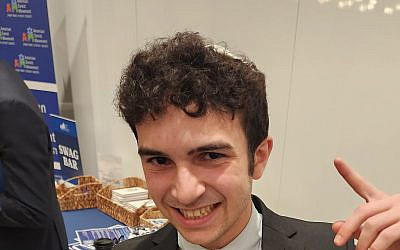
Josh Resnick, JSU President at Cherry Hill High School East, didn’t plan to become a public symbol of Jewish resilience. But everything changed on October 7.
“I woke up that Saturday and something in me shifted. I knew Israel was being attacked. I knew I was being attacked. And I wasn’t going to hide.”
So he put on his kippah and walked into school — alone.
“The first day I wore it, I felt every eye on me. It was like people were staring at a problem they wanted to poke at.”
And they did.
“Kids literally walked up to me and yelled ‘Free Palestine’ in my face — not to have a conversation, but to intimidate me.”
He wasn’t surprised by students.
But he was stunned by his teacher.
“My teacher flat-out told me Zionism is colonialism. I was like, are you serious? You’re teaching this in public school?”
Still, Josh never considered taking the kippah off.
“If I hide who I am, they win. I’m not letting them win.
The kippah stays.”
Other Jewish students noticed.
“I didn’t expect it, but people started coming to me… freshman, sophomores, kids I barely knew. They’d say, ‘Josh, this happened to me,’ or ‘Josh, what do I do?’”
Josh didn’t intend to become a point of strength for 400 Jewish teens in his JSU.
But he became one.
“I realized I had to be someone people could look to. I had to show them you can be proud, even when it’s scary.”
And he is.
Anna Toledano: “I broke down. I’d never seen people celebrate Jewish pain like that.”
In South Florida, JSU Executive Board President Anna Toledano faced a different battlefield — her phone.
Before October 7, Anna thought she understood social media. She didn’t.
“I’ve received messages saying ‘you should die,’ ‘your family should die,’ and ‘you’re a baby killer.’ I mean… what kind of person says that to a teenager?”
And that was just the strangers.
“I lost one of my best friends. She told me, ‘Anna, if you’re a Zionist, you’re basically a Nazi.’ I didn’t even know how to respond.”
But the moment that crushed her was the hostage video comments.
“I watched a video of hostages coming home and the comments were celebrating their suffering. I’d never seen people celebrate Jewish pain like that.”
She paused, then said:
“I broke down. I cried. It was just too much.”
But something inside her hardened — not in anger, but in clarity.
“Zionist isn’t a bad word. They turned it into one. And if I delete it from my bio or stop talking about Israel, I’m letting them win.”
So she kept posting.
She kept speaking.
She kept showing up.
“I’m proud of my people. I’m proud of my history. I’m proud of our country. If someone unfriends me, then they were never my friend.”
She is unshakeable now — not because she’s unhurt, but because she refuses to let hatred define her.
“They want us quiet. But I’m not going to be quiet.”
Amollia Antine: “I don’t wait to see if someone else will do it. If it matters, I do it.”
Where Josh uses visibility and Anna uses voice, Amollia Antine — a devoted Bnei Akiva leader — uses action.
She didn’t discover Zionism after October 7.
She lived it long before.
“I love Israel. I love our people. I love building community. That’s my thing.”
When things got tense, when kids were scared and parents were worried, Amollia stepped forward again.
“I don’t wait to see if someone else will do it. If it matters, I do it.”
So she organized.
She gathered.
She built.
Programs for kids.
Discussions for teens.
Spaces for families.
“People think activism is yelling online. But real activism is creating community, teaching kids, showing them joy.”
Amollia watched Zionism become distorted online too.
“People use Zionist like it’s an insult. Like it’s evil.”
But she refuses to accept that narrative.
“To me, Zionism is belonging. It’s democracy. It’s peoplehood. It’s home. Why would I ever be ashamed of that?”
Her advice for other teens is simple, almost deceptively so:
“Talk about Israel. Be honest. Be kind. Be proud.
And most importantly — be a doer.”
In a generation overwhelmed by noise, Amollia builds something real.
A Generation Rising — One Act of Courage at a Time
At the AZM Biennial, I spoke with seasoned leaders — people with decades of experience in communal life.
But the courage I saw in Josh, Anna, and Amollia was different.
Raw.
Immediate.
Unfiltered.
Formed in the fire of a difficult, defining moment.
Leadership matters now more then ever . These young adults are generals leading from the front.
Josh put on a kippah and became a symbol of Jewish pride in public school.
Anna faced a wall of online hatred and refused to erase her identity.
Amollia organized her peers and younger kids, building community from the ground up.
None of them chose this.
But each of them answered it.
Their voices reveal the future of Jewish leadership — brave, grounded, unapologetic, and deeply connected to peoplehood.
If this is the generation rising behind us, the Jewish world has every reason to hope.