We cannot see the future, but we can shape it!
Featured Post
Ten million for Uman, but what about the rest of us?
This is not about religion, it’s about priorities, integrity, and the principles that underpin national solidarity
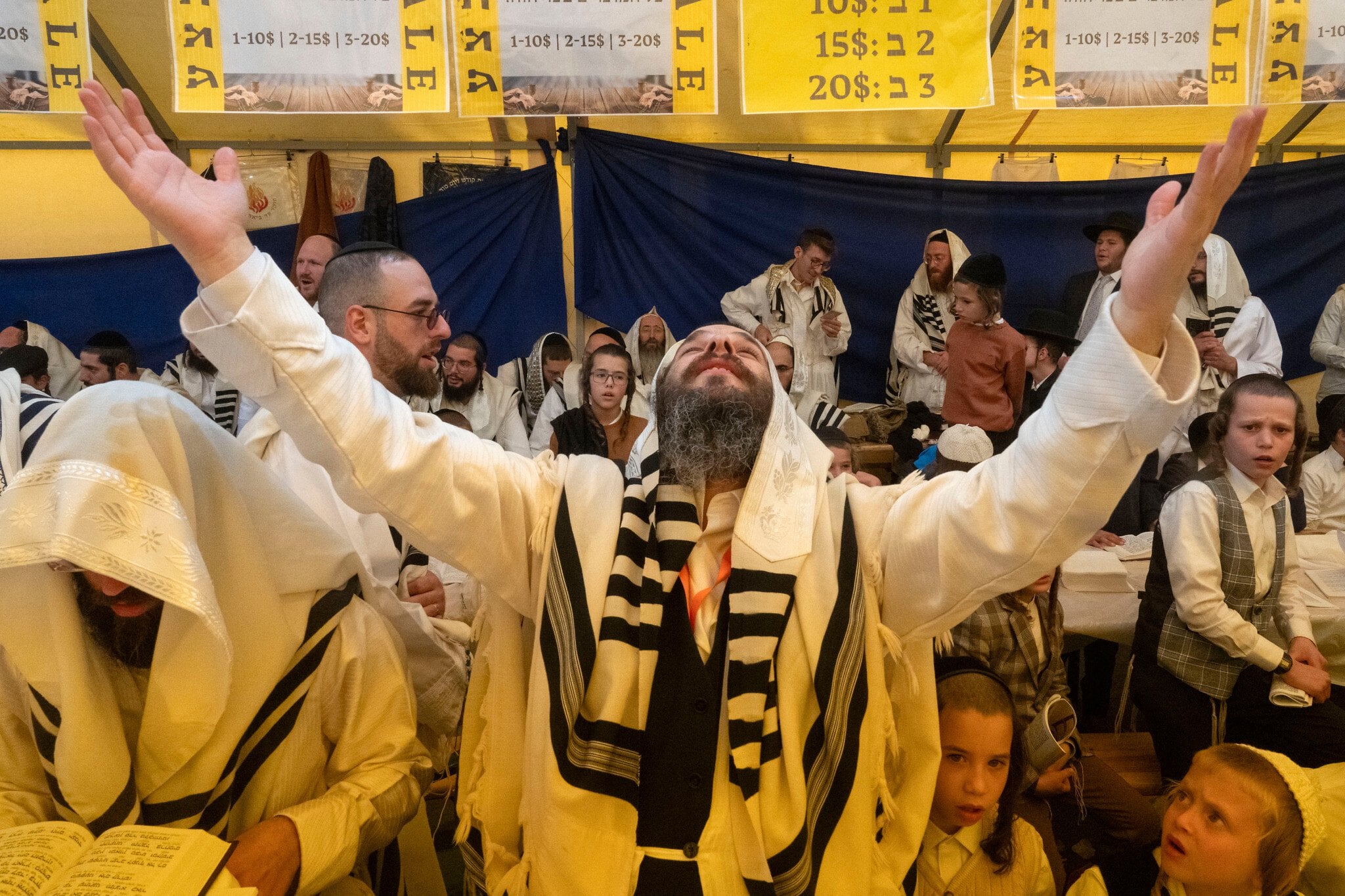
Orthodox Jews pray at the tomb of Rabbi Nachman, the great grandson of the founder of Hasidic movement, in the town of Uman, Ukraine, Thursday, Oct. 3, 2024. (AP Photo/Efrem Lukatsky)
The Israeli government seems poised to approve a ten-million-shekel budget, not for hospitals, schools, or even security at home, but for Moldova. The money will fund temporary airport facilities, extra border staff, and security logistics, all to ensure that tens of thousands of ultra-Orthodox pilgrims can pass smoothly through on their way to Uman, Ukraine.
To make it happen, five ministries are chipping in equally: the Prime Minister’s Office, Foreign Affairs, Transportation, Interior, and Jerusalem & Heritage. That means taxpayer money is being pooled across the government to ensure a small group of pilgrims can spend the High Holidays abroad, rather than being put into the Israeli economy.
But this isn’t just another budget line; it collides head-on with one of the most sensitive debates in Israel: the draft. By law, once a young man passes the 14-day deferment period after becoming draft-eligible, he cannot legally leave the country unless he has enlisted or secured an exemption. If he tries, he becomes a fugitive at risk of arrest at the airport, at the border, or even during a random police stop.
And yet, according to the Times of Israel, political pressure is building to carve out an exception. In one Ynet article, MK Aryeh Deri is quoted as saying, “a solution must be found to allow draft dodgers to fly as well.” In another, MK Yitzhak Goldknopf is quoted as saying that the government needs to find a way to “Expand the framework so that it includes the thousands of Chabad Hassidim traveling to be in the presence of their spiritual leader.” Put simply, allow even those who dodged their duty to hop on a plane and head to Uman.
That’s where this policy crosses a dangerous line. If the state truly has ten million shekels lying around, shouldn’t it be invested in Israel itself? Why funnel it into Moldova’s infrastructure when our schools are overcrowded, our hospitals underfunded, and our security stretched thin? Why bend the rules for draft dodgers, the very people who refuse to carry the financial and security responsibility the rest of us bear?
This is not about religion, it’s about priorities, integrity, and the principles that underpin national solidarity. Subsidizing a foreign country for a religious pilgrimage might be cautiously tolerated in times of plenty if it was guaranteed to yield some form of political capital. During war, when all citizens are asked to bear the burden, what might appear as generosity instead reads as negligence.
And if, on top of that, the government rewards draft dodgers with special privileges? Then it risks tearing apart the very sense of shared duty that holds this country together.
Why should taxpayers finance infrastructure investment abroad when our own domestic needs are neglected? Why should those who refuse to serve be given loopholes and additional privileges? And why, in this moment that requires unity above all else, is the government prioritizing Uman over Israel?
Related Topics