NEVER AGAIN IS NOW!
Thanksgiving: A Hebrew Perspective
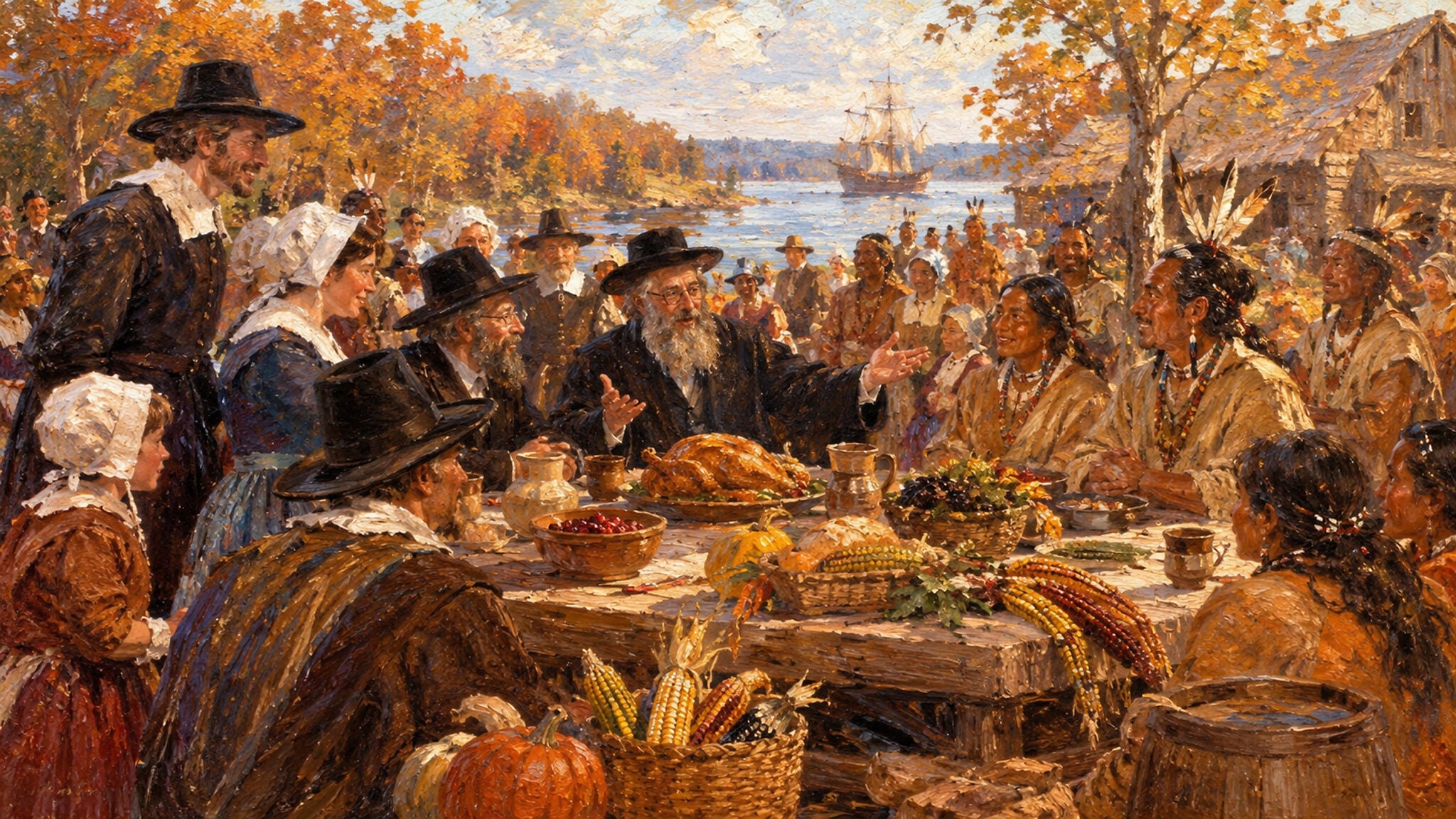
THE INAUGURAL THANKSGIVING FESTIVAL held in Plymouth, Massachusetts, on November 26, 1621. Imagined by BRANFMAN. Created by CHAT-GPT
When Pilgrim leader William Bradford disembarked upon Cape Cod, Massachusetts in 1620, he referenced Psalm 107 from the Tanakh. Authored in the 6th Century BCE, its themes of thanksgiving reflect God’s love and His power to rescue us from distress. Psalm 107 provides the spiritual foundation for today’s Thanksgiving holiday.
Upon their arrival, many Pilgrims studied Hebrew and gave their children biblical Hebrew names like Abraham, Sarah, Rebecca, and Isaac. They named their towns Salem, Bethel, Hebron, and Zion. William Bradford taught himself Hebrew by candlelight, filling pages of his manuscript with Hebrew vocabulary, proverbs, and grammar notes. A Hebrew inscription is carved onto his gravestone. Elder William Brewster, the Pilgrims’ spiritual leader brought Hebrew books of grammars and dictionaries with him on the Mayflower.
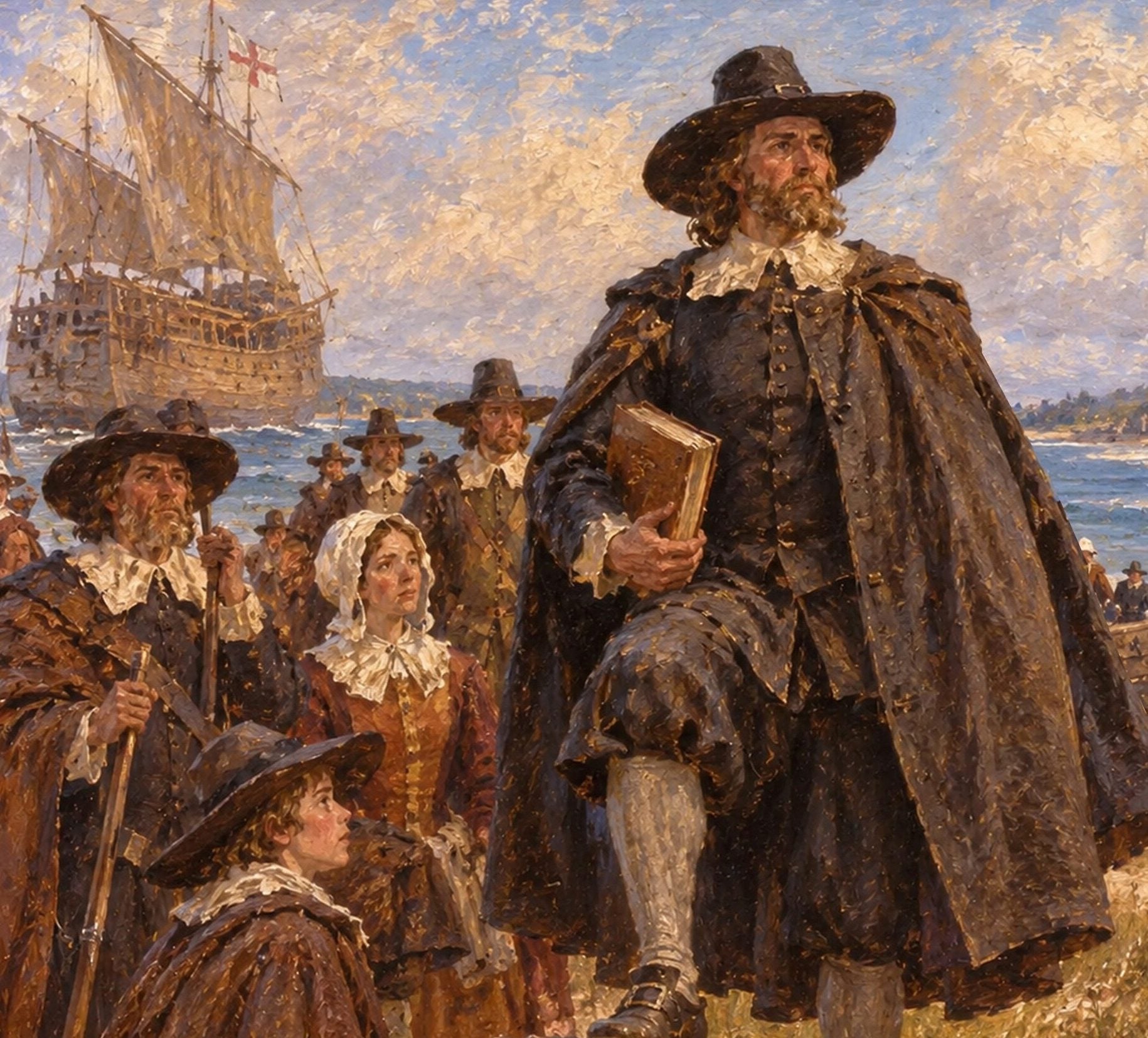
Imagined by BRANFMAN. Created by Chat-GPT
The Pilgrims thought of their journey as a reenactment of the Israelites’ Exodus from Egypt with King James I as Pharaoh, the Atlantic Ocean as the Red Sea, and North America as their Promised Land.
In 1630, the Puritans arrived and expanded Hebrew education at Harvard and throughout New England. From its founding in 1636, Harvard required all undergraduates to study Hebrew. Harvard’s model set the standard across early American higher education, inspiring Yale Princeton, Columbia, and Dartmouth to adopt Hebrew instruction.
Long before the Pilgrims and Puritans arrived in the promised land, Jews had settled in the Americas. In 1492, Luis de Santángel, born into a prominent Jewish merchant family in Valencia, helped finance Columbus’ voyage, and accompanied him on his voyage. Also joining the journey was Jewish interpreter Luis de Torres. Meanwhile, back at home, Jews Abraham Zacuto and Levi ben Gerson provided the navigation tools and tables.
Was Columbus of Jewish Ancestry?
A 2024 Spanish study led by researcher José Antonio Lorente analyzed DNA from remains in Seville Cathedral and Columbus’s son Hernando. He concluded that genetic traits pointed to Jewish ancestry. Columbus likely concealed a Jewish identity or converted to Catholicism to avoid persecution. Prior to his 1492 cruise, Spain experienced a pivotal turning point often called its annus mirabilis, marked by the Alhambra Decree with expulsion of its Jewish population. Ferdinand and Isabella ordered all Jews to leave Spanish territories or convert to Christianity, ending over a millennium of continuous Jewish presence in Iberia.
In 1585, three-and-one-half decades prior to the Pilgrims arrival, Joachim Gans, a Bohemian-German Jew, and renowned metallurgist/mining expert was recruited for Sir Walter Raleigh’s expedition. Shortly after the Pilgrims arrived, French Jew Elias Lagrange arrived aboard the merchant ship Abigail. He was a vigneron (winemakers and silkworm cultivator) who was instrumental in establishing wine and silk industries in Virginia. Solomon Franco, a Sephardic Jewish scholar from Holland settled in Boston 1649. Solomon Pietersen, a merchant from Amsterdam, came to New Amsterdam (Lower Manhattan) in 1654. Jacob Barsimson, an Ashkenazi merchant also arrived in 1654, employed by the Dutch India Company. New Amsterdam also welcomed kosher butcher Asher Levy, a Jewish refugee from Brazil. Asher fought for Jewish rights in the Dutch colony and was soon joined by 23 additional Jews escaping the heinous claws of the Spanish inquisition which had metastasized to Brazil.
For the first Thanksgiving festival which was a three-day religious harvest celebration, the Pilgrims sought guidance and inspiration from the Torah. Sukkot celebrates the harvest and protection granted to us by God. Both holidays includes rejoicing with family and welcoming strangers. The Pilgrims too, marked their festival by feasting alongside their families, thanking God, and welcoming their indigenous Wampanoag neighbors. The celebration included around 150 attendees. Among them were the surviving Mayflower passengers, of whom roughly half survived the first winter.
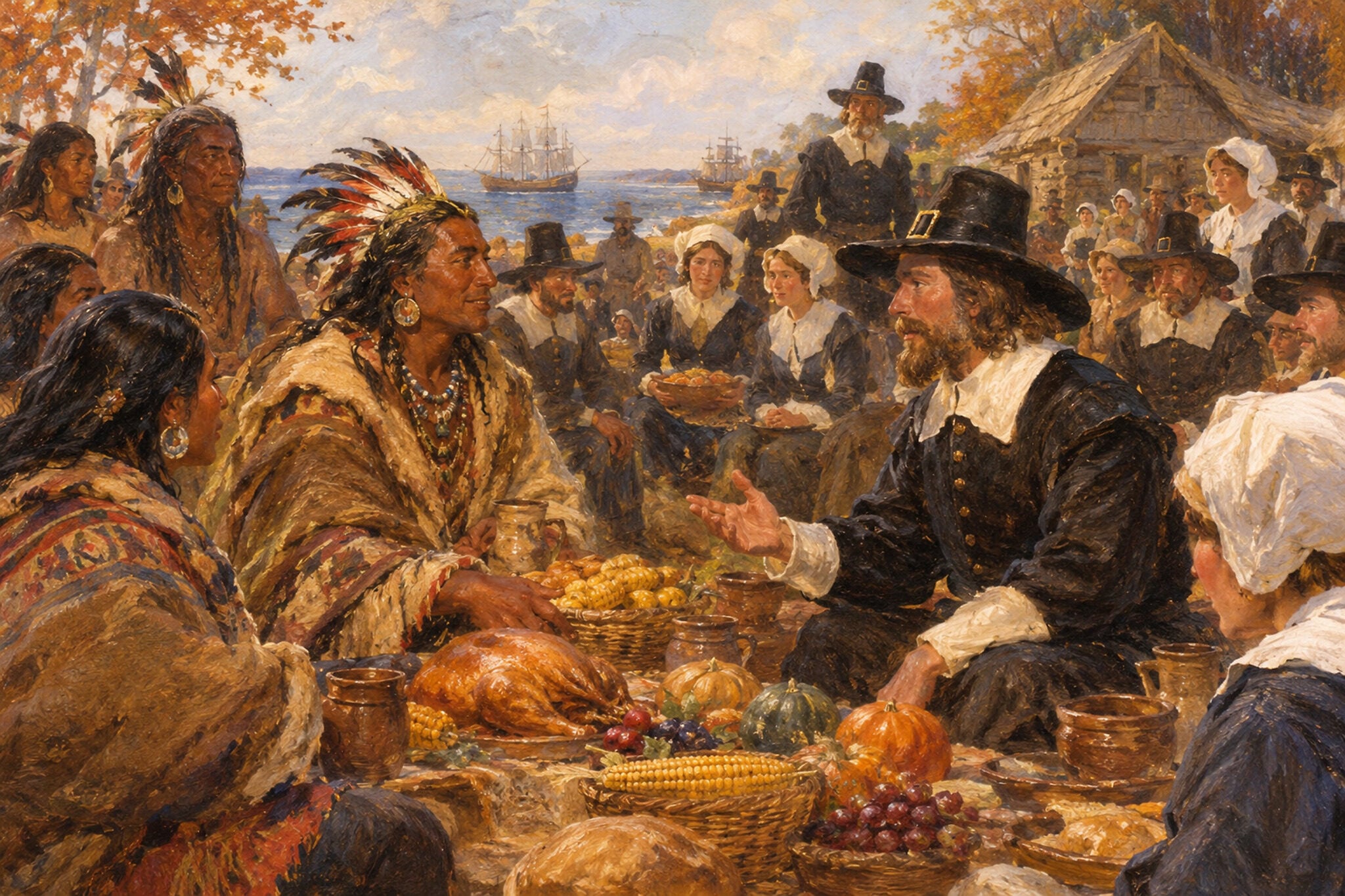
The party-goers included Pilgrim men, women, children, and twice as many indigenous Pokanoket Wampanoag. They too included families, and their leader, Ousamequin, widely known by his title Massasoit, “The Great Sachem”.
Long before Washington’s presidency and his official declaration of Thanksgiving as a national holiday, Alexander Hamilton served as General George Washington’s senior aide-de-camp. He managed security and intelligence, acting as his trusted right-hand man before commanding a battalion at the Battle of Yorktown.
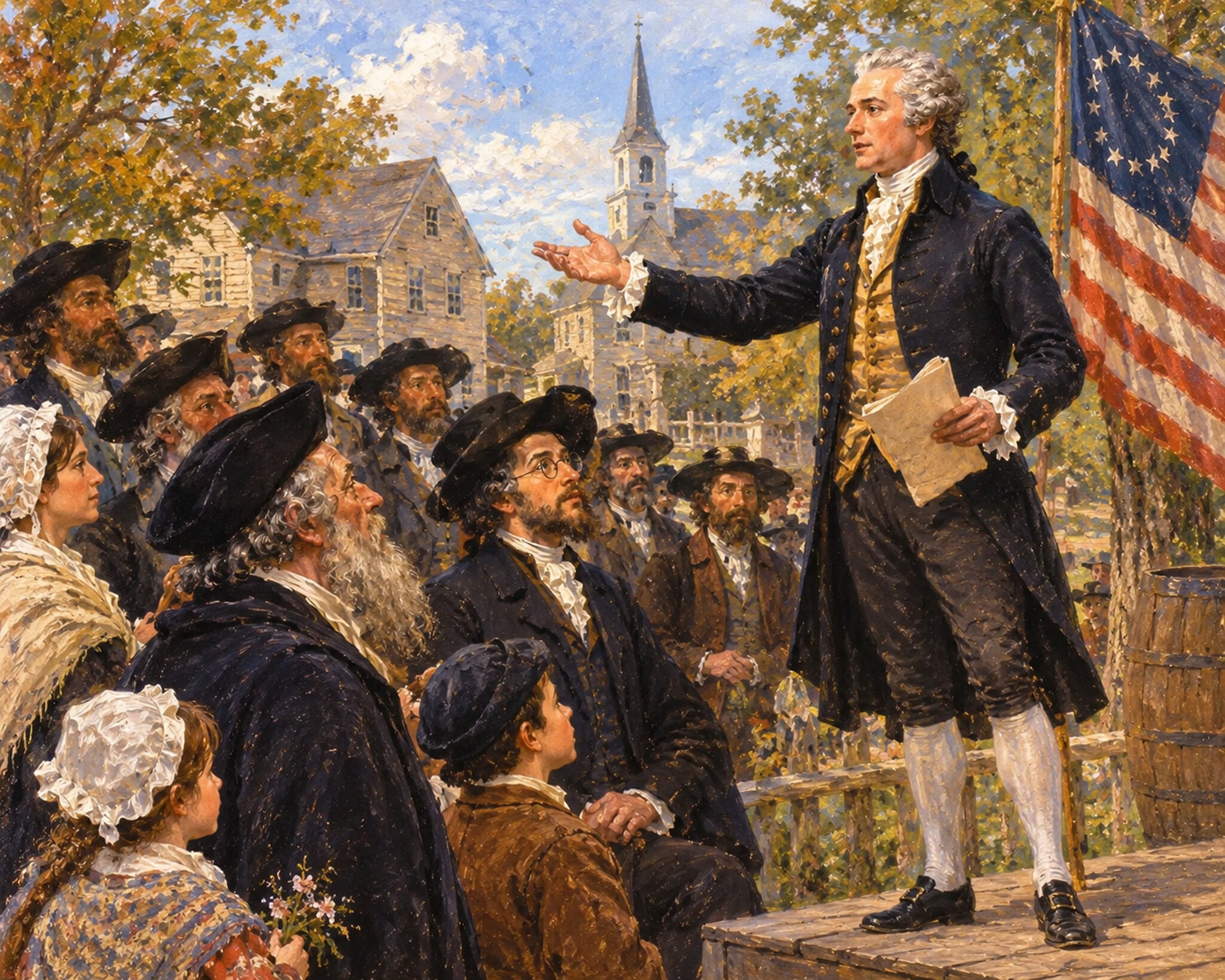
Alexander Hamilton was an outspoken champion of Jewish civil rights in the early United States. As a lawyer, he fought to overturn Antisemitic laws including those that barred Jews from testifying in court. He also passed legislation allowing Jewish graduates to serve on the board of Columbia College (then King’s College). Why? Recent research published in 2021 by historian Andrew Porwancher argues that Hamilton was born and raised Jewish in the Caribbean.
The American Revolutionary War which lasted from 1775 to 1783, was financed by Polish-born Jewish businessman Hyman Solomon. Prior to the revolution, 1,000 Jews lived in the colonies. In 1789, following the American Revolution, George Washington issued the first national Thanksgiving proclamation.
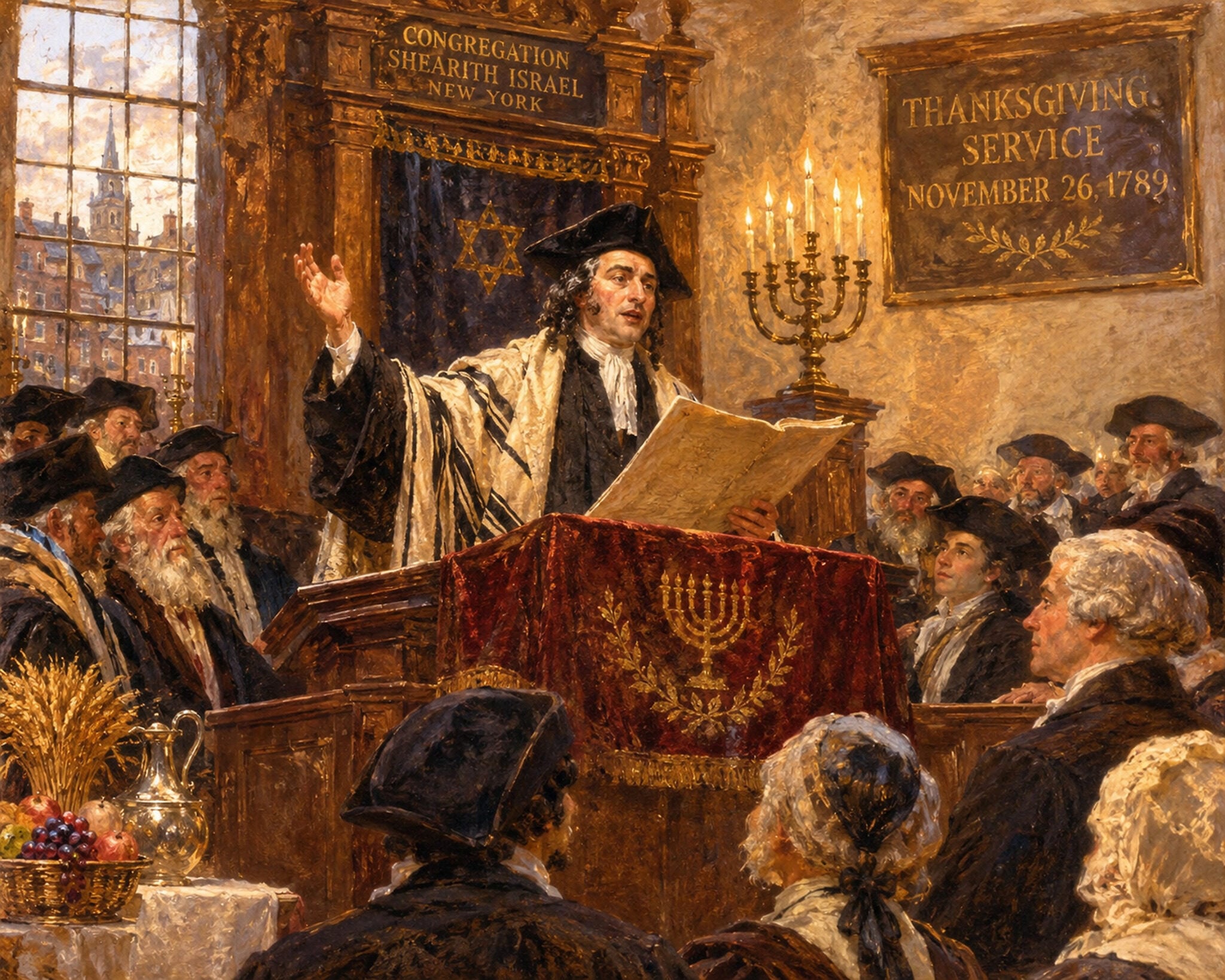
delivering special Thanksgiving service at Congregation Shearith Israel in New York City on November 26, 1789, Imagined by BRANFMAN. Created by CHAT-GPT
Rabbi Gershom Mendes Seixas of New York held a special Thanksgiving synagogue service honoring the newly declared American holiday. The following year, George Washington, quoting from the Tanach, penned a letter to the Touro Hebrew Congregation in Newport, Rhode Island. Referencing Micah, 4:4, he wrote, “everyone shall sit in safety under his own vine and fig tree, and there shall be none to make him afraid”.
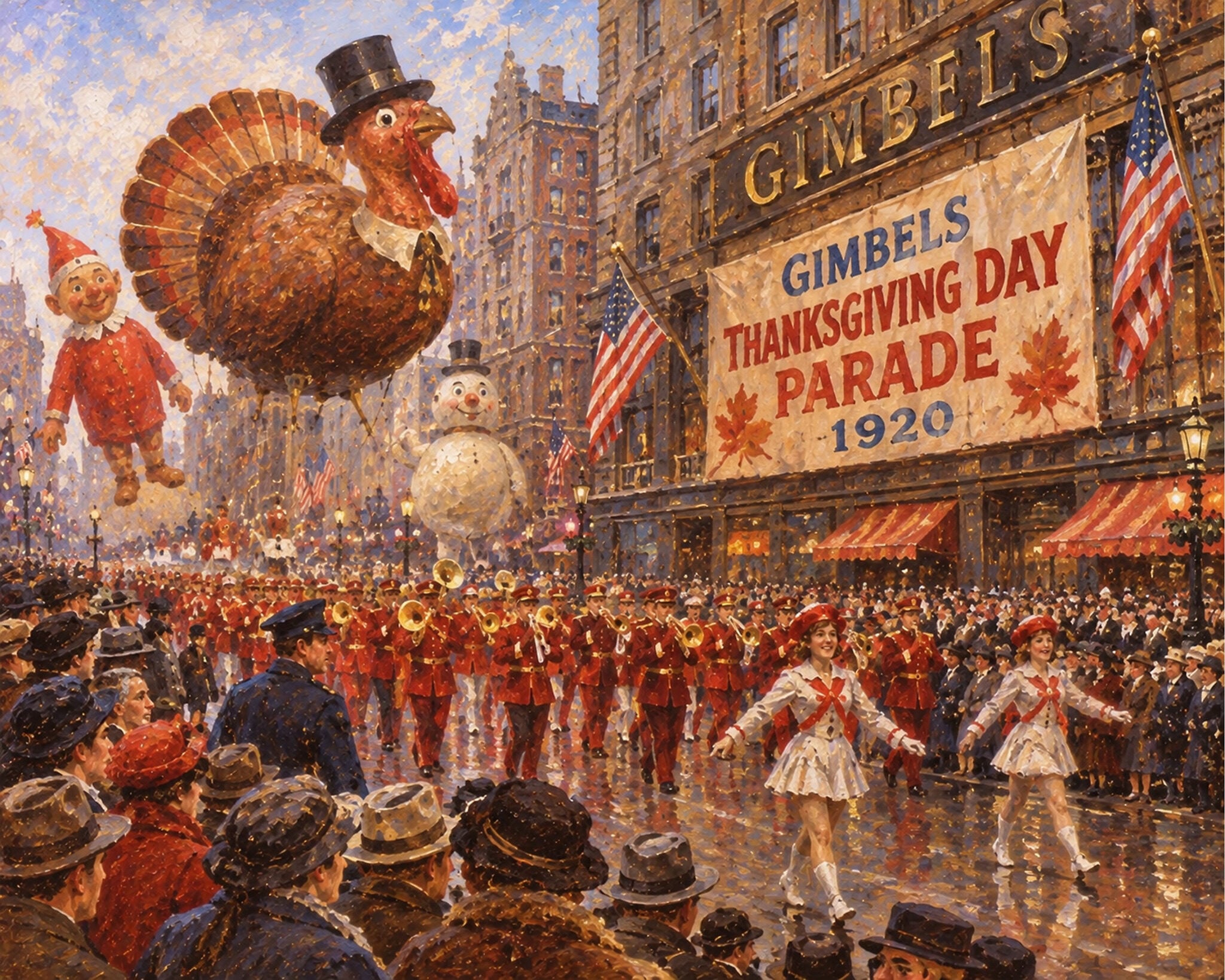
Today, a true highlight of the Thanksgiving holiday is the Thanksgiving Day Parade, first introduced by the descendants of Jewish immigrant Adam Gimbel. In 1920, his grandson Bernard held the first Thanksgiving Day Parade in Philadelphia. It included 50 employees, some dressed as clowns, along with decorated cars and Ford Model Ts. In 1924, Macy’s Jewish owner Isidor Straus followed suit and introduced their own Thanksgiving Day parade featuring circus performers, floats, marching bands, and live animals from the Central Park Zoo.
As is customary in Jewish tradition when celebrating holidays or reaching a special moment in time, let us meditate on the Shehecheyanu blessing.
בָּרוּךְ אַתָּה יְיָ אֱלֹהֵינוּ מֶלֶךְ הָעוֹלָם, שֶׁהֶחֱיָנוּ וְקִיְּמָנוּ וְהִגִּיעָנוּ לַזְּמַן הַזֶּה
Baruch atah Adonai, Eloheinu Melech ha’olam, shehecheyanu, v’kiy’manu, v’higiyanu laz’man hazeh.
“Blessed are You, Lord our God, King of the universe, who has granted us life, sustained us, and enabled us to reach this occasion.”
Happy Thanksgiving, and my sincere best wishes to you and yours for a happy, healthy holiday season and a joyous and prosperous New Year!
Related Topics
Related Posts