Kindness is a habit, not an event.
They Sing My Great-Grandfather’s Song Every Time They Bring Out the Torah
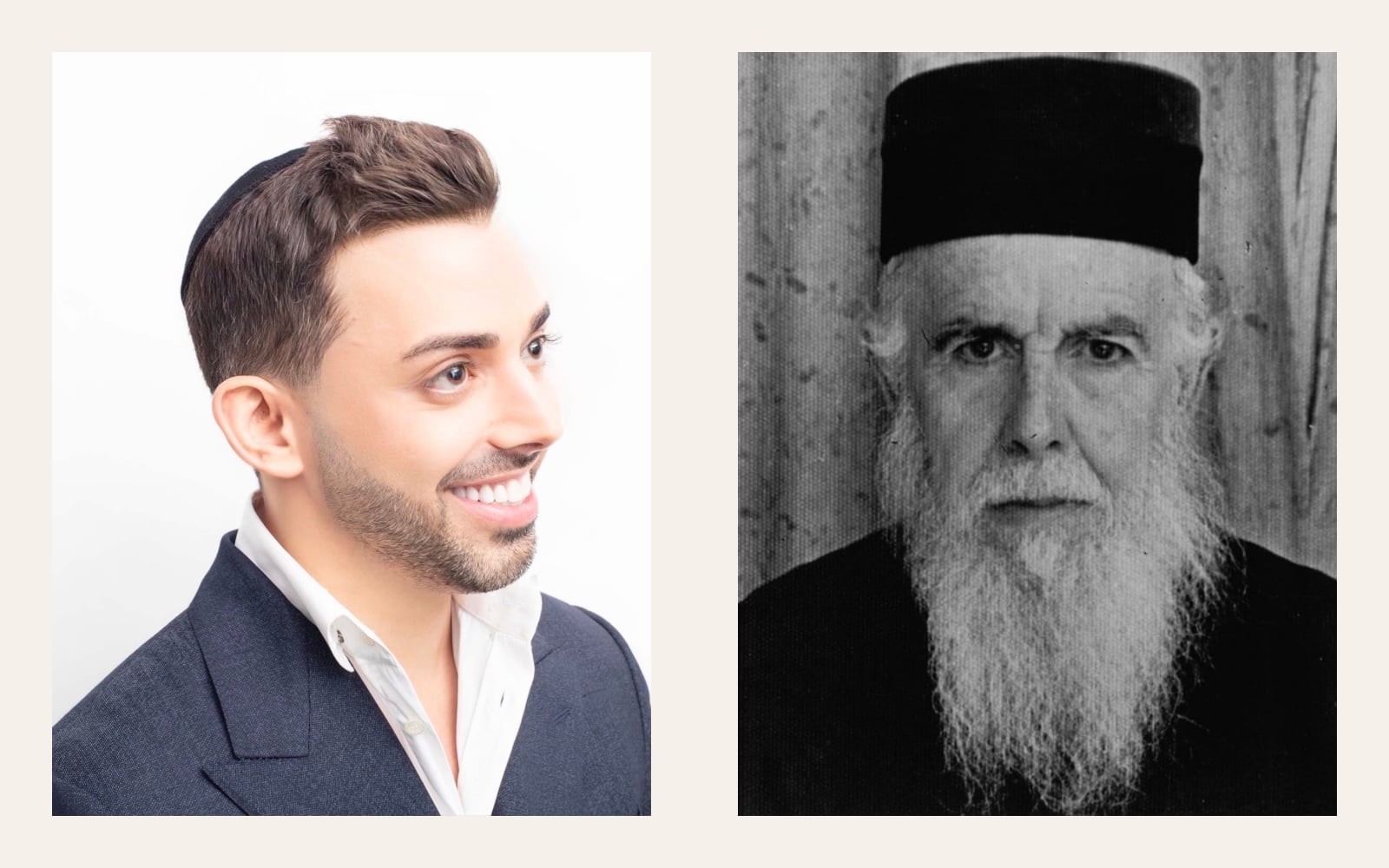
Rafi Toledano, also known as Raphael Toledano, and his great-grandfather, Rabbi Raphael Baruch Toledano, Zt”l, Chief Rabbi of Meknes and composer of Ashorer Shirah. Portrait of Rabbi Toledano: public domain (CC0), via Wikimedia Commons.
Every time the Hechal (הֵיכָל, the Holy Ark) opens in my synagogue, something extraordinary happens.
Before a single word of the weekly portion is read, as the Sefer Torah is lifted into the arms of the congregation and carried through the room, the entire sanctuary breaks into one timeless Piyyut (פִּיּוּט, a sacred liturgical poem):
אֲשׁוֹרֵר שִׁירָה לִכְבוֹד הַתּוֹרָה, מִפָּז יְקָרָה זַכָּה וּבָרָה
Ashorer Shirah Lichvod HaTorah, MiPaz Yekarah, Zakah U’varah.
“I will sing a song in honor of the Torah, more precious than fine gold, pure and radiant.”
Children reach up to kiss the Torah’s velvet mantle. Elders close their eyes and sing every syllable by heart. From Morocco to Jerusalem, from Paris to Cedarhurst and Manhattan, that melody welcomes the Torah. Israel’s National Library says it is sung today in every community.
My great-grandfather, Rabbi Raphael Baruch Toledano, Zt”l (זֵכֶר צַדִּיק לִבְרָכָה, Zecher Tzaddik Livracha, “may the memory of the righteous be a blessing”), Chief Rabbi of Meknes, Morocco, composed that song.
Living proof of a Tzaddik
Stop and think about what that actually means.
Throughout history, brilliant scholars have written thousands of poems that faded within a single generation. You can write a book with intellect alone. But you cannot write the song that Klal Yisrael (כְּלַל יִשְׂרָאֵל, the Jewish people) sings at one of its holiest moments, standing face to face with an open Hechal, unless Heaven itself places its seal on your life.
I do not believe Hashem places a person’s words at the doorway of His Torah, in communities across the world, by accident. Ashorer Shirah endured because the man who wrote it was a true Tzaddik (צַדִּיק, a righteous, holy soul), and the deepest prayer of his life was that his children and grandchildren would stay attached to the Torah forever. He poured that prayer into his Piyyutim. The most famous of them is this one.
His holiness had nothing to do with distance from people. It lived in his boundless devotion to them. Every time I stand at Hachaim Vehashalom in Cedarhurst, where there is a Minyan (מִנְיָן, a prayer quorum of ten) whenever someone needs one and some days more than 5,000 people walk through the doors, and I hear a room full of Jews singing my great-grandfather’s words as the Sefer Torah passes, I know I am witnessing living proof of who he was. More than fifty years after his passing in Bnei Brak, Hashem still lets his voice escort the Torah into the arms of the Jewish people.
Ashorer Shirah, sung by Yosi Niazov.
Why Thanksgiving is an obligation of the heart
This Thanksgiving, millions of us gather around tables across America. In Jewish thought, this day touches something at the core of our spiritual DNA.
In Hebrew, gratitude is הַכָּרַת הַטּוֹב (Hakarat HaTov), literally “recognizing the good.” Notice that our Sages do not call it feeling the good. Feelings come and go. Recognizing the good is a discipline and a moral duty.
Living in New York and watching Jewish life thrive openly every single day, I feel a deep obligation of Hakarat HaTov to the United States of America and to the government that protects our freedom. For centuries of exile, our ancestors prayed simply for a haven where we could open an Ark in peace, raise our children in faith, keep synagogue doors open around the clock and care for neighbors of every background.
America gave us that sanctuary, and its laws, leaders and service members safeguard that liberty every day. The prophet Yirmiyahu (Jeremiah 29:7) told the Jewish people in exile: וְדִרְשׁוּ אֶת שְׁלוֹם הָעִיר (“Seek the peace of the city”). And Pirkei Avot (Ethics of the Fathers 3:2) teaches: הֱוֵי מִתְפַּלֵּל בִּשְׁלוֹמָהּ שֶׁל מַלְכוּת (“Pray for the welfare of the government”), because a society of law protects every human being.
Dvar Torah
There is a remarkable teaching in the Torah that shows how deep gratitude goes.
Before the first plague in Egypt, Hashem told Moshe Rabbeinu: say to Aharon, take your staff and stretch out your hand over the waters of Egypt (Shemot/Exodus 7:19). Why Aharon, and not Moshe?
Rashi explains: when Moshe was a helpless baby, he was hidden in a basket on the Nile, and the river protected him. So the river was not struck by Moshe’s hand, not for the plague of blood and not for the plague of frogs. Later, Aharon also struck the dust for the plague of lice, because the dust had once protected Moshe too (Rashi on Shemot 7:19 and 8:12).
Stop and let that sink in. If the Torah teaches the greatest prophet who ever lived to show gratitude to water and dust, which cannot hear, think or feel, how much more do we owe gratitude to Hashem, to our country and to the living, breathing people who stand beside us every day?
And how do you truly say thank you? Not only with words. With Chesed (חֶסֶד, kindness). When you recognize how much good you have been given, you naturally look around the room for someone to share it with.
That was my great-grandfather. He said every Bracha (בְּרָכָה, blessing) with deep intention, and those who knew him recorded that he thanked Hashem even for the Mitzvot (מִצְווֹת, commandments) he was privileged to fulfill. He thanked Hashem inside the synagogue with Ashorer Shirah, and then he walked out the front door and thanked Hashem with his hands: he founded Bikur Cholim to bring free medical care to the sick and the poor, Malbish Arumim to clothe the needy, and every Friday he gave out Tzedakah (צְדָקָה, charity) to the poor himself. That is the spirit we strive to live by every day through Rafi Toledano | Philanthropies.
A Thanksgiving blessing
On this Thanksgiving, may Hashem bless the United States of America, its government and all who defend its freedom with wisdom, strength and peace. May He watch over Klal Yisrael and grant comfort, healing and protection to all who need it. And may He bless you and everyone around your table with good health, Shalom Bayit (שְׁלוֹם בַּיִת, peace in the home), abundant Bracha and a heart so full of gratitude that it overflows into kindness all year long.
The next time the Hechal opens and the Sefer Torah comes out to meet the congregation, listen closely to the song. Heaven kept that melody alive for a reason.
Happy Thanksgiving, and B’ezrat Hashem (בְּעֶזְרַת הַשֵּׁם, with God’s help), may we always have reasons to sing.
Related Topics