


Defense & National Security Policy Analyst
The $2.8 Billion Trap: Why Israel Must Modernize Its Defense Doctrine
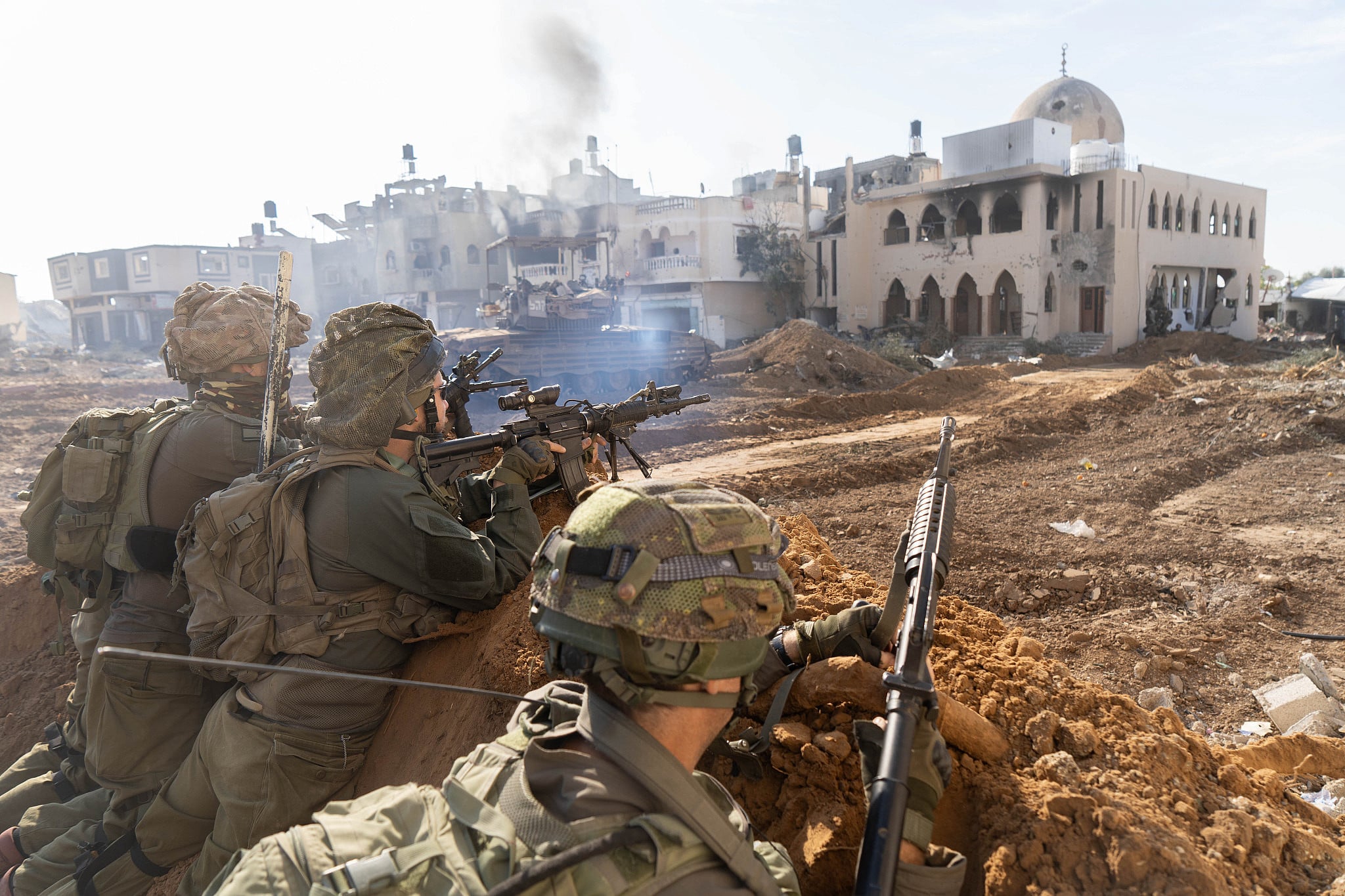
IDF Paratroopers Brigade forces engaging Hamas in the Gaza Strip, January 2024 By נועם קרמפף -
The recent notification of a proposed $2.8 billion U.S. arms package to Israel—featuring 40,000 2,000-pound heavy bombs, including MK-84s, BLU-117s, and 20,000 I-2000 Penetrator warheads—was widely celebrated across Jerusalem’s security establishment. In an era characterized by simultaneous regional threats, multi-front military operations, and degraded stockpiles, securing heavy firepower from Washington provides an undeniable tactical lifeline.
At first glance, the deal represents a major victory. It replenishes critical munitions reserves, leverages Foreign Military Financing (FMF), and sends an unambiguous signal of Washington’s commitment to Israeli security. Yet, beneath the tactical relief lies a profound strategic dilemma. Relying on massive aerial bombardment as a substitute for a comprehensive ground, intelligence, and maneuver doctrine comes at a steep price—one that threatens Israel’s diplomatic standing, supply-chain independence, and long-term security posture.
The most immediate cost of this operational posture is diplomatic and geopolitical. Heavy 2,000-pound munitions are designed primarily for high-intensity conventional warfare against hardened, buried infrastructure. However, when deployed extensively in dense urban operational theaters like Gaza or southern Lebanon, the resulting destruction inevitably draws intense international scrutiny. Every large-scale strike consumes vast amounts of Israel’s global diplomatic capital, placing severe political strain on relationships with Western allies, Arab partner nations, and international organizations.
Furthermore, over-reliance on heavy munitions creates a dangerous supply-chain dependency. Becoming structurally reliant on massive shipments of foreign-made warheads leaves Israel’s strategic freedom of maneuver vulnerable to political shifts abroad. As past holds and delays on 2,000-pound bomb shipments demonstrated, when a nation’s war-fighting capability depends on continuous foreign replenishment, its sovereign decision-making is quietly constrained. Relying on heavy aerial ordinance funded via foreign aid creates a tactical shield that doubles as a strategic tether.
The $2.8 billion arms package should therefore serve not as a permanent strategic playbook but as a transitional bridge. The Israeli Defense Forces (IDF) must use this moment to execute a long-overdue shift in defense doctrine, moving away from heavy attrition warfare and toward a modern, highly adaptive operational concept.
First, Israel must accelerate its transition toward decentralized, high-precision strike capabilities. Rather than relying heavily on massive unguided or heavy penetrating ordnance to neutralize subterranean or urban targets, investment must pivot toward autonomous loitering munitions, micro-drones, advanced cyber-kinetic systems, and specialized ground maneuver units capable of surgically dismantling adversary infrastructure. Precision and localized tactical maneuvering reduce collateral damage, conserve resources, and preserve international political space during extended campaigns.
Second, Israel must prioritize sovereign domestic production for essential defense hardware. While heavy warheads and specialized aerospace components will always require international cooperation, scaling up domestic manufacturing for critical munitions reduces strategic vulnerability. Achieving greater self-reliance ensures that future security decisions are dictated solely by national interests, not foreign domestic political considerations.
Third, an updated defense doctrine must reintegrate military force with proactive diplomatic strategy. Firepower alone cannot eliminate asymmetric threats or establish long-term regional stability. Deterrence is built not merely by the weight of dropped warheads but by combining tactical strength with durable political alliances, economic integration, and clear strategic endgames.
The $2.8 billion U.S. munitions deal offers an essential short-term safeguard, but it cannot replace a forward-looking security strategy. Heavy bombs can win tactical engagements and destroy enemy strongholds, but only an evolved, self-reliant defense doctrine can guarantee Israel’s long-term survival and strategic independence.
Related Topics
Related Posts
