
The Abrahamic Movement and the Reframing of Peace in the Middle East
For decades, the conversation around peace in the Middle East has largely been dominated by discussions of power, borders, and security. While these aspects are crucial, they haven’t proven to be enough on their own. The Abrahamic movement introduces a new way of thinking—one that views peace not just as a political achievement, but as a moral and civilizational obligation rooted in our shared faith, history, and the dignity of all people.
Emerging alongside diplomatic efforts like the Abraham Accords of 2020, the Abrahamic movement draws from the shared spiritual heritage of Judaism, Christianity, and Islam. It challenges the belief that religion is destined to incite conflict in the region. Instead, it posits that when faith is liberated from extremism and political manipulation, it can act as a stabilizing force—creating opportunities for dialogue where traditional diplomatic efforts often struggle.
This shift in perspective has become particularly crucial in the wake of the ongoing regional violence and the ideological divides that followed the Hamas attacks on October 7, 2023. In this charged environment, the Abrahamic movement has transitioned from abstract interfaith dialogue to real moral action. Delegations, discussions, and public initiatives are now focused not just on coexistence but also on holding people accountable—especially in communities where silence or vague responses to violence have become the norm.
A notable instance of this change was the week-long delegation to Israel that took place from December 19–25, 2025, organized by the American Muslim and Multifaith Women’s Empowerment Council (AMMWEC) in partnership with the Ohr Torah Interfaith Center. Thirteen Muslim leaders from North America, Pakistan, the UAE, and other regions participated, led by AMMWEC President Anila Ali. Their goal was straightforward: to unequivocally condemn terrorism, to counter propaganda with direct engagement, and to strengthen Muslim–Jewish solidarity against extremism and antisemitism.
Day Two | AMMWEC–Ohr Torah Muslim Leaders Delegation to Israel
Today marked Day Two of our second delegation organized by the American Muslim and Multifaith Women’s Empowerment Council (AMMWEC) in partnership with Ohr Torah.
Muslim leaders from the United States and Canada… pic.twitter.com/4g4QgkZn00
— Anila Ali (@anilaali) December 21, 2025
The delegation’s visit to the Nova Music Festival site, where Hamas committed horrific acts against civilians, along with their trips to nearby Bedouin villages that suffered the same fate, carried significant moral weight. It brought to light a reality that often gets overshadowed in ideological debates—that extremist violence is indiscriminate, affecting both Jews and Muslims. Sharing meals with Bedouin families and listening to the stories of survivors turned tragedy from a mere headline into a shared human experience. For many participants, it reinforced a simple yet often neglected truth: condemning terrorism is not just a political act; it’s a moral responsibility.
The subsequent activities reflected the broader aspirations of the Abrahamic movement. Visits to the Al-Aqsa compound, the Israeli Knesset, and the ANU – Museum of the Jewish People were paired with ongoing interfaith dialogues and cultural exchanges. These interactions didn’t aim to erase political disagreements or historical grievances. Instead, they sought to dismantle the zero-sum narratives that have long framed the recognition of one people as a denial of another.
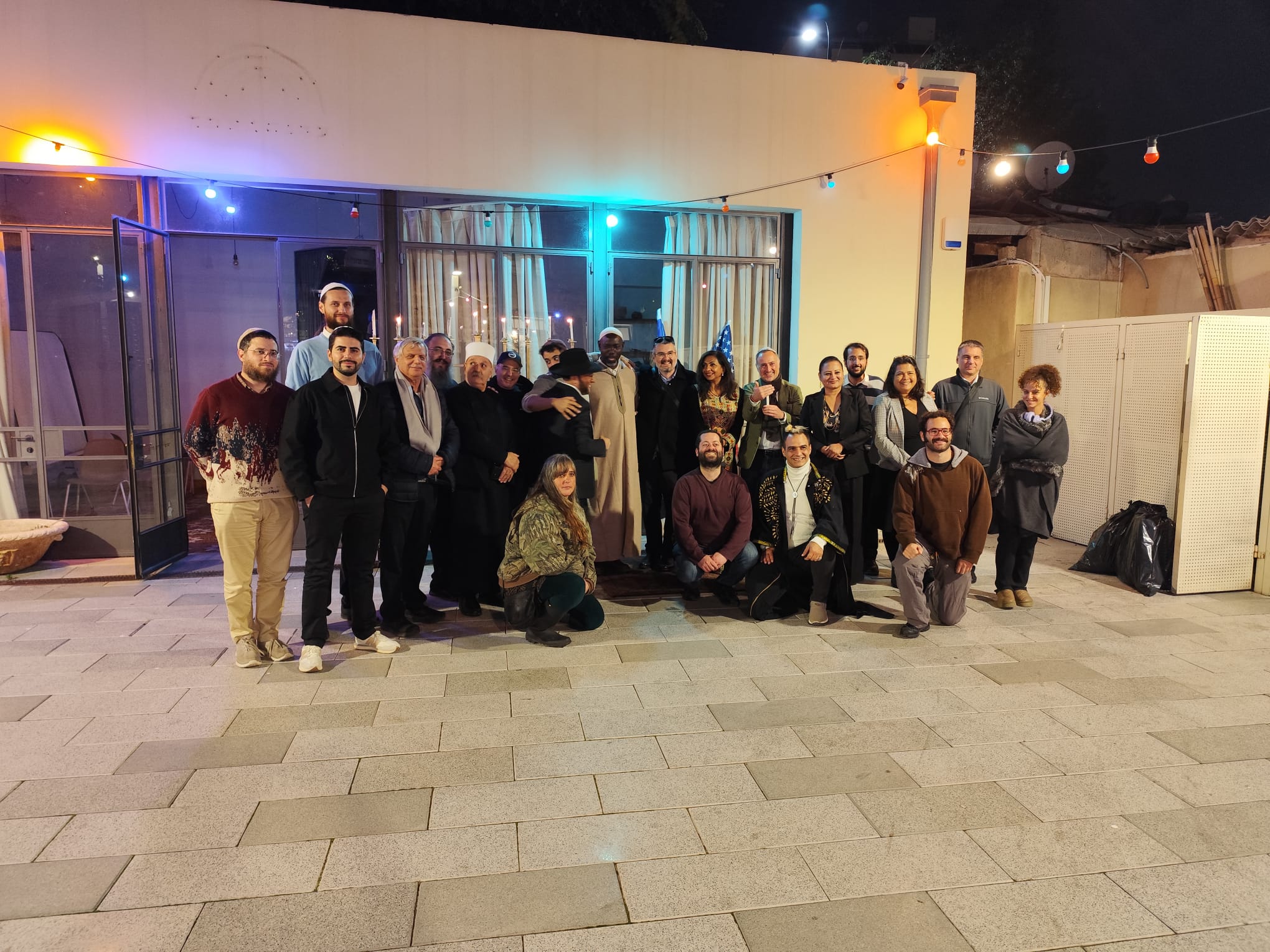
The symbolism gained significant attention during Hanukkah when Muslim participants came together with their Jewish and Druze counterparts for the “Light Up Tel Aviv” celebration, organized by the Combat Antisemitism Movement. In a region where religious symbols are often used to create divisions, the act of Muslims lighting Hanukkah candles conveyed a strong message: standing in solidarity against antisemitism is about protecting our shared humanity. As Loay Alshareef, an activist from the UAE, noted during the event, Islamic scripture acknowledges deep historical ties to the land, challenging the idea that recognizing the Jewish connection equates to betraying Muslim identity.
Honored to join our friends in Israel @CombatASemitism who brought our Muslim American faith leaders to Israel- to bring hope and light on the beautiful festival of hope- #Hanukkah – @POTUS @WhiteHouse @LeoTerrellDOJ @jnsource @realDonaldTrump @SenateGOP @SenateDems @JDVance…
— Anila Ali (@anilaali) December 23, 2025
The groundwork for these discussions was laid at the First Abrahamic Conference in Jaffa, brought together by Tom Wegner, the founder of the Abrahamic Movement. The conversations tackled some of the most sensitive and often-ignored topics within Muslim discourse, including the outright rejection of Zionism. Participants argued that it’s ethically inconsistent to oppose Jewish self-determination while supporting other national movements, which goes against the Abrahamic principles of justice and fairness. These discussions, recorded for public sharing, represented a rare effort to connect theology with moral integrity rather than just political convenience.
A crucial part of the discussion was the rejection of the ideological machinery that supports radical violence. Speakers pointed out that extremist movements depend on a blend of indoctrination, grievance cultivation, and opportunity. If we address security without confronting the manipulation of religious texts, we’re just keeping the cycle alive. When violence is framed as a sacred duty instead of a crime, it’s not faith that gets elevated, but faith that gets corrupted—and it’s the communities that ultimately bear the brunt.
A standout moment from the visit took place during a Hanukkah candle-lighting ceremony, where Muslim activist Soraya Deen addressed a diverse audience of Jews and Muslims with incredible moral clarity. As she lit the candles, she spoke not as a politician or a negotiator, but as someone deeply aware of her conscience, stressing that we can’t delay peace until governments take action. She described the Middle East as a dark valley that we must cross together. Her message was powerful: real change won’t come from summits or official declarations, but from authentic human connections, courageous listening, and a readiness to lead with empathy and love, even when the political landscape seems most challenging.
“I would like to express my deep gratitude to Tom Wagner for initiating a thought-provoking discussion of the Abrahamic movement’s goals in protecting the future of humanity.” An essential aspect of our religious duty lies in its ability to rise above personal interests.
Violence will not bring peace for any of the parties involved. “
The Abrahamic movement doesn’t promise quick fixes or an end to conflict. Its real importance lies in a different direction. It redefines peace as an ethical journey rather than a mere transaction, and it sees recognition as a strength rather than a concession. By insisting that compassion, justice, and the sanctity of life are non-negotiable across all faiths, it confronts both extremism and the moral paralysis that allows it to thrive.
Skepticism about these initiatives is completely understandable, especially in a region that has seen its fair share of broken promises and failed peace efforts. Yet, history tells us that meaningful change often starts with those who are willing to tackle tough subjects before they become safe to discuss. Take the Abraham Accords, for example; they were once brushed off as unrealistic, but now they’ve made a real impact on regional dynamics.
What really sets the Abrahamic movement apart right now is the willingness of Muslim leaders to engage in self-reflection instead of deflecting blame, and to embrace moral clarity rather than just balancing their words. By openly rejecting violence carried out in the name of Islam and affirming the legitimacy of Jewish identity and history, they aren’t abandoning their faith. They’re actually taking it back.
In a Middle East increasingly marked by absolutism, the Abrahamic movement presents an alternative way of looking at things—where faith is a source of restraint instead of rage, and peace is a collective responsibility rather than just a distant hope. Whether this new perspective will truly reshape the region is still uncertain. However, it has already begun to change the dialogue, and in a conflict so deeply entrenched in narrative warfare, that alone is a significant and hopeful beginning.