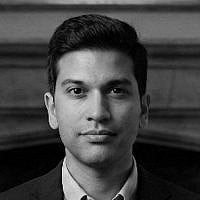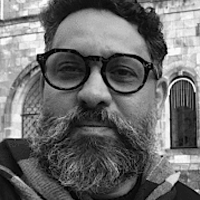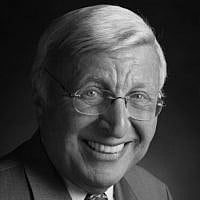
Why should we care what Mark Ruffalo thinks about Marwan Barghouti?
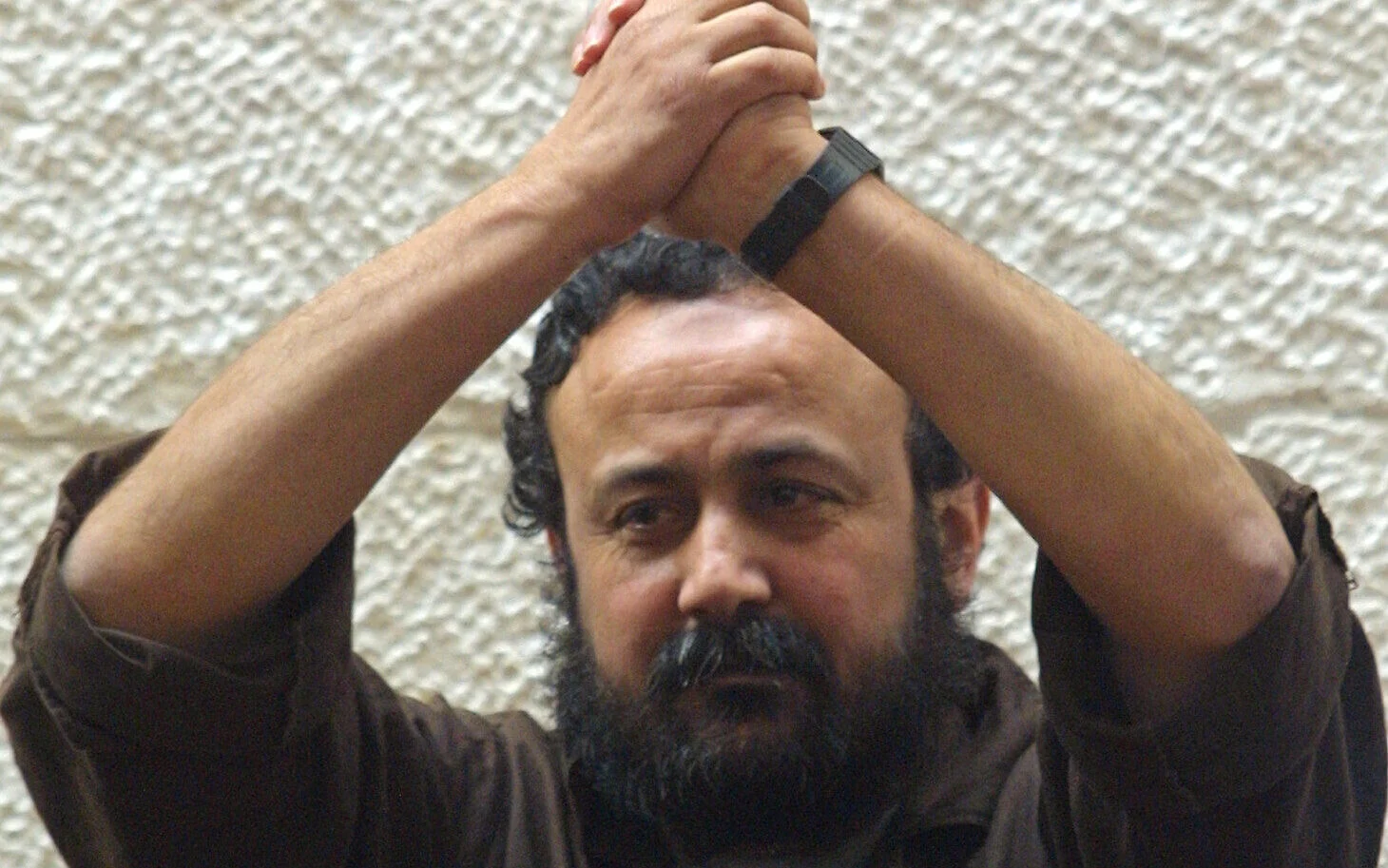
The world is witnessing a remarkable and disquieting shift: celebrities once content to peddle fashion trends or lifestyle choices are increasingly dipping their toes, or rather diving headfirst, into the murky waters of geopolitics. The recent open letter, signed by over 200 high-profile cultural figures, urging the release of Marwan Barghouti from Israeli prison, is not just a political statement: it is a testament to the astounding ego and misplaced confidence of those who believe that cinematic fame equates to geopolitical insight.
At stake is more than a man’s freedom — it is the integrity of reason, responsibility, and the very purpose of influence.
Marwan Barghouti is a Palestinian political figure who has been behind bars since 2002. In 2004, an Israeli court convicted him on five counts of murder and other charges, including directing deadly attacks during the Second Intifada, most notably the 2002 “Seafood Market” attack in Tel Aviv, in which three civilians were killed, and other incidents involving civilians and soldiers. He was sentenced to five consecutive life sentences plus 40 years.
Barghouti refused to recognize the court’s legitimacy and declined to mount a defense, calling it a “court of occupation.” To supporters, he is hailed as a political leader, even described by some as the “Palestinian Mandela,” credited with the potential to unite warring Palestinian factions and steer toward a two-state solution. But to many others, including the courts that tried him, he is a convicted terrorist, responsible for orchestrating lethal attacks on civilians.
This duality — martyr to some, murderer to others — is precisely what makes the decision by celebrities to lobby for his release so controversial, and problematically emblematic of a broader trend. Fame has a seductive power. Once someone becomes well known — admired for acting, music, or writing — it can start to feel like everything they express carries weight.
This is the kind of power many of the 200+ signatories are exercising now. Among them: actors, writers, musicians, public figures, names that many respect for their artistic craft, but not for political judgment or expertise. But here lies the problem with conflating fame and expertise. Crafting a believable character on screen does not confer expertise in matters of war, justice, or geopolitics. The nuance, history, and legal complexity all demand far more than celebrity endorsements. And yet, many of these signatories are using their “cultural voice” to make sweeping judgements about a deeply fraught political situation, its victims, and its perpetrators.
It is not simply that they have the right to express opinions — of course they do. The issue is the pretense that they hold any authority or insight simply because their name sells tickets or books. When a movie star offers fashion advice, the public may smile indulgently. When that same star offers geopolitical prescriptions about who should be released from prison, based on a narrative that privileges one side of an atrocity over victims, the implications are far more serious.
What is truly startling, and, I would argue, morally reckless, is the confidence with which people accustomed to make-believe assume they can adjudicate real-world justice. It is as if actors and singers think that because they once “faked” painful emotion on a sound stage, they are now qualified to dictate the fates of real people whose lives, deaths, and suffering are no act.
This is not just a case of “influencers speak out.” It is a case of “influencers assume authority.” And it’s instructive to compare it to something more obviously absurd: imagine people with zero medical training, but with large social media followings, running advertisements telling doctors what surgeries to perform. That would be laughed out of court (both figuratively and literally). Yet in politics, in the fog of war and conflict, the same narcissistic impulse goes unchallenged, and sometimes is celebrated.
This dynamic becomes even more alarming when the cause is charged with ethnicity, trauma, historical grievances. Celebrities who likely possess no personal connection to the region claim to understand the suffering — or the “resistance” — better than those who have lived it. They choose sides. They demand action. They assign guilt and innocence. And all from a distance of comfort, cameras, and guaranteed applause from fans who like their movies.
The fact that over 200 cultural figures signed this open letter is meant to suggest gravitas, as if the sheer mass of signatures confers collective wisdom and moral clarity. But that’s an illusion. A hundred voices do not equal expertise. A thousand opinions do not become truth. Groupthink does not equal consensus. Group visibility does not equal correctness. What matters is substantially understanding — not merely signaling.
This is collective chutzpah: to believe that pooled fame somehow produces political legitimacy. To lean on the emotional force of numbers rather than the intellectual rigor of grounded argument. There is no shortage of moral drama in the world, no shortage of people suffering, no shortage of injustices. But acting on injustice — meaningfully, thoughtfully, responsibly — requires more than a good speech, a powerful gaze into the camera, or a trending hashtag. It requires knowledge, nuance, and humility.
When celebrities demand that a convicted killer be released, they are engaging in a dangerous simplification. They are substituting complex history with glossy generalities. They are replacing due process — with which the courts dealt — with moral grandstanding. And worst of all, they are offering political prescriptions without bearing the consequences.
The risk here is not simply that their message might be wrong. The real risk is that their message will drown out real expertise, real voices, real victims. In a world already starved for truth, for clarity, for honesty, their “influence” becomes noise masquerading as substance.
There is, of course, a legitimate argument that artists and celebrities can — and sometimes should — use their platforms to speak about injustice, oppression, human rights, war. There is a long tradition of political art, protest songs, socially conscious films. But there is a vast difference between advocating for humanitarian aid, condemning violence in broad moral terms, and calling for universal human rights versus campaigning to free a convicted terrorist, presenting a narrative that ignores victims and legal verdicts, and claiming the authority to shape political outcomes in a foreign conflict. The first is empathy. The second is hubris.
There is no shame in artists caring. Shame lies in the presumption that because one can act in one dramatic realm, one can also act (or decide) in another, far more consequential arena.
There is a certain romance in the notion of the “celebrity-activist”: the Nobel laureate author, the Oscar-winning actor, the rock star with a conscience. But as Oscar Wilde once quipped about fashion, “fashions are clearly symbolic” — and transient. The meaning behind them can be shallow, their appeal based on novelty rather than principle.
When the latest political “fashion” among celebrities becomes advocating for the release of a convicted terrorist — cloaked in the language of cultural solidarity and human rights — we should ask: is this a genuine moral stance, or simply the latest trend in virtue-signaling?
For those signing, the risk is minimal. Their homes are safe, their careers unthreatened, their security intact. But for those affected by the terrorism — the victims, the families, the communities — the consequences are real. Their trauma, their loss, their grief are not part of any red-carpet narrative.
The gulf between the world of cinema and the world of conflict is not merely one of geography. It is one of gravity. One is artifice. The other is life. To influence rightly, especially in politics, requires more than a recognizable name. It demands humility, responsibility, and above all, respect for complexity.
There may be a role for artists and cultural figures in shaping moral awareness, in drawing attention to suffering, in rallying support for peaceful solutions. But that role must be grounded in empathy, not ego. In listening, not lecturing. In solidarity with the vulnerable — not swaggering for attention or trend.
When fame becomes a blunt instrument in geopolitical controversies, we all lose. Because in the end, influence is not about how many follow you on social media or how loudly your statement is retweeted — it is about whether your words help build understanding or merely build illusions. This latest plea for the release of Marwan Barghouti by hundreds of celebrities, many with no direct stake or expertise in the conflict, feels less like moral clarity than moral entitlement.
Let us be clear: acting on a screen does not give you the authority to act in the world. And our world deserves better than the kind of make-believe that confuses celebrity with conscience.