
Featured Post
The best way to protect zookeepers? Get rid of zoos
In the wake of the mauling death at a Jerusalem zoo, it's worth asking why animals that should be roaming free are held in captivity
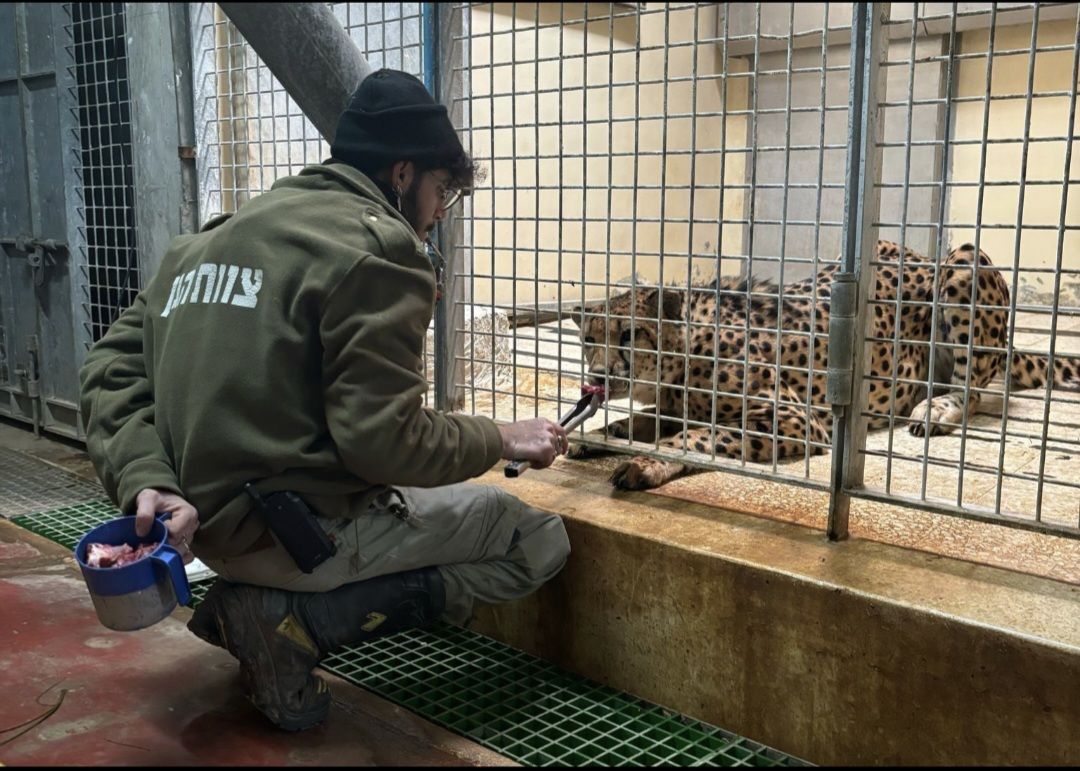
Uriel Nuri feeding an animal at the Jerusalem Zoo. (Facebook)
The death of Uriel Nuri, a zookeeper at the Jerusalem Biblical Zoo, is tragic. But it was not an isolated incident. It reflects a troubling pattern seen in zoos around the world. Just weeks earlier, a woman in Australia lost her arm after being attacked by a lion at Darling Downs Zoo, and a supervisor at Thiruvananthapuram Zoo in India suffered a serious head injury after being struck by a tiger. In April, a zookeeper at Mariupol Zoo in Ukraine was killed by a tiger, and in February, a lion at Fayoum Zoo in Egypt fatally mauled a keeper.
Although the Jerusalem Biblical Zoo has promised a full investigation into how the leopard escaped from his enclosure, the answer is simple: Animals don’t belong in zoos.
Leopards are sensitive, complex animals who roam vast territories in their natural habitat. In zoos, they are reduced to entertainment, confined to artificial spaces that strip them of choice. Every decision — what to eat, when to sleep, and whom to mate with — is controlled by humans.
Without the ability to engage in behaviors that are natural and important to them — and under the daily stress of being stared at by thousands of visitors — animals in zoos often exhibit self-destructive behaviors, such as pacing, swaying, or even self-harm. Confinement also fuels dangerous unpredictability. The tragedy that took Nuri’s life was not unforeseeable; rather, it was a consequence of denying a leopard his most basic needs and autonomy.
Despite what many zoos claim, conservation is rarely the true goal. Most animals in captivity are not endangered, and even those who are almost never make it back to their natural habitats. Instead, zoos shuffle animals between facilities for display, breeding babies to boost ticket sales — not to support real population growth. Captive breeding gives the public a false sense of security about a species’ survival and distracts from the real threats: habitat loss, poaching, and the exotic animal trade.
We can’t cage our way to conservation. If zoos truly cared about protecting wildlife, they would invest in habitat preservation, anti-poaching efforts, and community-based programs that help humans and animals coexist. Keeping leopards in zoos may be profitable, but it does nothing to ensure their future in rainforests, grasslands, deserts, or mountains — where they truly belong.
This tragedy should serve as a wake-up call. It’s time we stop treating animals as exhibits and start treating them as fellow beings who deserve freedom and respect.
If you care about animals, the most powerful thing you can do is avoid zoos. Support organizations working to protect wildlife where they live. Let’s move toward a world where protecting animals means protecting their freedom, not taking it away.
Related Topics
Related Posts