
The Blockade – Part 1: Supply and Distribution
The narrative on Israel in Western discourse has settled; the blockade of humanitarian aid to Gaza in March was the last nail in the coffin. “Israeli atrocities” have moved on from being strongly suggested to being casually asserted as self-evident truisms requiring no further justification.
There has been hunger in Gaza and Israeli decisions are partly responsible. But the story that is sold in the West is criminally truncated. Israel has blamed the UN and partner organisations for not collecting and distributing enough aid. There is merit to this argument.
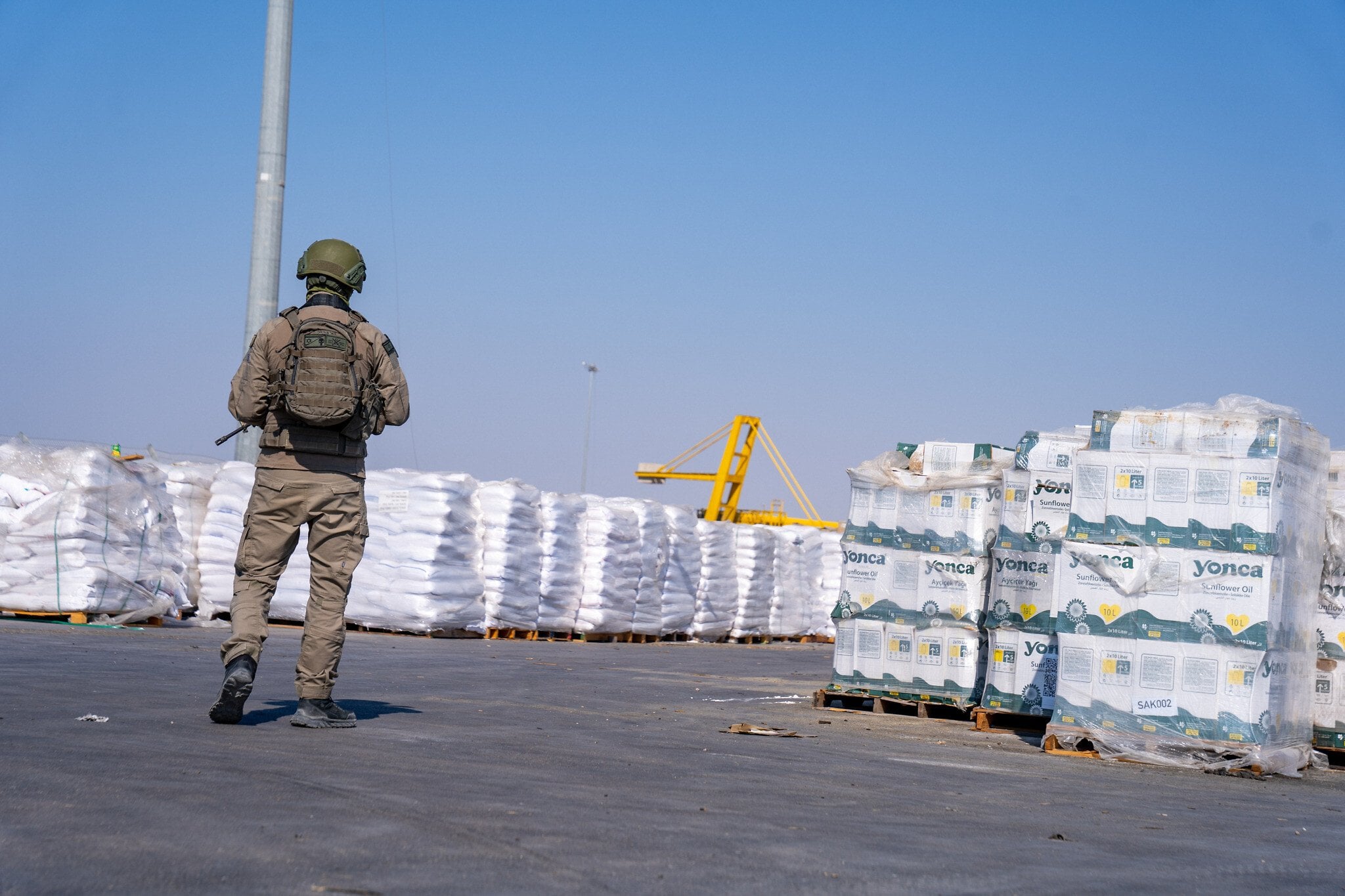
Between May 19 – when the blockade was lifted – and May 27, humanitarian organisations were able to collect only 200 of the 500 truckloads of aid offloaded at the Kerem Shalom border crossing. By May 29 Israeli authorities reported the crossing was at full capacity and they would not permit further entry until cargo had been collected on the Gazan side. Uncollected aid and subsequent reduction in aid shipments – framed by humanitarian organisations as “arbitrary restrictions” – would become somewhat of a theme over the next two months with Israel repeatedly accusing the UN of failing to collect the aid coming in.
Distribution Issues
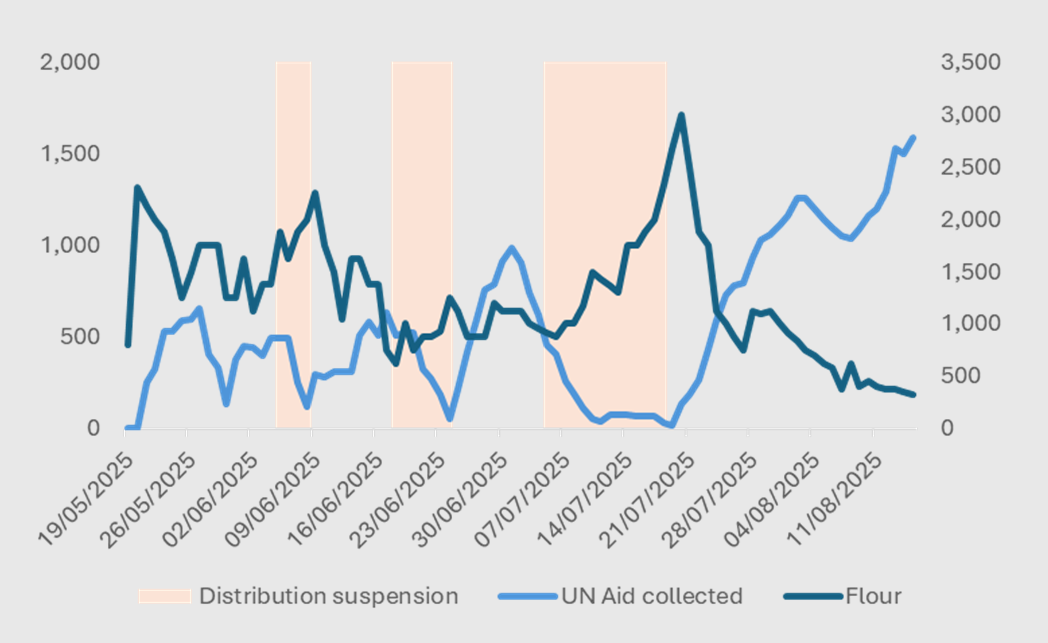
During this period distribution rather than supply was without a doubt the main bottleneck. On June 5 the Special Transport Association – the union of Gazan truck drivers – suspended all transportation for four days following a violent looting incident.
UN data shows that in the week between 18 and 24 June almost no aid (24 trucks carrying 360 tons of aid) was collected from the border crossings. The UN Logistics Cluster in one meeting cites “severe security incidents on 19 June” in another “severe deterioration of access and safety conditions” since June 20 as the reason for the suspension of activities.
Data by Israel’s aid coordination office (COGAT) shows 451 trucks carrying over 9000 tons of food were transferred to the Strip in that week. While UN organisations distributed next to nothing, more than half of the amount transferred (254 trucks) was distributed by the US and Israel backed Gaza Humanitarian Foundation (GHF).
Probably the most consequential, however, was another breakdown of UN distribution in the weeks leading up to the peak of the hunger crisis. Beginning in early July aid collections started declining and by July 5 had ceased entirely due to “an increase in organized looting and secondary theft”.
Over the next two weeks there were only three days where a minimal amount of aid was collected from border crossings by UN organisations totalling 50 trucks carrying around 500 tons of aid. During the same period COGAT facilitated the entry of 1,333 trucks carrying over 25,000 tons of food and GHF again managed to distribute 25-50% of the aid transferred to the Strip.
Despite the failure lying with distribution and not supply, UNRWA wrote on July 21: “[J]ust outside Gaza, stockpiled in warehouses UNRWA has enough food for the entire population for over three months. […] Lift the siege and let aid in safely and at scale.”
In each case the UN has pointed to deteriorating security conditions as the root cause for the collapse of the distribution system. UN tracking data confirms that between May and July nearly 90% of all collected aid was looted, stolen or diverted. And yet, UN organisations spurned repeated offers by the GHF to provide trucks, drivers and security to aid convoys under the pretext of guarding humanitarian principles of neutrality and impartiality, despite GHF itself being an independent organisation. At the same time UN officials reportedly requested that Israel allow Hamas police escorts and decried Israeli rejections of such requests as obstructing the flow of aid.
On July 19 UN organisations slowly increased aid collections after both COGAT and GHF had called them out for uncollected supplies, but arguably by then the damage was done. After two weeks without UN food distribution the price of flour had quadrupled indicating a severe shortage of food. A few days later Israel implemented several measures such as airdrops, daily 10-hour tactical pauses and the return of commercial food imports in an effort to drastically increase the food supply. Prices of staple goods like flour and sugar have since dropped significantly indicating that the worst may be over.
Supply issues?
But if distribution was the issue why the laser-focus on Israel as the culprit? UN organisations would say that Israeli policies – specifically the aid blockade – have led to the security conditions that effectively prohibit distribution. There is merit in this argument as well.
Aid organisations have emphasised the role of crowds of hungry civilians as opposed to armed groups in the looting of aid convoys. While the relative shares of each form of theft are not currently known, cases of unorganised looting by large crowds have been documented as early as May. It is difficult to imagine that the restriction of aid by Israel has not exacerbated this phenomenon.
However, the blockade alone cannot possibly explain the hunger crisis as the amount of food that has entered the Gaza Strip since January would be more than enough feed the entire population during that time.
While the precise amount of food required is not known, my own previous estimate – based on an analysis of the caloric density of past aid deliveries – is about 45,000 tons per month. This is consistent with a UN estimate from May which put the number at 43,000-57,000 tons. More recently UN agencies have settled on the higher estimate of 62,000 tons. According to this range of plausible values the 490,000 tons of food which entered Gaza in the 7 months between January and July represents an oversupply of between 15% and 55%.
For the period between January 19 (beginning of the ceasefire) and May 19 (end of the aid blockade) this calculation becomes even more clear-cut. During the ceasefire Gaza received a total of 340,000 tons of food, 85,000 per month when distributed over the 4-month period. Not only does this represent an oversupply of between 40% and 90%, it also meant a 30% increase in the availability of food compared to the war up to that point. Yet, according to the UN, by the end of the blockade Palestinians had ostensibly become so desperate for food that distribution without looting by crowds of starving people was no longer possible.
—
A German version of this article was first published by the Austrian think tank Mena-Watch.