The Brady Bunch: A Tu B’Av Story For Our Times
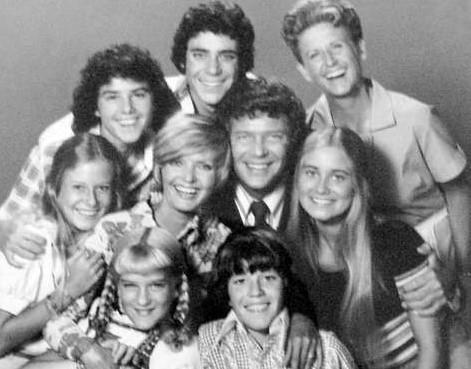
I wasted some of my best years watching The Brady Bunch – the iconic American sit-com in the early 1970s about a widowed man with three young sons who marries a woman with three young daughters. There’s also a jolly housekeeper for the jokes. There was no reference to his deceased wife or her previous husband [given the stigma around divorce at the time, it was left ambiguous as to whether she was a widow or a divorcee]. This was the happy-ever -after archetypal story of the perfect blended family.
I’ve been thinking about The Brady Bunch as Tu B’Av – the 15th of Av – approaches this Shabbat. Often flippantly referred to as Jewish Valentines Day, Tu B’Av is usually a welcome relief and a distinctive break from the mournful Tisha B’Av just a few days earlier. However, this year things feel very different. This year it feels like Tu B’Av is deeply connected to Tisha B’Av – perhaps even its culmination.
While Tisha B’Av remembers our collective trauma and loss, this year too many individuals experienced their own personal Tisha B’Av in the shadows of October 7th.
This year we need Tu B’Av – also nicknamed the Festival of Love – as part of our individual and collective redemption.
Tu B’Av is a sign of hope; a sign that we can believe in a better future and that a grieving partner can rebuild their life. We are watching blended families being created in real time: only a brick wall would not be moved by the recent engagement of Hadas Loewenstern, a mother of six young children whose husband Elisha was killed in Gaza in December 2023 and Hod Reichert, whose wife died due to complications during childbirth.
The Tu B’Av origin story is that
the maidens of Jerusalem used to go out dressed in white garments—borrowed ones, in order not to cause shame to those who had them not of their own…. they went out and danced in the vineyards, saying, Young men, look and observe well whom you are about to choose [as a spouse] … Mishnah Ta’anit 4:8
Women were bold, dancing in fields, looking for love and encouraging men to approach them. Nowadays, their fingers are swiping one way to the left, swiping one way to the right in a delicate dance of online dating. It’s tough out there and in the last few days, talk of love has certainly been in the air. I’ve seen new initiatives launched for Tu B’Av, listened to new podcasts dedicated to matchmaking and in September, the Global Love Institute will be meeting in London and although not a Jewish conference, Aleeza Ben Shalom, the star of Jewish Matchmaking on Netflix has top billing. But love is a tall order and idealises a romantic fabrication that doesn’t always reflect contemporary relationships. Rather, it might be more helpful to think about Tu B’Av as the Festival of Complicated Possibilities or perhaps the Festival of Optimism for the Jaded.
Tu B’Av 2025 raises many uncomfortable realities.
Jews across the globe complain that it’s hard enough to find a Jewish partner and now current Israeli politics has become the bellwether for relationships – and not usually in a positive way. In Israel, there is the tragedy of young people whose partners or spouses died at Nova or during battle – Tu B’Av is a painful reminder for them that they will have to start again. The wives of soldiers might be honored in the press – referred to as ‘giborot’ and regarded as symbols of sacrifice – but beneath this bravado, surely there are feelings of isolation and pangs of loneliness. Amidst the ‘singles’ parties and the general levity of the day, the bereaved are suddenly invisible. We do not want to see their sorrow or approach their distress; each person like an electric fence whom we must stay away from for fear of touching their sadness and being zapped into oblivion. However, we must look and we must touch.
As David Kessler, the founder of Grief.com suggests
Each person’s grief is as unique as their fingerprint. But what everyone has in common is that no matter how they grieve, they share a need for their grief to be witnessed. That doesn’t mean needing someone to try to lessen it or reframe it for them. The need is for someone to be fully present to the magnitude of their loss without trying to point out the silver lining.
There has been much talk of Bearing Witness to the events of October 7th; visiting the Nova site, listening to those who have returned from captivity and hearing the soldiers’ experiences.
Tu B’Av is the day to witness the grief of the widow and the widower, the grief of anyone who has lost their partner.
Pointing out silver linings to a bereaved person is an act of intense selfishness, indicating one’s own inability to sit with pain and sadness.
A sensitive matchmaker – be they a professional, a friend, your neighbour or local rabbi – appreciates the complexities of dating after loss. Unfortunately, we are in great need of very sensitive matchmakers and previously, I’ve suggested that Tu B’Av is the perfect day for showing gratitude for matchmakers. Obviously, not everyone who has lost a partner since October 7th is ready to establish a new partnership – oftentimes there are children to consider and this presents its own challenges. Further, even with this heightened awareness of the bereaved and their desire for a ‘second chance,’ Tu B’Av 2025 is certainly not the time to forget those who have not had a ‘first chance’ to find their partner. And age matters. Too often, the focus is on young people in their 20s and 30s, presumably as a nod to pronatalism, but there are many, many older people who deserve the same attention and care. And all the organisations serving these groups also merit our collective appreciation.
The received wisdom is that there are more single women than men and so the men have the ‘pickings.’ I’m not a mathematician and I can’t verify the figures but if true, I presume some of this has to do with more men marrying non-Jewish women than the other way round and some men being gay [but that might be cancelled out by the number of gay women]. In Israel there is one tragic variable that skews the numbers and this is of course, the soldiers killed in battle. Tu B’Av is a memorial for their lost potential and the news articles about the Israelis who want grandchildren from their dead sons’ sperm attests to this sense of capturing the future. In the first ruling related to the current war, in July 2025 a court in Eilat authorized Sharon Eisenkot to use sperm retrieved from her son who was killed in Gaza in 2023 to have a grandchild through surrogacy.
Israel has an impressive wrap-around service of health care and services offered by national insurance.. When new immigrants arrive, they receive a ‘sal klita’ [basket for absorption] of financial help and Hebrew classes are available.
In honour of Tu B’Av, I’d lobby the government to add a matchmaker to each citizen’s ‘basket’ of support.
I’d argue for a national matchmaker’s strategy – a comprehensive plan to address the needs of those looking for shared values in a life partnership. Matchmakers would have to be authorised, trained and supported in their work. They will be state employees and face severe punishment should their attention be diverted to wealthier or influential citizens. There must not be a monopoly on who is permitted to be a matchmaker – in fact, they would have to reflect every different cultural, religious and ethnic group in Israel and be ready to serve them. They must not judge existing living arrangements and will support people in their chosen style of partnership. A Union of Matchmakers will be established and their primary role will be to support their members and lobby the government to ensure that all partnerships are equally recognised.
The Brady Bunch – updated for our times – might just be the right television show we need now.