The Chareidi Draft Crisis Is Not Only About Chareidim
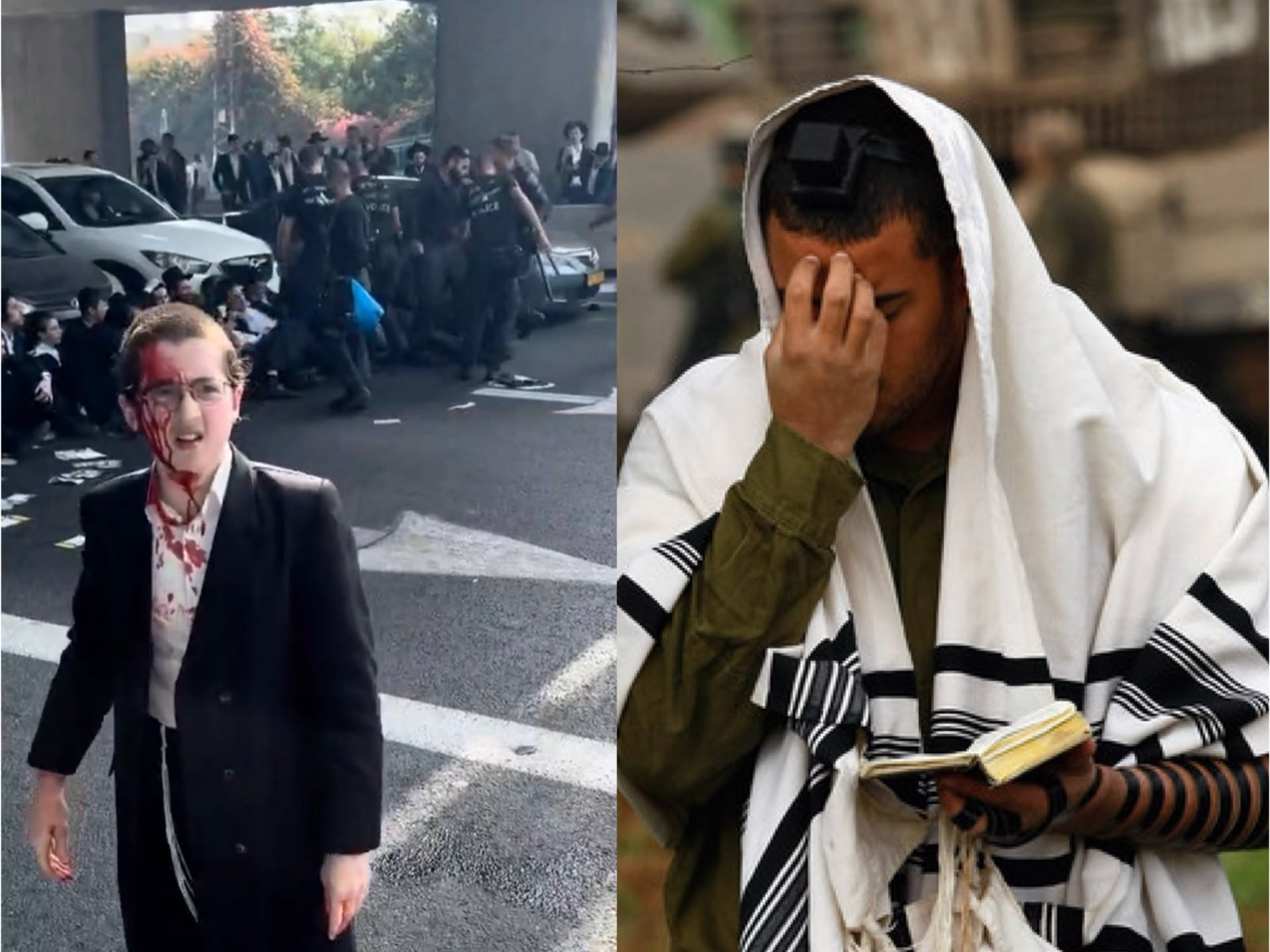
Right now, the issue tearing the Knesset apart, threatening the coalition, shaping the coming election, and at times dividing the country itself is not Gaza, Iran, Lebanon, or the Supreme Court. It is the issue that the war has pushed to the center of Israeli politics, forcing Israel to confront deeper questions it avoided for years: the Chareidi draft crisis.
War takes the arguments a country avoided in normal times and turns them into immediate emergencies. After years of loss, fear, and exhaustion, those emotions are now running straight into one of Israel’s most sensitive unresolved issues.
On the surface, the fight looks explosive, yet simple. Many see Chareidi protests, draft arrests, and road blockages, and say: ‘enough. You cannot expect everyone else’s sons to fight while your sons sit in the air conditioning in Yeshiva. The country needs more fighters, the toll has been too high, you have to serve, and if not, we will enforce it with arrests and economic sanctions.’ ‘Why should a population who doesn’t give to the country receive its benefits?’, they say.
Many Chareidim look at the same situation and see something completely different. They see a system they believe is corrupt, spiritually dangerous, and not built to respect their values. They hear “integration” and fear it really means becoming less Chareidi and more “Israeli.” So they say: we cannot enter that. And because they see spiritual destruction as a danger no less real than physical danger, they are willing to fight almost anything to prevent it.
The tragedy is that each side’s response only confirms the other side’s deepest fear. When a politician speaks in the language of arrests, sanctions, and enforcement, Chareidim hear exactly what they already believe: the state wants to break them if they don’t comply with their rules. And when Chareidim answer only with refusal, protests, and total rejection of the system, the rest of the country hears exactly what it already believes: that Chareidim want the benefits of the state without carrying its burdens.
Some say: but Chareidi tracks already exist, like Chashmonaim. Why can’t they serve there? Fair question. The answer is that a framework only works if the community trusts the institution behind it. And for many religious communities, that trust is exactly what is missing.
That distrust is not only a Chareidi issue. You can see a version of it among religious Zionists too, communities that disproportionately send their sons to combat units, command tracks, and reserves, with the highest turnout rates in the country. And still, many of them feel the army pushes their religious boundaries.
The recent women-in-Shiryon debate is an example of that. The IDF recently announced it was moving forward with a women-in-tanks “pilot,” in ways that many religious-Zionist rabbis said violated the army’s religious-service understandings, warning they would stop sending their students into tanks. On the surface, the army frames it as a professional manpower issue. But for many religious soldiers and rabbis, it is about a pattern: the army gives assurances, writes rules, promises frameworks, and then later pushes the boundaries, because they know no matter what, the men in this community will show up anyway.
Rabbi Ohad Tirosh of Bnei David in Eli, one of Israel’s most influential religious-Zionist pre-army institutions, said it bluntly this week:
“I don’t believe a word [Zamir] says. Why? Because I’ve been dealing with this for 20 years. The army wrote the order, and then, systematically, did everything it could not to actually enforce it…
If religious-Zionist communities already inside the IDF are saying the army cannot be trusted to protect their religious boundaries, then Chareidim are basically making the same argument from outside the system.
That is why many of the pressure tactics politicians are now pitching, like arrests, economic sanctions, public shaming, miss the core issue. They all share the same message: draft into our system as it currently exists, or we will punish and humiliate you until you do. They ask how to force Chareidim in before asking how to build a framework that could actually hold them.
But the army is only where this issue is exploding now. If we look back, just 11 days before October 7, Jews were fighting in Tel Aviv over public Yom Kippur prayer and mechitzas. That came after months of judicial reform protests, fights over religion and state, and rising fears of “religious coercion.”
That is why the draft crisis is not only about the draft. It is about the larger question of whether religious Israelis can enter every part of Israeli society, the army, the workforce, universities, and public life, without feeling that integration means relinquishing their religious beliefs and practices.
That question is already playing out in fights over what counts as “religious coercion.” Naor Narkis, a secular activist and founder of “Chozrim Betvuna”, has built a movement around pushing back against what he sees as religion entering public life. Recently, it reached the point of a boycott he celebrated against a McDonald’s branch in Rishon LeZion, because it became kosher and began paying for kashrut supervision.
That is exactly the wrong direction to lead people in. You cannot demand that religious Israelis enter Israeli society while protesting the accommodations that make that integration possible. If the message is, “join our system, but don’t expect your religious life to be respected inside it,” don’t be surprised when religious communities distrust the system even more.
That does not mean religious Israelis should be able to force everyone else to live religiously. It means basic respect: for each other, for each other’s beliefs, and for each other’s right to live by those beliefs. When that respect exists, accommodation becomes easier.
For example, a secular soldier may not personally care about higher religious standards on base, but if he understands that those standards allow more religious Jews to serve beside him, he can see the mutual benefit. And a religious soldier who feels his values are genuinely respected is far more likely to trust the system and carry the burden with it.
A lot of this looks inefficient and inconvenient if the only question is how to solve the next logistical problem. And yes, building this properly would be a years-long effort, which may require a serious upheaval of the system as we know it. But that has to at the very least become the direction of the discussion starting now.
Our enemies understand this long-term thinking, and have been using it against us for almost three years. Hamas planned October 7 for years. Iran built its proxy network, missile infrastructure, and regional pressure points over decades, understanding that patience, investment, and belief create resilience.
The draft crisis will not be solved by one side trying to overpower the other: not by Chareidim blocking roads, not by secular Israelis fighting them in the street, not by public shaming, and not by politicians kicking the can down the road.
The direction of conversation right now must be how Israel will build a model that allows more Jews to carry shared responsibility while still feeling their values are respected and supported. Because if accommodations build trust and bring more Jews in, that is not weakness or inefficiency. That is how the system starts to thrive: a society where the burden is carried seriously, without destroying communities, Torah life, or the values of the very Jews being asked to carry it.
–
For more Israel and Jewish-world context beyond the headlines: I break down what’s happening, why it matters, and the stories affecting Jews around the world on my WhatsApp channel: https://whatsapp.com/channel/0029Vb7aAJZJP214zCFznR0T