From Kibbutz to the global stage
The Copper Scroll Sec 4, the New Testament and Baptism 2030: A Research Proposal
An Administrative Station for Ritual Purity and Tithe Redemption: A Hydroclimatic and Halakhic Reading of Section 4 of the Copper Scroll (3Q15)
Introduction: Mapping Administration, Ritual Purity, and Flood Risks
Among the various groups within Jewish society in the early first century CE, the Essenes stand out as a sect that advocated asceticism, communal living, strict observance of ritual purity, and avoidance of the accumulation of personal wealth and property. Our understanding of the sect’s principles and way of life expanded considerably following the discovery of the Dead Sea Scrolls in the caves above the Dead Sea at Qumran.
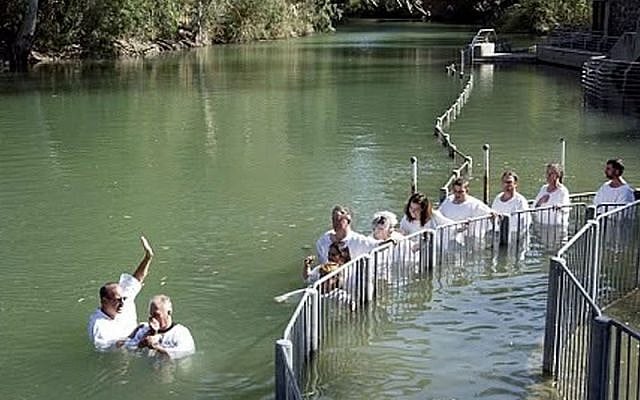
Many aspects of the worldview of the community associated with the scrolls recall early Christian ideas. Particularly striking are the affinities between John the Baptist and this community. John, a contemporary and relative of Jesus according to Luke 1, spent his early adult life in the Judean wilderness, preached repentance, and gave it tangible expression through immersion in the Jordan River:
“John was baptizing in the wilderness and proclaiming a baptism of repentance for the forgiveness of sins. All the land of Judea and the people of Jerusalem went out to him, and they were baptized by him in the Jordan River, confessing their sins.”
— Mark 1:4–5
The New Testament presents baptism as an encounter between the wilderness and flowing fresh water. In our previous articles, we proposed that Section 4 of the Copper Scroll (3Q15) fits our interpretation of Tel Kahlat, describing infrastructure serving administration and ritual purity on the eastern side of the Jordan’s mouth.
In this article, we explore a possible connection between the “immersion grotto” in Section 4 of the Copper Scroll and the baptism site mentioned in Christian writings.
Section 4, rendered here from the Hebrew text:
“In the mound of Kahlat: vessels of demaʿ, jugs and amphorae, all containing demaʿ, and the seventh-year store and the second tithe, at the opening of a mound. Its entrance is at the edge of the aqueduct on the north, six cubits to the immersion grotto.”
The Hydroclimatic Perspective: Planning around the “Maximum Flood Line”
Geomorphological and climatic research indicates that the period encompassing Roman antiquity, from approximately 200 BCE to 400 CE, was particularly wet, with dramatic fluctuations in the level of the Dead Sea. Research by Dr. Tzippora Klein and modern drilling studies indicates that the lake’s level during this period was tens of meters higher than today, ranging between 330 and 390 meters below sea level.
These climatic conditions likely encouraged infrastructure planners and Temple administrators to apply principles of engineering risk management to facilities exposed to periodic flooding:
Tel Kahlat (Tall el-Hammam) as an operational center: Its location in the eastern delta of Perea, beside the rocky outcrops at the foot of the mountains of Moab, served as a point for collection, tithe redemption, and immediate immersion—the “immersion grotto” and the “edge of the aqueduct.” Fresh water could be intercepted there before mixing with mud or the rising waters of the lake.
Concealment above the flood line (Section 60): The justified concern over rising Dead Sea levels, flooding of the delta, and saline intrusion into underground chambers explains why the principal archive and the backup copy of the scroll—“a duplicate of this writing”—were not concealed at Tel Kahlat itself. Instead, they were transferred to “the valley north of Kahlat” in Section 60. The elevated, rocky valley to the north provided protection against rising water and flooding.
In our interpretation, the combination of second-tithe laws, ritual purity requirements, the use of “living water,” and engineering shaped by fluctuations in the Dead Sea’s level transforms Sections 4 and 60 from descriptions of isolated hiding places into an operational and archival system serving an administrative, border, and ritual station at the passage from Perea into Judea.
Previous Identifications of Kahlat and Their Fit with Section 4
Applying the criteria of an “administrative border station for second-tithe redemption” and “rock-cut infrastructure supplied with living water” raises questions about earlier scholarly proposals identifying Kahlat with Hyrcania in the Judean Desert, Ein Samia on the fringes of Benjamin, or sites in Upper Galilee:
Disruption of geographical continuity: In our assessment, earlier proposals isolate Kahlat from the continuous geographical and administrative route that characterizes the scroll. As we argued in previous articles, the Copper Scroll follows a structured circuit: from the Jericho region and the eastern delta, through fortresses and complexes in the Judean Desert—Hyrcania, Herodium, and Ramat Rachel—to Jerusalem’s Upper City, Temple porticoes, and aqueducts. From there, the route shifts eastward and northward to Mount Gerizim before returning south through the Phasael Valley and the Adam Bridge (Adamah), with reports delivered back to Jericho and the valley north of Kahlat. Locating Kahlat at a detached site in Galilee or on the fringes of Benjamin disrupts the spatial continuity of this route.
Hyrcania and the Judean Desert: Hyrcania was an isolated, fortified desert stronghold. It did not stand on a major pilgrimage route, serve a broad agricultural population, or function as a border station. In our assessment, this identification is less compatible with the administrative role we propose, since a public transit station would have been more accessible to farmers and pilgrims seeking to redeem their second tithe.
Ein Samia and the fringes of Benjamin: These locations lay within the continuous geographical zone of the central hill country. They did not constitute a border crossing between distinct tithing regions or serve the flow of people arriving from Transjordan and Galilee.
Absence of suitable hydraulic infrastructure: These sites lack the engineering combination of an aqueduct carrying flowing fresh water—the “edge of the aqueduct”—and a controlled supply to an immersion recess cut into hard rock—the “immersion grotto.” Under our hypothesis, such infrastructure served ritual purity needs alongside the handling of consecrated produce and tithes.
Why Tel Kahlat (Tall el-Hammam) in Eastern Perea Fits Our Interpretation
The hypothesis locating Tel Kahlat in eastern Transjordan, in the Jordan delta of eastern Perea, rests on a combination of hydraulic engineering, halakhic practice, geology, and topography:
A meeting point between halakhic regions—the “three lands”: The rabbinic sages defined Transjordan (Perea) as one of the “three lands for biʿur,” the removal of stored sabbatical-year produce: Judea, Galilee, and Transjordan. In our interpretation, Tel Kahlat in the eastern delta stood at the junction between Perea and the crossing of the Jordan into Judea and Jericho.
The logic of tithe redemption at the point of departure: Redeeming the second tithe for money—“bind up the money in your hand”—was intended to spare farmers and pilgrims the burden of carrying heavy agricultural produce over long distances. Kahlat served as the administrative center where residents of Perea and passing travelers redeemed their produce, converted its value into money, and gathered demaʿ—the priestly offering, or terumah—before crossing the river.
Ritual purity alongside collection—“living water in rock”: The mention of demaʿ and the second tithe alongside the immersion grotto raises the possibility of an operational connection between the handling of consecrated produce and ritual purity requirements. Whereas the western delta and the Jericho area consist of soft, muddy Lisan marl, the mouths of the eastern watercourses around Tall el-Hammam feature outcrops of hard limestone. Cutting an “immersion grotto” into rock and supplying it with clear aqueduct water could have provided an engineering solution for immersion in living water before that water encountered mud or the saline lake.
Latitudinal alignment and a westward shift: Tall el-Hammam lies at a latitude similar to that of Qasr al-Yahud and Al-Maghtas. As the Dead Sea receded and the Jordan’s meanders changed over the centuries, the crossing corridor and the associated ritual memory shifted westward, following the river channel.
An Interpretive Shift: The Copper Scroll as an Infrastructure and Administrative Register
The interpretations we published in 2026 concerning the Copper Scroll, the mysterious place called Kahlat, and Section 4 propose a fundamental shift: from searching for treasures, real or imagined, to a scientific, hydrological, and administrative analysis of the text.
An engineering reading of “gold” and “silver”: The terms “gold” and “silver,” which appear throughout the scroll, also served in the ancient world as classifications of quality, purity, and the standard of water and infrastructure systems—comparable to expressions such as “golden age” or “gold standard.”
Recording essential infrastructure in emergencies: In our reading, the Copper Scroll is an encoded administrative record intended to preserve knowledge of essential water infrastructure—cisterns, aqueducts, and immersion grottoes—throughout Judea, the Jordan Valley, and Samaria during periods of existential threat or siege. Kahlat serves as a central geographical and operational anchor, appearing near the beginning of the scroll in Section 4 and at its conclusion in Section 60.
Conclusion and a Call for Research: Toward Baptism 2030
In our assessment, a close connection may exist between the “immersion grotto” in Section 4 of the Copper Scroll and the baptismal setting described in the New Testament, associated with events dated to approximately 26–30 CE. This possibility warrants further study, investigation, and reassessment.
As 2030 approaches, marking the commemoration of 2,000 years since the beginnings of baptism in the Jordan through the Baptism 2030 initiative, interpreting Kahlat as an administrative, border, and ritual purity station offers an intriguing basis for academic, theological, and regional cooperation across borders—among research institutions in Israel and Jordan, the international scholarly community, and churches worldwide.
Related Topics
Related Posts