
The Third Story
The Courage to Think at Israel’s Ballot Box
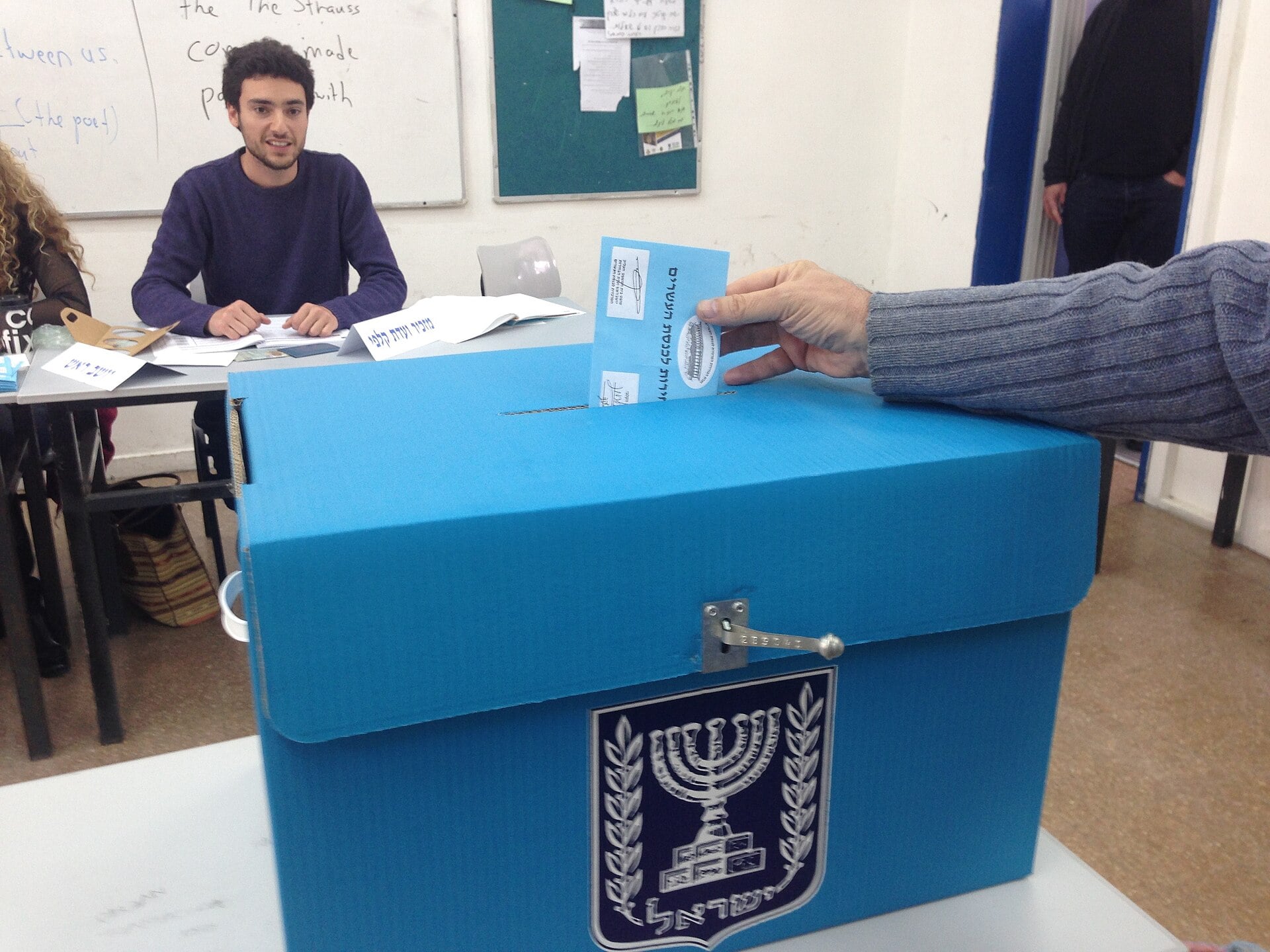
Used with Permission, Creative Commons
Walk into any café in Jerusalem or Tel Aviv as election day approaches, and you will hear a country speaking almost entirely from within dug-in trenches.
Israel’s political conversation has calcified into an unyielding war of attrition. It is “Rak Bibi” versus “Rak Lo Bibi,” bloc against bloc, survival versus doom. In this environment, politics ceases to be an exercise in statecraft; it becomes about unconditional loyalty to our own foxhole. The critical questions, like What is this candidate’s actual track record of effective governance? What are the long-term, second-order consequences of this coalition deal? What ethical compromises am I casually forgiving just so my bloc can scrape together 61 seats? are drowned out by communal sirens and partisan anxiety.
This reveals a profound and painful paradox for a society that prides itself on two great intellectual lineages: the beit midrash and the university lecture hall.
Israel is a nation defined by its love of rigorous study. We are both the People of the Book and the “Start-Up Nation,” a society boasting one of the highest concentrations of advanced degrees in the OECD. Every week, Israelis fill academic auditoriums and seminar rooms, just as thousands gather in batei midrash and community study groups.
In both settings, Israelis are trained in the disciplined pursuit of truth:
* In the academy, researchers and students are taught to stress-test hypotheses, demand empirical evidence, and root out cognitive bias before reaching conclusions.
* In the beit midrash, learners engage the ancient dialectic of machloket l’shem shamayim (dispute for the sake of Heaven), sitting inside an eilu v’eilu tension where competing claims carry profound legitimacy.
* In both traditions, an assertion is only as credible as its foundations, intellectual honesty requires holding complexity, and facile slogans are treated with instinctive skepticism.
Yet when election season arrives, these hard-earned intellectual reflexes vanish the moment we approach the polling booth. Why?
Because political campaigns are meticulously engineered to shut down the analytical mind. They bypass the critical discernment cultivated in our universities and batei midrash, aiming straight for the primal circuitry: tribal belonging, perceived existential threat, and grievance.
Rigorous thinking, whether talmudic or academic, demands cognitive friction. It requires intellectual vulnerability, the patience to weigh competing evidence, and the courage to acknowledge the blind spots within one’s own camp. The political trench, by contrast, demands nothing more than compliance. It offers immediate warmth, psychic safety, and absolute moral certainty. In a reality marked by constant regional vulnerability and raw national trauma, nuance is always the first casualty.
If our educational traditions, sacred and secular alike, are truly transformative, their value cannot remain quarantined on university campuses or inside study halls. The real test is transferability.
What is the civic value of world-class scholarship and subtle rabbinic debate if we cast our national ballots with the unthinking reflexes of a panicked mob? Why do we demand peer-reviewed rigor and textual integrity on Monday, only to accept soundbites, character assassinations, and manufactured panic on election Tuesday?
Why do we demand peer-reviewed rigor and textual integrity on Monday, only to accept soundbites, character assassinations, and manufactured panic on election Tuesday?
Imagine an Israeli electorate that approached the ballot slip with the same disciplined scrutiny a graduate student brings to a dataset, or a havruta pair brings to a complicated sugya. Imagine evaluating party slates not by decibel level or tribal allegiance, but by demonstrated competence, institutional integrity, and long-term vision for the public good.
Democracy in this country was never meant to be a permanent trench war between irreconcilable tribes. It was envisioned as a shared enterprise of state-building – one that demands the intellectual rigor of the academy, the moral depth of the beit midrash, and the courage to bring both into the voting booth.
Related Topics