
The Danger of a Peace Illusion with Syria
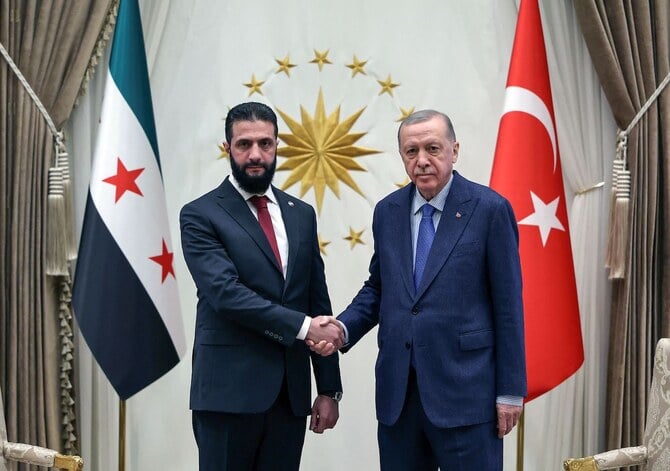
There have been growing reports and calls for a “peace” agreement or “non-aggression pact” with Syria. The Trump administration has been in talks with Al-Sharaa, who has met with Trump, Rubio, and also just gave a speech at the General Assembly. Initially, there was talk of peace, normalization, Syria joining the Abraham Accords, but the reality is, Al-Sharaa, a devil in lamb’s clothing, is simply trying to cut himself a deal that would see Israel leave its current buffer zone in Syria in exchange for a “security deal,” or more technically, a non-aggression pact. The reality is that if Israel does agree to this false premise of a security agreement with Syria, it will weaken the whole of the Abraham Accords by providing an alternative to full normalization, and will also significantly weaken Israel’s security, all the while not having any real material benefit to Israel. Israel will not be in a position of strength as it is now, and where it can operate in the Syrian theater as required. There are no economic advantages. Only security disadvantages. They will also continue to educate and teach hate against the State of Israel and the Jewish people, so what is the advantage?
There is a chance for peace with Syria, but unlike past agreements, this one would require genuine efforts towards normalization, real security cooperation, and genuine economic incentives, all based on mutual security and respect. Israel also needs to seize this agreement with Damascus as an opportunity to get a foothold in Syria, to offset Turkey’s growing influence in the new government it’s already been pushing since the start of the Syrian civil war.
One need not look further than the current “peace” or “normalization” agreements that we have with the current Arab countries. Take Egypt. The peace treaty with Egypt is held up as a model, but it’s a model of what, exactly? Egypt routinely votes against Israel at the UN. Its TV soap operas, news programs, and school curricula are soaked in anti-Israel and anti-Semitic venom. The moment something doesn’t go the way of the Egyptian Arab street, Cairo recalls its ambassador. They have now been building up very significant forces in the Sinai in direct violation of the peace treaty they signed with Israel. They also offer zero accountability for their border with Gaza. This is not a peace. When the Muslim Brotherhood’s Morsi rose to power, the first order of business was planning how to unravel the peace agreement. Even under Al-Sisi, who plays the moderate, the animosity toward Israel is everywhere.
Jordan is no different. The Hashemite regime, king, queen, and palace Instagram accounts included, never misses an opportunity to lash out at Israel. From the assassination of Sheikh Ahmed Yassin to any flare-ups in Gaza, Amman always finds its way to spew venom. It might not be a huge surprise since the country is majority Palestinian, but the hostility goes beyond demographics; it’s institutional. They too vote against Israel, smile for the West, and hand out Baklavas as soon as there’s a terror attack against Jews or Israelis.
Then there’s the UAE, once the most promising of peace partners. They initially put a lot of effort into their relationship with Israel, and it really seemed like it would focus on its own relationship with Israel and not venture into conflict with Jerusalem by meddling in Gaza or Palestinian affairs. As of late, the rapprochement efforts it has made seem to have been part of a past approach. Perhaps some of this is (correctly) due to Israel empowering Qatar and allowing it to be the central mediator between Israel and Hamas, instead of empowering the UAE. Nonetheless, Abu Dhabi has in part abandoned its positive overtures towards Israel and started to criticize it and, in short, join the chorus of Arab countries that are “friends” but solely on paper.
And then there’s Morocco. The monarchy’s treatment of Jews has always been dignified but its population has always been a threat, both to the Jews and the monarchy. King Mohammed V, King Hassan II, and Mohammed VI—these were and are leaders who understood the value of coexistence. But today’s Moroccan youth, products of satellite propaganda and Al Jazeera rhetoric, are not being raised on that legacy. They’re being raised to hate. Just look at the street protests in Morocco, or ask the Jews in France, where so many of the attacks come from young Maghrebis who carry their parents’ passports and their own indoctrination.
Finally, there’s Turkey. Not officially an enemy, not technically at war, but it is Hamas’s number one destination and second home after Doha, thanks to Erdogan’s Islamization and radicalization of Turkey. But make no mistake, under Erdogan, Turkey has grown to become one of Israel’s most determined regional adversaries. The country has been methodically working to secure influence in northern Syria, pouring money and weapons into jihadist factions while parading itself as a global NATO power. Israel needs Syria to bridge its security gap and influence with Turkey; along with its air superiority and unmatched regional capabilities, it is the only country that can counter Erdogan’s Islamic Turkey. And that’s why Syria matters.
There’s talk now of trilateral meetings, quiet sidelines diplomacy, new security arrangements, and potential “peace” agreements with Syria. Israel must approach this moment with eyes open. Israel cannot afford to make the same mistakes it made with previous agreements. The world may clamor for “peace deals” and “security pacts,” but unless those deals address the root and the totality of the issues—media, education, economics, UN policy, and most importantly, Israel’s security requirements, then they’re just more poker-face performances. And Israel’s had enough of the bluff.