
The digital afterlife of October 7
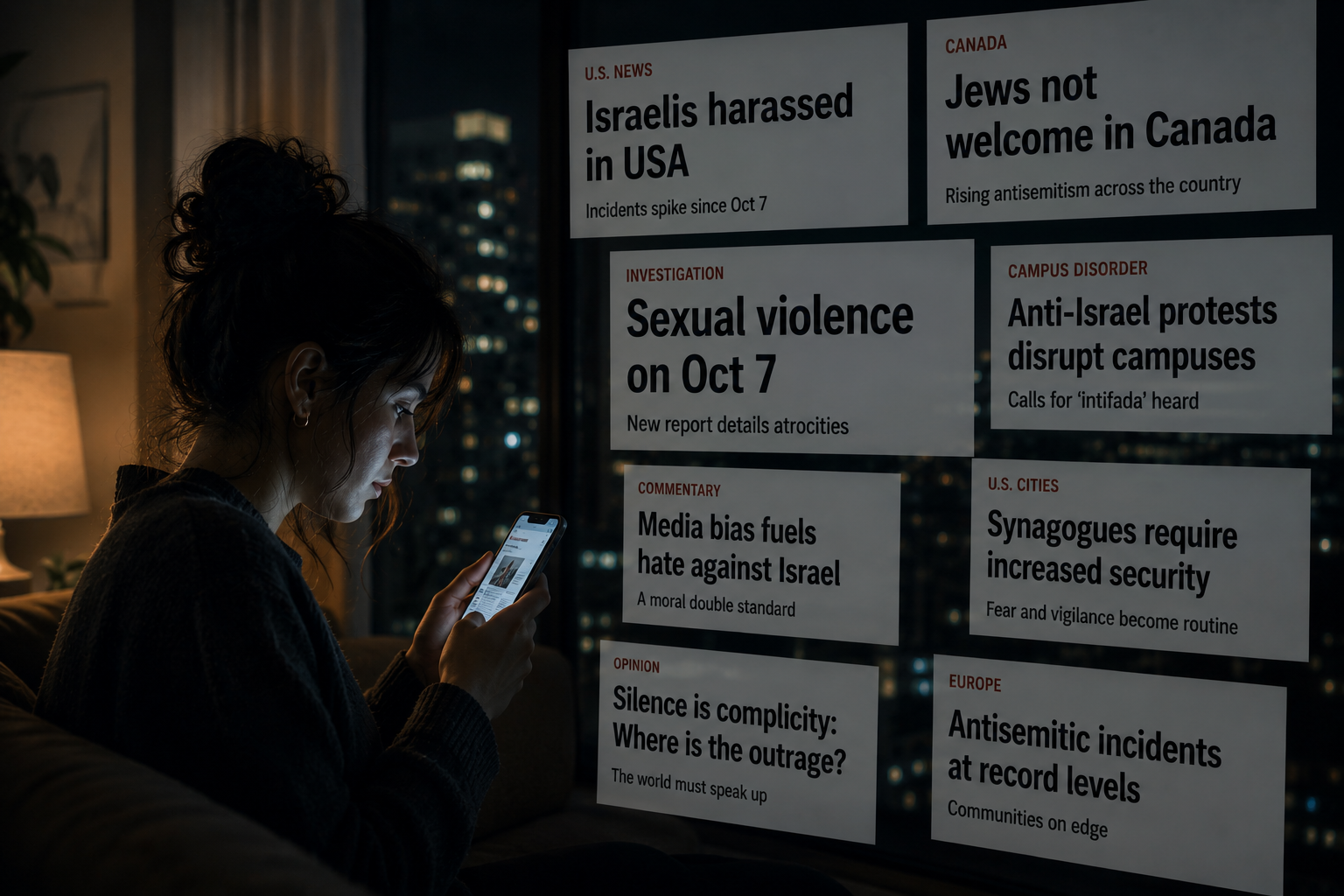
We are inching toward three years since October 7, and I have begun noticing something unsettling inside myself. As new reports, survivor testimony, investigations, and analysis continue to emerge, I find myself not simply reading the news or learning about these events, but reliving something through them.
The recent publication of “Silenced No More: Sexual Terror Unveiled” by the Civil Commission on October 7th Crimes by Hamas Against Women and Children, along with the wave of discourse surrounding it, has left me feeling thrown backward. I do not mean intellectually disturbed, but physically interrupted. There are moments while taking in these accounts when I feel a kind of internal collapse: paralysis, panic, sadness; a feeling that makes me want to disappear, scream, and cry all at once.
I would have thought by now I’d have developed some kind of immunity to this feeling. I have always considered myself a resilient person, particularly when it comes to confronting stories of hateful atrocities committed against my own people and my own family. I grew up hearing my grandparents’ accounts of surviving Auschwitz. Jewish suffering, memory, and survival were not abstract ideas in my upbringing. Lately, these repeated exposures, not only to the atrocities themselves but to the surrounding discourse, have been affecting me in an unexpected way. Every new testimony, analysis, argument cycle, and collision of narratives pulls something inside me back into a state of disbelief and emotional flooding that I cannot seem to fully metabolize.
Every atrocity committed on October 7 must be documented thoroughly and truthfully. Survivors deserve to be heard. Evidence matters. Historical record matters. Accountability matters. These stories must be told. Yet I am beginning to recognize the psychological consequence of living alongside the continuous media afterlife of a traumatic event. October 7 no longer arrives only through memory. It arrives through daily recurrence: a relentless digital circulation that repeatedly reopens something unresolved inside me.
Part of what feels so psychologically disorienting is that exposure itself is no longer fully voluntary. Much of modern life is now lived through media ecosystems that do not allow us to fully control what enters our consciousness. Of course, there are moments when I intentionally choose to bear witness, to read testimony, or engage with survivor accounts because these stories matter. But there are far more moments when information arrives on autoplay. Headlines surface algorithmically. Commentary interjects into ordinary life. Trauma follows us through digital proximity.
It is not only the accounts of October 7 themselves that feel destabilizing. It is that these repeated returns are unfolding alongside a tidal wave of post-October 7 antisemitism that has crashed across the world in the years since the attack. Consuming survivor testimony, investigations, reports, and interviews does not occur in emotional isolation. It exists beside the ambient hostility of social media, moral inversions, accusations, protest slogans, slur-ridden comment sections, and viral videos of Israeli couples being harassed while checking into California hotels, called ‘baby killers’ as the footage spreads across social feeds.
In graduate school, I studied the intersection of terrorism and media, specifically the ways extremist groups exploit modern information systems to extend psychological impact far beyond the physical site of an attack. October 7 eventually became part of that academic lens for me. What unsettles me now is recognizing traces of those dynamics unfolding inside my own daily life. Understanding the mechanism intellectually does not create immunity from it emotionally. If anything, there are moments when I simultaneously recognize the pattern and yet feel caught inside it. The experience is deeply disorienting.