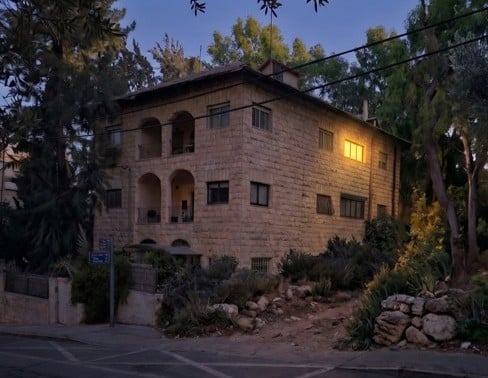
The Discomforts of Home

“Ah! There is nothing like staying at home, for real comfort.” Jane Austen
“All the comforts of home!” Travel brochure
Home can be comfortable, though not always all of it. Depending on who else is at home, comfort may be limited, perhaps to one room.
**********
Our former home was in Galut. In exile, you share your core identity with just a few. For instance, I was and am Jewish and Shomer Shabbat. There were no other observant Jewish kids in the town where I grew up. Later, when we could choose, my wife and I moved to places where there were enough people like us to know who we were, and where there was enough of what we needed—shuls, food, schools for the kids, camaraderie—to live our lives with others like us.
That was our home’s comfortable room, where no explanations were necessary. Our home had other rooms, for casual contacts, or for people whose connections were civic or professional. These were comfortable too, in their less personal way.
Then we left Galut and came, as we thought, home. As expected, many things here are different. Not all.
**********
Oyneg Shabbes at a Jerusalem Hospital
At my prior Shabbat in a Jerusalem hospital, I was a patient. This time, at a different Jerusalem hospital, I would be a visitor.
A friend had surgery planned for the next Friday morning. I joined him early that week for trom nituach, preop evaluation.
He would not be discharged until Sunday, though, and even visitors need to eat. The ward administrator assured me that there would be meals for visitors. “They’re delicious, traditional Shabbat meals,” she said. “There is even a d’var Torah.” The only thing she did not tell me about these meals was where to find them.
Hospital stays are all business. For me, this one came with cholent and a side of ambivalent nostalgia.
Shabbat Food—available but unofficial
The surgery went well. My friend was in Recovery by 10 AM, back on the ward by noon.
I asked his nurse about the Shabbat meals for visitors. She said someone would bring them mid-afternoon into the lobby near the hospital entrance. I went down there about 2 PM but saw nothing. I asked the receptionist at Admissions, who did not know what I was talking about. A colleague told her to send me down a circular staircase off to the right.
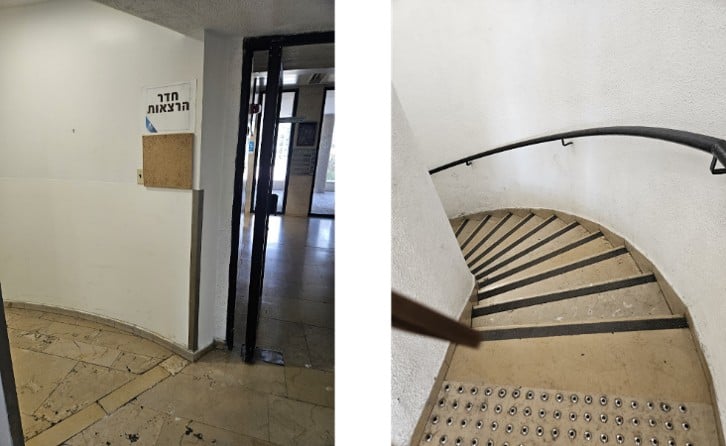
I found the stairs. To the left at the bottom was an empty conference room.
I climbed back up and started to ask random people about the meals. The first was a young Israeli—casual clothes, untucked shirt, knitted kippa. “No idea,” he said.
I tried my luck with haredi young man, sitting near the lobby with his wife and baby. He smiled and answered in Aramaic. “Sayata dishmaya,” he said. “Divine assistance! I was here last week and found out for myself.” He said meals would show up downstairs in a bit. He took my mobile number and promised to call with details. Which he did, saying the meals would be delivered in an hour, through the Main Entrance. I thanked him warmly.
Sure enough, an hour later several haredi families entered the lobby. They carried boxes of provisions and supplies, and carried them down the circular staircase. The “Conference Room” sign was soon covered with one that read: Se’udot Shabbat, Shabbat meals. No mention of a need to sign up, pay, or contribute. It seemed that all you had to do was show up.
**********
At dusk I asked the ward nurse where I could light Shabbat candles. She showed me that near the window in the ward kitchenette, a drawer held an array of tea lights. I lit two and made the bracha. One old woman joined me to light candles. No others were lit.
I headed for the Bet Knesset two floors down and followed people clearly heading to daven. The shul was small but attractive, fitted out with Kibbutz Lavi furniture. There were fewer than 50 seats. Behind the curtains on the front wall, a window looked out onto a stone garden.
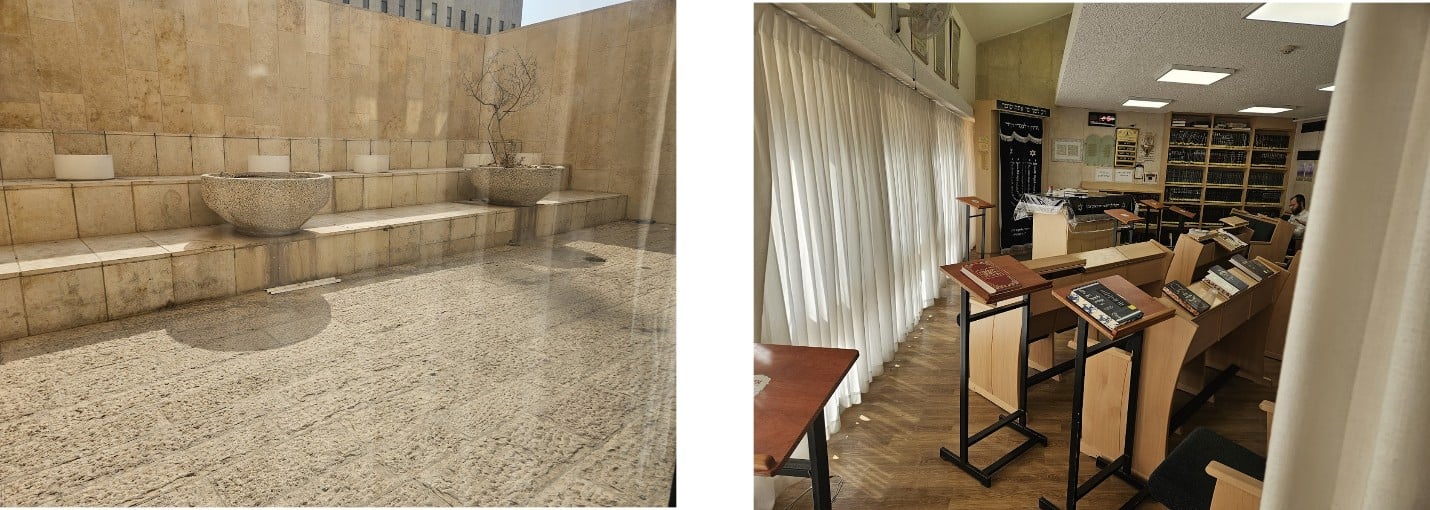
As the shul filled, I was transported back to my youth. Almost everyone there was a yeshiva bochur, just like the ones I went to summer camp with in the Catskill Mountains of New York many decades ago. They wore the same Yeshivish Shabbat uniform: black suit, white shirt, black hats with flat brims perched on the back of the head. Some had the same knowing smiles I recalled.

Among these Yeshivish types were two Hasidim wearing fur shtreimels. There were also a few young men dressed Israeli: open white shirts, knitted kippot. These were much in the minority. I wondered where all these yeshiva boys came from and what they were doing in a hospital for Shabbat.
After the davening Friday evening, the older haredi man who had been supervising food delivery rose to make brief announcements. He said food would be served downstairs, but people could pick up packaged meals to take back to hospital rooms. He gave the times for davening the next day and wished everyone a Gut Shabbes.
Although all the yeshiva boys looked young to me, I learned that while some were teens volunteering to serve and package food, others, just a bit older, were there because their wives had just given birth.
At davening the next morning, some older haredi men came, as well as a few Israelis.
A man in his 60s with an official air, likely employed by the hospital, was the gabbai in charge. He wore a large knitted kippa underneath the tallit that covered his head. He took care to identify new fathers who needed aliyot to bless their wives with a Mi Sheberach.
After he led the first part of the davening, yeshiva boys took over, leading in the style I recalled from my youth. Unlike Israeli tefilla, there was almost no communal singing. The chazan used the standard nusach. Others joined in only for Kel Adon, sung to the same tune I learned when I was ten.
Hebrew pronunciation was Ashkenozis. The Torah portion was Noach, pronounced Noyach. As one young man after another was called to the Torah and celebrated a baby’s birth, people called out Mazeltov ! but no one sang the tune Israelis use in shul for celebrating happy occasions.
Before musaf the gabbai stood at the bima and recited the Tefilla Lishlom HaMedina, the Prayer for the State of Israel, and made a Mi Sheberach for the chayalim, IDF soldiers. Just a handful of men stood up. Everyone else stayed seated, studying their hands.
Fifteen or twenty men had stayed outside, in the stone garden. Almost all were dressed Israeli. One was a physician wearing scrubs under his tallit.
Later, downstairs in the retrofitted conference room, a few dozen people sat to eat at long tables. A curtain separated men from women. In the next room, the younger yeshiva boys prepared packages to be taken upstairs to hospital rooms.
The food was plentiful and tasty, traditional Ashknenazi Shabbat fare: gefilte fish, chicken soup, chicken, cholent. I was told that the Rabbis who oversee food delivery get funding from abroad. There would be no solicitation.
And there was a d’var Torah.
**********
My own prior hospitalization, elsewhere in Jerusalem, had been a more heymish affair. By no means was everyone on staff or in the wards religiously observant, or Jewish. But the ambience was more down-home. Musicians played nigunim Friday afternoon. When they announced Havdalah after Shabbat, a lot of people came out into the ward to hear it, and to smell the besamim, spices.
Here there was little of that. The people who went to daven or to eat downstairs melted out of view once they were back in the lobby, the halls, or the wards, much as you might expect if fate deposited you for Shabbat in Boise, Idaho, and you bid farewell to fellow daveners at the local shul. The one other woman who lit candles before Shabbat strolled the halls the next day with her hiloni husband. At noon on Shabbat a young man, obviously sent by the hospital, came to the nurse’s station and called out, “Kiddush!” No one responded. I walked over, just to give him some company before he left for the next ward.
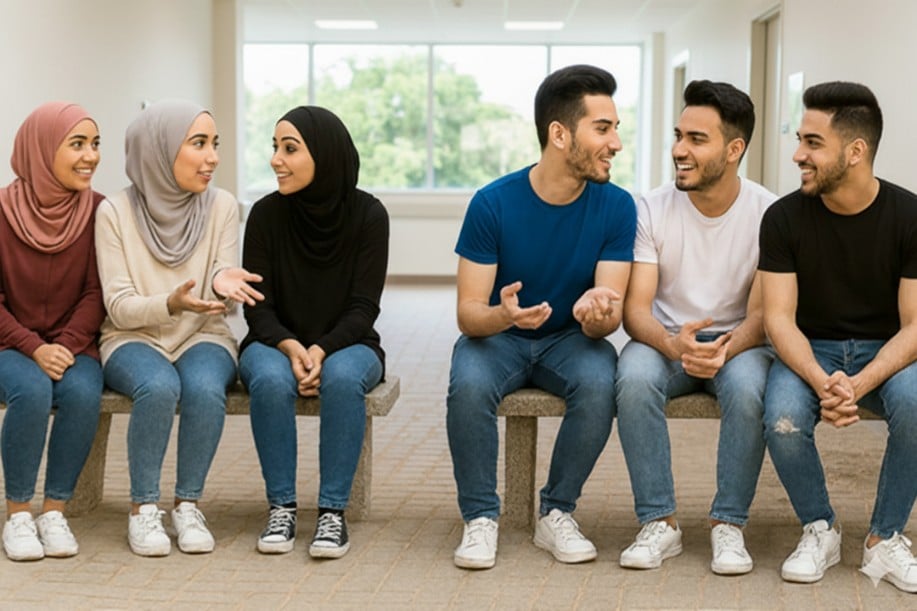
The halls were filled with ordinary folk for whom Shabbat was not in any way relevant. In mid-afternoon, one and two floors down, young Arab couples lined benches along the hallways. The men dressed casually; the women covered their hair. I assumed they were either visiting hospitalized family, or else on break from jobs here at the hospital.
As Shabbat ended, the young man assigned to make kiddush came to make Havdalah. Again, only I joined him.
After a lifetime of religious isolation elsewhere, I felt no discomfort at being Shomer Shabbat. Just rather more alone than I had expected, in Jerusalem, here at home.
**********
My last summer in camp came a few months after my Bar Mitzvah. Unlike some of the yeshiva bochurim there, I did not wear a black hat to shul on Shabbat. When I told my camp friends that I would be starting ninth grade at MTA, the Yeshiva University High School for Boys in Manhattan, they stopped talking to me.
I was hurt and perplexed, but back then I was naïve and from out-of-town. To New Yorkers, those words meant “from outside New York City.” For many Orthodox New Yorkers, they meant, “out of Brooklyn.” I did not yet know that in some precincts of staunch Brooklyn Orthodoxy, Yeshiva University was anathema. I might have troubled them less by saying I was headed for St. Ignatius Prep.
Like anyone starting to grow up, I was learning how full the world is of many kinds of people, most of them unfamiliar, varied in appearance and outlook, often split by unsuspected differences that divided them from each other, and from you. I imagined that over time I would somehow sort things out and find my place.
Now, all these years later, I find myself in a new home that, not unlike my old one, is also filled with varied people, some of new kinds.
Here too I was meeting many Jewish people for whom Shabbat had no meaning at all, not even symbolic. Here too were others, who do indeed observe Shabbat in the traditional way, who daven in the old way–not the Israeli way, whose wives light candles, who make kiddush, eat and serve the familiar foods. The ones like them whom I met as a child had no use for my high school. The ones I meet now have no use for the State I now call home. That this State licenses and deploys the doctors who brought us all to this place, that sends its young and not-so-young to risk—and give—their health and their lives to defend us all against implacable enemies, does not seem to matter to them. When the time comes to pray for our State and its soldiers, they respond with demonstrative detachment and thumb-in-your-eye rejection. While the congregation rises, they stay seated and stare at the backs of their hands.
Then they serve lunch.
Various aphorisms aim to capture the essence of home. For me, the comfort of home means being able to think as you wish, say what you want, be who you are, without worrying that doing such things will evoke bafflement, suspicion, even hostility.
People have always tended to live near others who are at least somewhat like them: in origin, outlook, tastes, social instincts. Only in the last fifteen years have English speakers called such aggregations, “bubbles.”
Home may be indeed a place of comfort, perhaps the most deep and satisfying ease one can hope for. And yet even at home, so it seems, a bubble may be limited to a room or two.