The Double Bind of Liberal Jews
Maybe it’s the political instability and undermining of norms in Trump’s America, the erosion of support for Jews and the Jewish state, and the return of something that feels like the 1930s – authoritarians, ideological camps and hot wars, uncertainty about the future, and the sudden washing away of what had seemed like firm foundations, the erosion not only of the guardrails but even of the very ground in which the foundations of those guardrails are planted.
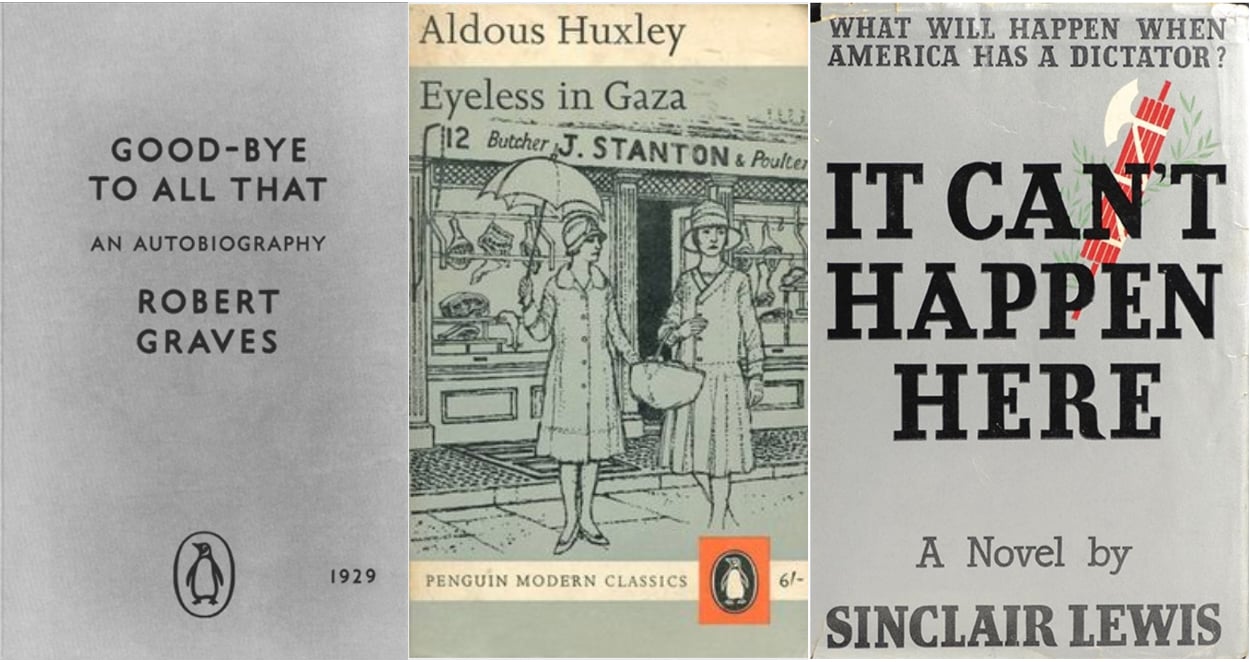
And maybe it’s been filtered for me through my recent reading of the satirical novels of Aldous Huxley (other than Brave New World), describing England in the 1920s and 30s, when there was a similar shaking of the foundations. They didn’t know then – in 1929, when WWI poet Robert Graves wrote Goodbye to All That, or even in 1936, when Huxley wrote Eyeless in Gaza – but we know now the horrible catastrophe that was just about to come, and so soon after the War to End All Wars.
Rabbi Yohanan in the Babylonian Talmud says: “Since the destruction of the Temple [by the Romans in 70 CE] there is no prophecy, except in fools (and children).” Like those future‑blind 1930s authors, none of us today are actual prophets; we don’t know what’s coming in the next few years – a US‑China cyber war? A global climate catastrophe? An AI apocalypse?
And.
And maybe it’s because, on the way to a college reunion last fall, on the 16‑hour autumn drive from Toronto to Boston and back, while counting the cars on the New York State Thruway, I listened to It Can’t Happen Here, a novel from 1935 in which Sinclair Lewis imagined a fascist dictatorship taking over America based on a populist demagogue, fueled by the resentment of the dispossessed. The parallels to today’s anti‑woke deplorables, who now seek revenge through their own forms of cancel culture and norm‑corruption, are hard to miss.
So I find myself here and now: Judeophobes to the left of me, Judeophobes to the right of me, and I’m stuck in the middle with me. And I can’t seem to find any safe place to rest my thought‑tormented head, any contemporary soundtrack that feels like a safe harbor for my Jewish soul.
North American and Israeli Jews now find themselves in a painful bind: the very forces that appear to guarantee Israel’s survival are also eroding the liberal foundations on which many Jews, in Israel and the Diaspora, have long depended.
I grew up with the assumption that liberal democratic Israel was the United States’ natural, essential, dependable ally, regardless of which party held Congress or the White House. Over the decades, different presidents tilted more or less warmly toward Israel, but the underlying partnership felt steady and bipartisan. That sense of stability has eroded as attitudes in both American parties shifted, especially from Obama onward, when parts of the Democratic base began to turn harshly against Israel even as figures like Hillary Clinton and Joe Biden remained strongly supportive.
In his first term, Donald Trump sharpened this tension. On one hand, his policies were unmistakably pro‑Israel: in 2017 Trump recognized Jerusalem as Israel’s capital and moved the US embassy there; in 2018 the US fully reimposed Iran sanctions after withdrawing from the Obama‑engineered JCPOA nuclear agreement (many of the key “sunset” provisions of that deal were slated to begin expiring around October 2025); and in 2020, under the leadership of his son‑in‑law Jared Kushner, came the Abraham Accords – US‑brokered peace agreements between Israel and Arab states (the UAE, Bahrain, later Morocco and Sudan).
On the other hand, Trump’s “America First” populism, flirtation with white‑Christian nationalism, corruption, and especially his eagerness to weaken liberal democratic norms all sit uneasily with the political culture in which American Jews have historically flourished. Trump became a president who was “good for Israel” in a narrow, strategic sense, but deeply threatening to the broader liberal order that has protected Jews in America.
Most American Jews – roughly six million today – identify as liberal, culturally integrated, and primarily American in their self‑understanding, with Jewishness expressed in cultural affinities and ethical and political commitments rather than in religious observance or even community involvement. Support for Israel remains widespread, but it is increasingly under fire from an explicit campaign that aims to sever Diaspora Jews from their seven million fellow Jews in Israel.
This fierce campaign uses the language of human rights and social justice. It borrows the rhetoric and moral fervor of a new secular religion – with all the fire of old‑time religion but without God or the Old Testament – a secular orthodoxy full of Manichean good and evil, with righteous saints on the right side of history and devils incarnate on the wrong. In this worldview, Palestinians and Muslims – even those led by Hamas and the ayatollahs – are seen as inherently worthy of support, while the Jewish state of Israel is seen, regardless of the facts, as the embodiment of everything this new secular political religion condemns: white European settler colonialism, apartheid, and the ultimate sin, genocide.
Even pointing out that America, Canada and Australia are, factually, the actual white European settler‑colonial societies – which, against their Indigenous peoples, practiced forms of segregation, dispossession, and arguably genocide – and that much of the passion animating this new secular religion comes from projecting aversion to their society’s sins onto Israel and the Jews, doesn’t seem to matter. https://open.substack.com/pub/ebenbrandeis/p/canada-has-no-right-to-exist?r=d6rjx&utm_campaign=post-expanded-share&utm_medium=web
So support for Israel is greatly weakened among younger generations, including younger Jews, who feel more comfortable with familiar progressive ideals and are unaware of, or unsympathetic to, the dilemmas and challenges of Israel’s geopolitical reality.
Similar dynamics appear, on a smaller scale, in Canada and Australia, where once secure Jewish communities now face rising hostility based both on anti‑Zionism from the radical left (in a strange red‑green alliance with Islamism and growing Muslim immigrant communities) and on old‑fashioned conspiracy‑theory antisemitism of the Tucker Carlson variety. [For an excellent succinct analysis of the Canadian situation, see Canadaland’s Jesse Brown interview with Dan Senor, “My diaspora Jewish world is crumbling,” released on May 4, 2026. https://youtu.be/XM6RIFFuDMY?si=mCjQGZaYeWGJ0IKP ]
At the same time, classic liberal norms – constitutional restraint, minority protections, civic moderation – are under pressure from both extremes. On the left, the new dogmas of anti‑colonialism and intersectionality place “privileged” Jews and Israel at the top of an imagined oppressor pyramid and at the bottom of the intersectional victim sweepstakes, recasting Zionism as a form of racial domination rather than a Jewish national‑liberation movement of refugees and survivors seeking self‑determination. On the right, Christian‑nationalist rhetoric and conspiracy‑laden populism revive older forms of antisemitism, sometimes wrapped in philo‑Israeli gestures that instrumentalize Jews while undermining the liberal order on which they rely.
For decades, liberal Jews in Israel and abroad could support Israel in good conscience because Israel was, despite all its flaws and conflicts, a recognizably Western liberal democracy: a sovereign Jewish homeland built by refugees that nonetheless pledged equality under law in its Declaration of Independence. Today, that image is fraying. Israel’s ten million citizens include a large and growing ultra‑Orthodox population with little attachment to liberal norms, and a religious‑nationalist camp whose ideology often shades into Jewish supremacism and support for illiberal governance. Both constituencies are key to keeping together Netanyahu’s Likud‑led coalition.
Israel’s ten million citizens also include roughly two million Muslim Arab citizens. While they are increasingly integrated into Israeli society and the economy, their votes for various Arab parties in the Knesset (collectively up to about fifteen seats out of 120) now hold the balance of power. Since 2009, the only non‑Netanyahu‑led government – from June 2021 to December 2022 under Prime Minister Naftali Bennett and then Yair Lapid – depended for its Knesset majority on the five seats of the Islamist Arab party Ra’am. In 2026, Israeli Arab voters will likely determine whether Netanyahu’s right‑wing plus ultra‑Orthodox bloc returns to power or is replaced by the larger, but still short of majority, anti‑Netanyahu bloc in the October 2026 elections.
Benjamin Netanyahu sits at the heart of this tension. On one side stands his very real role in Israel’s economic transformation: the rise of the dynamic Start‑Up Nation, rapid growth in per‑capita income, and successful integration into the global high‑tech economy. Israel’s GDP per capita of about US$55,000 is roughly on par with Canada (US$58,000) and the UK (US$56,000), and higher than that of France (about US$51,000).
On the other side is Netanyahu’s long‑running assault on institutional checks and balances, his dependence on ultra‑Orthodox and far‑right factions, and his willingness to gamble with Israel’s relationship to American Jewry and to bipartisan support in Washington in order to preserve his own political survival. His government’s authoritarian and illiberal tendencies accelerated after 2016, when Israeli police opened corruption investigations against him that led to 2019 indictments for bribery, fraud and breach of trust, and then to a highly public trial that has dragged on to this day. That legal pressure helped motivate Netanyahu, in early 2023, to push an anti‑elitist “judicial reform” attacking the country’s liberal Supreme Court – which, in Israel’s parliamentary system, is the only real counterweight to the supremacy of a Knesset coalition majority.
Yet even those (including myself) who oppose Netanyahu for undermining Israel’s internal liberal constitutional compact must acknowledge his clarity, over a quarter century, about Iran as Israel’s central strategic threat.
Although Iran is roughly 1,100 miles from Israel and is not an Arab country, its revolutionary fundamentalist Shiite ideology and longstanding official rhetoric calling for the elimination of the “Zionist regime” make its drive for nuclear capabilities an unequivocal existential threat to Israel. Iran’s theocratic regime and its network of proxies – Hamas in Gaza, Hezbollah in Lebanon, the Houthis in Yemen, and Shiite militias in Iraq – have long sought to encircle and destroy Israel (as well as defend Iran), and they undermine both regional stability and Western influence.
October 7 made this strategy brutally tangible, as a massacre fueled and armed by Iran triggered a multi‑front confrontation stretching from Gaza to Lebanon to the Red Sea, and now to Iran. For Israeli Jews, the war with Iran and its proxies is existential, and the instinct to support national leadership in this war of survival is entirely understandable, despite the immense human cost and devastation in Gaza and Lebanon, and the human and material costs to Israel of October 7, Hezbollah rockets and Iranian ballistic missiles.
Here lies the terrible bind: Israel’s physical security may depend, in the short term, on an American president whose character and politics undermine the liberal democratic fabric that has sheltered Jews in the United States, and on an Israeli leadership that weakens the liberal character of the Jewish state itself. Many Jews experience this as an impossible moral arithmetic: how to support a necessary war against genuinely genocidal enemies without endorsing the illiberal forces – at home and abroad – that are eroding the very values which once made both America and Israel feel like safe harbors.
To live as a liberal Jew today is to inhabit this contradiction without easy resolution. It means refusing both the comforting belief that “friends of Israel” are automatically “good for the Jews,” and the equally hollow hope that “anti‑war” moral purity can be maintained by standing aloof from very real power and security dilemmas. For Jews, it demands a kind of double loyalty – not between America and Israel, but between Jewish survival and Jewish values – insisting that the defense of Jewish civilization, in Israel and the Diaspora, cannot be separated from the defense of liberal norms and institutions, minority protections, and constitutional constraints.
For many North American Jews, opposition to Trump is so central to their political identity that they reflexively reject almost anything associated with him; at some point they must concede that a policy is not automatically wrong simply because Trump advanced it (for example, the Abraham Accords or the June 2025 B‑2 strikes on Iran’s nuclear facilities at Fordow and Natanz). By contrast, many Israeli Jews, who are broadly supportive of Trump for clear strategic reasons and because they see value in having the world’s leading power firmly aligned against their existential enemy, must also recognize that Trump’s willingness to confront Iran’s nuclear ambitions and Islamist fundamentalism does not erase the significant risks of Israel being perceived as so closely and personally aligned with Trump, his administration, and his party.
The question is not just whether a particular leader – Trump, or Netanyahu – is “good for the Jews,” but whether Jews can help steer both America and Israel back toward political cultures in which that question becomes less urgent because liberal democracy itself, with all its imperfections, again feels like a plausible home.
I know that political prophecy is the realm of fools (and children), but here goes.
For liberal Israeli Jewish voters, the choice is clear: vote for the Israeli party and leader most likely to be able to assemble a coalition (including Arab parties) that can replace Netanyahu’s populist illiberal Likud‑led bloc that includes the ultra‑Orthodox and the far‑right extremists.
For American Jews, looking ahead to 2028, the choice is more fraught. The new young face of the Democratic Party is the proudly antizionist, anti‑Israel New York City mayor, Zoran Mohammed Mamdani. On the other side are openly antisemitic, anti‑Israel Republicans, whose big tent under J.D. Vance comfortably includes Tucker Carlson and the millions who listen to him and believe what he preaches.
So if not Mamdani Democrats, and not Tucker Republicans, then who? It reminds me of the old Jewish joke about a Jew in Germany in 1938 who goes into a travel agency and asks for a ticket to leave the country. The agent asks, “Where to?” and hands him a globe so he can choose a destination. He slowly turns the globe, realizing every country has closed its doors to Jews, then pushes the globe back and says: “Don’t you have another world?”
For me, just as dangerous as Trump is to the safe harbor of America as a liberal constitutional city on a hill is the election of Mamdani as the mayor of New York City. New York was not only the capital city of the goldene medineh, but the capital city of the American Jewish Golden Age, and the capital city of the post‑war Jewish Diaspora.
The New York City that produced Benny Goodman, Paul Simon, Carole King, Barry Manilow, William Safire, Barnett Newman, Adolph Gottlieb, Mark Rothko. The New York City that produced Supreme Court Justice Ruth Bader Ginsburg, feminist congresswoman Bella Abzug, literary critic Alfred Kazin, composer Aaron Copland, novelist Bernard Malamud, Danny Kaye, Woody Allen and Barbra Streisand.
That New York is gone. There’s no literary or musical safe harbor for me.
Goodbye to all that.
My only safe harbor is here, at my writing desk.
My only safe harbor is now, in the act of writing.